Iran War Intensifies as Diplomatic Efforts in Islamabad Collapse
The recent peace talks in Islamabad have ended in failure, extinguishing any immediate hopes for a resolution to the ongoing conflict between the United States, Israel, and Iran. This diplomatic breakdown comes amid a war that has defied initial expectations of a swift conclusion, plunging the region into deeper uncertainty and raising fears of broader global repercussions.
Operation Epic Fury: A Miscalculated Offensive
Buoyed by the success of a near-flawless operation in Venezuela in January that led to the capture of Nicolás Maduro, former President Donald Trump authorized Operation Epic Fury. On February 28, joint strikes with Israel were launched against Iran, anticipating similarly rapid and decisive results. However, the conflict has stubbornly persisted, with even the current 14-day ceasefire appearing increasingly fragile. Trump has maintained a combative stance, his rhetoric hardening as the war drags on, transforming what was intended as a display of overwhelming force into a protracted confrontation with no clear end in sight.
It fell to Vice President JD Vance, who had opposed military action from the outset, to travel to Islamabad for negotiations with an Iranian delegation. The outcome was predictable: deep mistrust, sharply opposed demands, and entrenched positions on both sides prevented any diplomatic breakthrough.

Historical Context and Escalation
The United States and Israel, as staunch allies, have long maintained adversarial relations with Iran. Tensions had already escalated into confrontation before the current war, with Tel Aviv and Tehran exchanging strikes in early 2024. This was followed by a far more intense 12-day war in June 2025, which drew American military intervention and marked the most significant military clash between the nations in decades.
In December of last year, Iran witnessed mass public protests triggered by a deepening economic crisis. The demonstrations were met with a brutal crackdown by Iranian authorities, with human rights groups reporting thousands of protesters killed. Throughout these events, Trump repeatedly spoke of the need to intervene to "save" Iranian protesters. This "intervention" ultimately materialized as Operation Epic Fury, with objectives including preventing Iran from developing nuclear weapons and pursuing regime change. Iran has consistently denied any intention of developing nuclear weapons.
Iran's Unexpected Resilience
Despite the United States being the world's most powerful nation and Israel adding further firepower, Iran has demonstrated a remarkable ability to absorb attacks. Militarily battered, Tehran has retaliated by striking Israeli territory and US military bases in Gulf states, expanding its targets to include civilian infrastructure and energy facilities across the Middle East.
Iranian drones and ballistic missiles have repeatedly breached Israel's famed Iron Dome air defense system, while attacks on energy facilities have sparked concerns about disruptions to global oil markets. Additionally, despite losing several key leadership figures, Iran has swiftly appointed successors, preventing a leadership vacuum. A critical miscalculation was the belief that assassinating Supreme Leader Ayatollah Ali Khamenei on the first day of strikes would trigger a public uprising against the Islamic regime—an expectation that failed to materialize.
The Strait of Hormuz: Iran's Strategic Ace
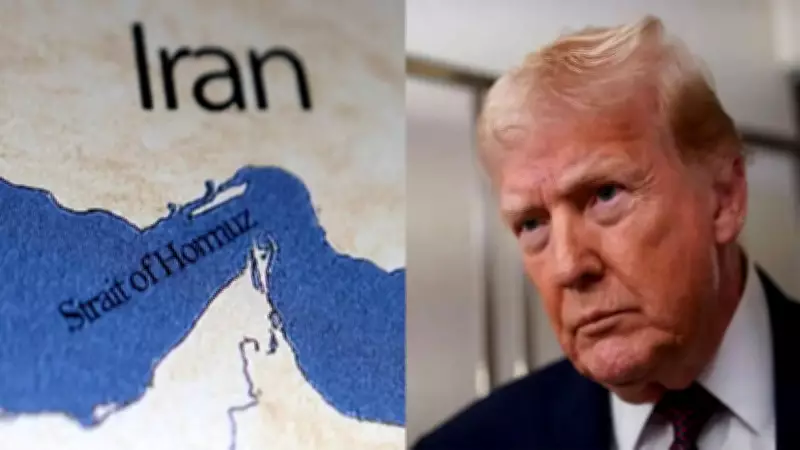
More than any other factor, Iran has leveraged the Strait of Hormuz to upend US-Israeli calculations. In retaliation for aggression, Iran has virtually blockaded this critical sea route, escalating fears of a broader global economic disruption. The strait carries nearly 20% of the global oil supply, making it one of the world's most vital energy chokepoints. Even limited disruptions in this narrow maritime corridor can have severe implications.

Since the blockade began, Trump's threats have increasingly focused on forcing Tehran to reopen the waterway. His calls for European and other allies to deploy naval forces to escort commercial vessels have largely been rebuffed, prompting him to berate NATO and warn of potentially withdrawing from the alliance. Iran, meanwhile, maintains that the Strait of Hormuz remains open "except for its enemies"—a pointed reference to the United States, Israel, and their allies.
Domestic Pressures and Financial Strain
For Trump, the war is exacting a growing cost on the domestic front, both financially and in terms of public support. Surveys indicate relatively low American backing for the conflict. For instance, a recent Ipsos poll found that 66% of Americans prefer ending the war early, even if not all objectives are met, compared to 27% who believe it should continue until all goals are achieved. The potential deployment of ground troops in Iran is deeply unpopular, with 76% opposing such a move.
A Pew Research Center survey revealed that 59% of respondents believed the use of force in Iran was the wrong decision, while 38% approved. Financially, the war cost Washington a staggering $11.3 billion in just the first six days, according to Pentagon officials. More than six weeks into Operation Epic Fury, total costs have surpassed $28 billion and continue to rise, as tracked by MilitarySpend.
The Benjamin Netanyahu Factor
Israeli Prime Minister Benjamin Netanyahu has been a frequent visitor to Washington since Trump's return, making at least six visits since February 2025. As per The New York Times, it was Netanyahu's "highly classified presentation" on February 11 that ultimately convinced Trump to authorize the operation. This decision came despite opposition from key officials, including CIA director John Ratcliffe, Secretary of State Marco Rubio, and Chairman of the Joint Chiefs of Staff General Dan Caine, with only Defence Secretary Pete Hegseth backing the plan.
Subsequently, Israel's decision to continue hitting Lebanon despite the ceasefire prompted Iran to briefly suspend the truce before ultimately attending talks with Vance. Lebanon was drawn into the conflict after Hezbollah, the Tehran-backed Lebanese militant group, entered the war to avenge Khamenei's assassination, triggering Israeli retaliation. Critics accuse Netanyahu of deliberately prolonging the conflict to delay a long-pending corruption trial, which could result in his removal from office, imprisonment, and permanent disqualification from public office if convicted.
What Lies Ahead: Escalation or Truce?
The Vance-led team has already returned home, and his sharp remarks at the post-talk press conference in Islamabad were particularly telling. While the ceasefire does not end before April 22 unless violated or extended, Trump's increasingly combative tone has led many to speculate about future developments. America's commander-in-chief has already signaled escalation by ordering the US Navy to prevent ships from entering or leaving the Strait of Hormuz.
The Iran war has unfolded contrary to initial plans, evolving into a longer and more complex conflict with no clear solution in sight. As diplomatic efforts falter and military tensions rise, the situation remains fraught with uncertainty, posing significant risks to regional stability and global economic security.