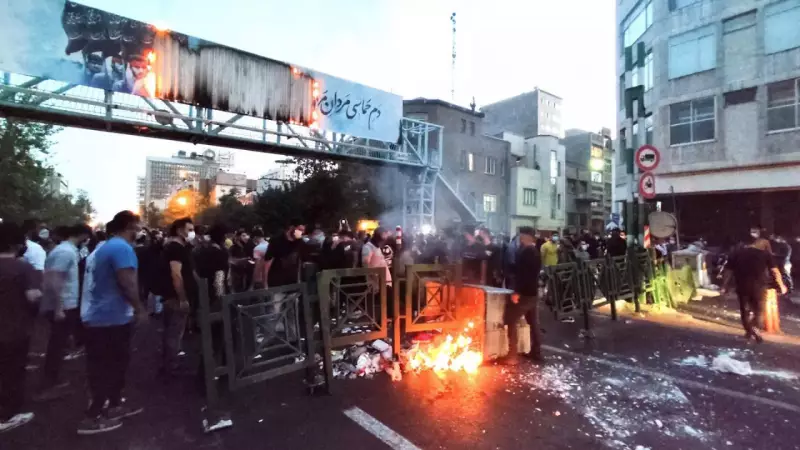
Nationwide protests in Iran, now entering their second week, have turned increasingly violent, with at least 116 people killed and over 2,600 arrested, according to human rights monitors. The demonstrations, sparked by economic collapse, have evolved into a direct challenge to the country's theocratic leadership, prompting a severe crackdown and international concern.
Deadly Crackdown and Severe Warnings
The scale of the unrest is difficult to fully assess due to severe internet restrictions and disrupted phone lines across the country. The US-based Human Rights Activists News Agency, citing verified reports, confirmed the death toll of 116 and the arrest figure exceeding 2,600. Iranian state media, however, has painted a different picture, focusing on casualties among security forces and labelling protesters as "terrorists."
The government's response has escalated sharply. Iran's Supreme Leader, Ayatollah Ali Khamenei, has signaled an impending harsh crackdown. Echoing this, the country's attorney general, Mohammad Movahedi Azad, issued a stark warning. He stated that anyone participating in the protests would be treated as an "enemy of God," a charge that carries the death penalty in Iran. This designation would also apply to those accused of helping "rioters."

A statement aired on state television called for prosecutors to act "without leniency, compassion or indulgence" to prepare for the "decisive confrontation" with those seen as betraying the nation.
US President Trump Threatens Military Action
Internationally, the situation has drawn a sharp reaction from the United States. According to officials cited by the New York Times, US President Donald Trump has been briefed on new options for possible military strikes against Iran as he considers a response to Tehran's suppression of protesters.
While no final decision has been made, officials confirmed Trump is seriously considering authorizing action. The options presented reportedly include strikes on non-military sites in the capital, Tehran. "Iran is looking at FREEDOM, perhaps like never before. The USA stands ready to help!!!" Trump posted on his Truth Social platform.
He reiterated his threat on Friday, stating, "I've made the statement very strongly that if they start killing people like they have in the past, we will get involved... We'll be hitting them very hard where it hurts. And that doesn't mean boots on the ground."
Economic Grievances Fuel Systemic Challenge
The protests erupted on December 28 following the dramatic collapse of the Iranian rial. The currency is now trading at over 1.4 million to the US dollar, crippled by international sanctions—partly over Iran's nuclear program—and domestic economic mismanagement.
What began as demonstrations fueled by widespread economic hardship has since intensified, with chants and actions now directly challenging the foundations of Iran's Islamic Republic. The unrest represents one of the most significant waves of public dissent in recent years, testing the regime's ability to maintain control through a combination of force and ideological rhetoric.
With communication channels stifled and the government projecting an image of control, the full human cost and future trajectory of the protests remain uncertain, setting the stage for a critical period ahead.