

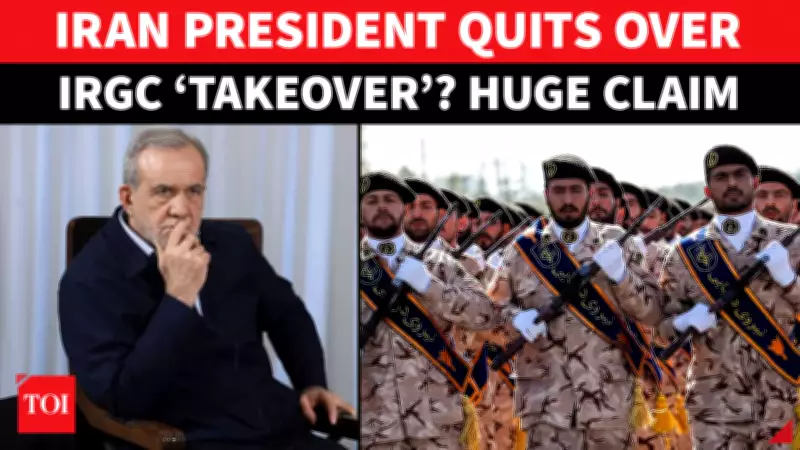
In a stunning development, Iranian President Masoud Pezeshkian has submitted his resignation to Supreme Leader Ayatollah Ali Khamenei, alleging that a quiet military coup d'état by the Islamic Revolutionary Guard Corps (IRGC) has stripped the civilian government of all power. The bombshell disclosure came through a leaked letter, in which Pezeshkian declared that he was completely locked out of major decisions while the IRGC took total control of the country.
President's Final Act of Defiance
Pezeshkian's letter reveals his deep frustration with the IRGC's unauthorized actions, particularly recent missile strikes that he labeled as 'madness.' The president staged a final act of defiance before stepping down, accusing the military of undermining the civilian government and plunging the nation into an unprecedented regime crisis.
Power Shakeup Exposed
The resignation marks a dramatic escalation in the ongoing power struggle between Iran's civilian leadership and the IRGC, which has long been a dominant force in Iranian politics. According to the leaked document, Pezeshkian was sidelined from key decisions, with the IRGC effectively running the country from behind the scenes. The president's decision to resign publicly highlights the severity of the rift.

This crisis comes amid heightened tensions in the region, with Iran facing international scrutiny over its military activities. The IRGC has been accused of conducting unauthorized strikes that risked dragging the country into conflict. Pezeshkian's resignation is seen as a desperate move to expose the military's overreach and rally international attention to the internal power dynamics.
Reactions and Implications
The Iranian government has not officially commented on the resignation, but sources indicate that the Supreme Leader is expected to accept it and appoint a caretaker government. Analysts warn that this power shakeup could lead to further instability, as the IRGC tightens its grip on power. The international community is closely watching the situation, with concerns over Iran's nuclear program and regional influence.
This unprecedented regime crisis has sent shockwaves through the political establishment, with many questioning the future of Iran's governance. The leaked letter has also sparked debates about the role of the military in civilian affairs and the erosion of democratic institutions in the country.






