

Iran's Leadership Suffers Catastrophic Blows in Escalating Conflict
The ongoing military confrontation between Iran, the United States, and Israel has delivered a devastating series of strikes against Iran's highest echelons of power. A targeted campaign of assassinations has systematically dismantled the country's political and military command structure, marking one of the most significant leadership crises for the Islamic Republic in modern history.
Supreme Leader and Key Pillars Eliminated
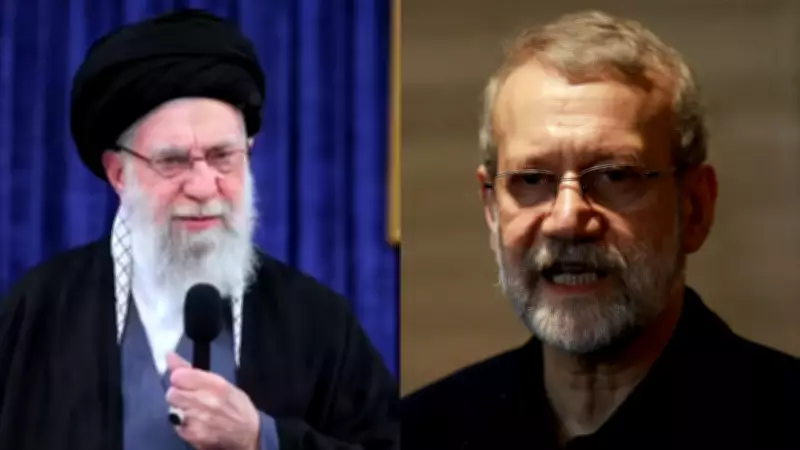
At the apex of the losses stands Ali Khamenei, Iran's Supreme Leader since 1989, whose death on February 28th sent shockwaves through the regime. He was killed during a precision strike on a high-level security meeting in Tehran during the opening hours of the conflict. The attack reportedly also claimed the lives of several close family members. His son, Mojtaba Khamenei, has assumed the leadership mantle but has maintained an extremely low public profile since the transition.
Another monumental setback occurred on March 17, 2026, with the death of Ali Larijani, Iran's national security chief and a longtime institutional pillar. An Israeli strike near Tehran eliminated Larijani, an event widely interpreted as the second-most consequential loss for the Iranian establishment following Khamenei's demise.

Widespread Decapitation of Military and Security Apparatus
The conflict has evolved into a multi-front confrontation characterized by continuous strikes, missile barrages, and expanding regional fallout. Iran's leadership vacuum extends deep into its security organs:
- Mohammad Pakpour: The IRGC Commander-in-Chief, who had only assumed the role in 2025, was killed on the war's first day, February 28th. He was swiftly replaced by Ahmad Vahidi.
- Alireza Tangsiri: The veteran IRGC Naval Chief, a central figure in Iran's maritime strategy since 2018, succumbed to wounds on March 26th from an Israeli strike. Israel linked his operations directly to activities concerning the Strait of Hormuz.
- Ali Shamkhani: A senior defense adviser and cornerstone of Iran's security establishment since the 1980s, was killed in a February 28th airstrike after surviving a previous attempt.
- Esmail Khatib: The Intelligence Minister, a cleric who headed the apparatus since 2021, was eliminated in a Tehran strike on March 18th, crippling internal security operations.
- Aziz Nasirzadeh: The Defense Minister and Iran-Iraq war veteran was killed on February 28th in strikes targeting senior leadership.
- Gholamreza Soleimani: Head of the Basij paramilitary force, known for internal security, died in a March 17th airstrike.
- Ali Mohammad Naini: The IRGC spokesperson was killed on March 20th in what Iran labeled a US-Israel strike, shortly after publicly touting Iran's missile program strength.
- Mohammad Shirazi: Head of the military office coordinating armed forces under the Supreme Leader, killed on February 28th.
- Abdolrahim Mousavi: The recently appointed Armed Forces Chief, tasked with army-IRGC coordination, was killed in the opening wave of strikes on February 28th.
Diplomatic Deadlock and Regional Escalation
Amid this leadership carnage, diplomatic channels remain fraught with uncertainty. Iran has explicitly denied participation in any mediation initiatives, including those proposed by Pakistan, while continuing its campaign of retaliatory attacks across the Middle East. The situation has grown increasingly volatile, with global energy markets reacting nervously to the persistent threat of disruption in the critical Strait of Hormuz.
US President Donald Trump has asserted that the conflict has effectively precipitated a "regime change" in Tehran, claiming Washington is engaged in "serious discussions" with a new, "more reasonable" Iranian leadership. However, he issued a stark warning: should these talks collapse and the Strait of Hormuz remain closed, the United States is prepared to launch military action targeting Iran's key oil and power infrastructure. Iranian officials have categorically denied any direct talks are occurring, stating there have been "no direct talks" with the US.

The United States and Israel have maintained relentless pressure, targeting Iranian assets, while Tehran moves rapidly to appoint replacements and preserve operational continuity. The conflict shows no signs of abating, with the potential for further escalation looming large over an already unstable region.





