

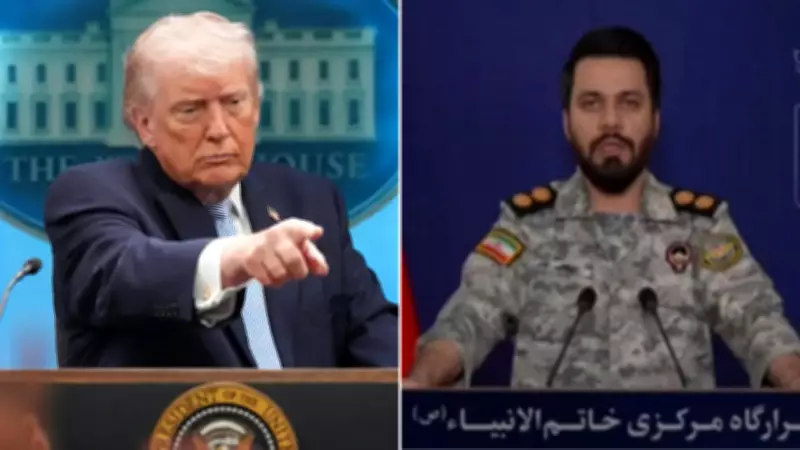
Iran Announces Two-Week Ceasefire and Unveils Sweeping Peace Proposal
In a significant development aimed at de-escalating tensions, Iran's Supreme National Security Council has officially agreed to a two-week ceasefire in the ongoing conflict. This temporary pause is set to facilitate high-stakes negotiations with the United States, scheduled to commence in Islamabad on Friday. The announcement marks a pivotal moment in the protracted hostilities, offering a glimmer of hope for diplomatic resolution.
Comprehensive 10-Point Proposal for Conditional Ceasefire
Iran has put forward an extensive 10-point proposal for a conditional ceasefire, as outlined by state media and endorsed by Tehran's leadership. This plan calls for an immediate halt to hostilities across multiple fronts, including Iran, Iraq, Lebanon, and Yemen, alongside broader demands designed to bring about a complete end to the war. The proposal is structured to address both immediate and long-term issues, reflecting Iran's strategic priorities.
Key demands in the proposal include:

- Complete and permanent cessation of the war against Iran, with no time limit.
- Ending all conflicts in the region in their entirety.
- Reopening of the Strait of Hormuz and establishing protocols to ensure safe and secure navigation.
- Full compensation for reconstruction costs in Iran.
- Lifting of all sanctions on Iran and release of frozen Iranian funds held by the United States.
- Iran's full commitment to not seeking possession of any nuclear weapons.
- Immediate ceasefire on all fronts upon approval of these conditions.
Officials from Iran's Supreme National Security Council emphasized that the two-week ceasefire "does not signify the termination of the war", highlighting the conditional nature of this arrangement. This underscores that the pause is a tactical move to enable dialogue rather than a definitive end to hostilities.
US Response and Diplomatic Engagements
US President Donald Trump has responded by stepping back from earlier threats to expand attacks on Iran. He announced a two-week suspension of planned strikes, contingent on Iran honoring the ceasefire and reopening the Strait of Hormuz in a "complete, immediate, and safe" manner. Trump described this as a "double-sided ceasefire" intended to create space for diplomacy.
Trump indicated that his decision followed discussions with Pakistan's Prime Minister Shehbaz Sharif and Army chief General Asim Munir. He pointed to Iran's proposal as a "workable basis" for negotiations, expressing optimism that most major points of contention between Washington and Tehran have already been addressed. This suggests a potential pathway toward a longer-term agreement if the temporary pause proves successful.
Strait of Hormuz: A Critical Flashpoint
The Strait of Hormuz, a crucial waterway handling a significant share of global oil shipments, remains a central issue in the negotiations. Iran has demanded its reopening and the establishment of guarantees to ensure safe navigation. Foreign Minister Abbas Araghchi stated that Iran would allow safe maritime passage through the strait during the talks, though under coordination with its armed forces and subject to "technical limitations".
It remains unclear whether this signals a full easing of restrictions on the vital shipping lane, which Iran has effectively controlled since the conflict escalated. The conditional nature of Iran's offer reflects the strategic importance of the strait in both economic and military terms.
Broader Implications and Regional Stability
The ceasefire and proposed peace plan have far-reaching implications for regional stability. By calling for an end to conflicts in Iraq, Lebanon, and Yemen, Iran's proposal aims to address broader geopolitical tensions beyond its immediate borders. The demand for compensation and sanction relief highlights the economic dimensions of the conflict, underscoring Iran's focus on post-war recovery and sovereignty.

As talks are set to begin in Islamabad, the international community watches closely. The success of these negotiations could pave the way for a more stable Middle East, while failure might lead to a resurgence of violence. The involvement of Pakistan as a mediator adds an additional layer of diplomatic complexity, potentially influencing outcomes in the region.
In summary, Iran's agreement to a two-week ceasefire and its detailed 10-point proposal represent a critical juncture in the conflict. With US reciprocation and scheduled talks, there is cautious optimism for progress, though the conditional and temporary nature of the arrangements leaves room for uncertainty. The coming weeks will be crucial in determining whether this diplomatic opening can lead to a lasting peace.





