Atlanta Braves Off to a Strong Start in 2026 MLB Season
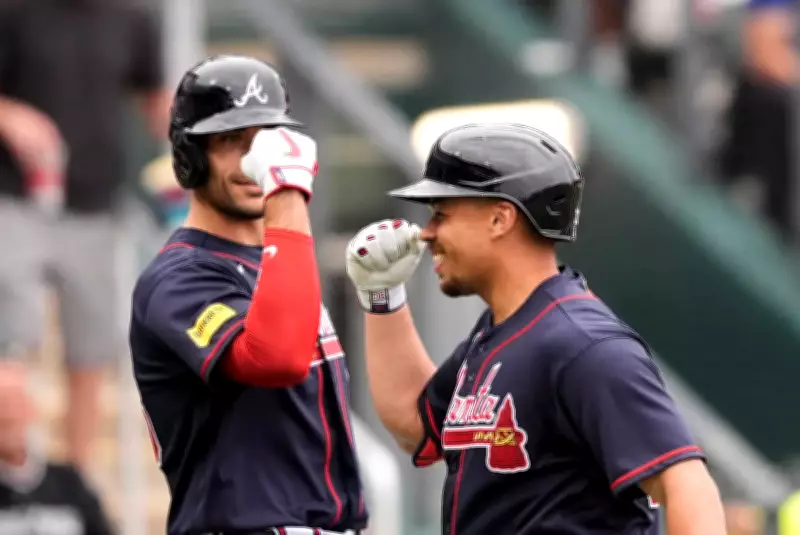
The Atlanta Braves have kicked off the 2026 Major League Baseball season in impressive fashion, securing a 6-3 record as of April 5 and claiming the top spot in the National League East division. Their offensive lineup has been a powerhouse, consistently generating runs with standout performances from key players like Ronald Acuña Jr., Matt Olson, and Austin Riley. However, despite this early success, concerns linger on the pitching front, where injuries have exposed potential vulnerabilities that could threaten their championship aspirations over the grueling 162-game schedule.
Pitching Woes Prompt Trade Discussions for Braves
While the Braves' starting rotation appears solid at first glance, it has already been hit by significant setbacks. Key pitchers Spencer Strider, AJ Smith-Shawver, and Hurston Waldrep are currently unavailable due to injuries, leaving the team to rely on Chris Sale, Reynaldo López, Grant Holmes, Bryce Elder, and Martín Pérez to shoulder the load. This situation has sparked internal discussions about acquiring additional pitching depth, with Minnesota Twins starter Joe Ryan emerging as a prime target. At 29 years old, Ryan is in his prime, coming off a strong 2025 season, and offers a reasonable financial cost, making him an ideal fit for a Braves squad focused on winning immediately.
Proposed Trade Structure Between Braves and Twins
A potential trade framework between the Atlanta Braves and Minnesota Twins has been outlined, designed to address both teams' needs without disrupting their core rosters. Under this proposal, the Braves would acquire right-handed pitcher Joe Ryan, who brings over three years of team control, a $6.35 million salary for 2026, and a $13 million mutual option for 2027. In return, the Twins would receive a package of prospects: right-handed pitcher JR Ritchie (22, a top Braves pitching prospect), outfielder Didier Fuentes (20, a young arm with upside), catcher Cam Caminiti (19, a developing catcher), and a 2026 Competitive Balance Round A draft pick.

This deal allows the Braves to bolster their rotation without sacrificing current major league contributors, instead leveraging their farm system to secure immediate help. For the Twins, who have struggled to a 3-6 start with offensive woes, trading Ryan presents an opportunity to rebuild for the future by acquiring multiple young talents and draft capital.
How Joe Ryan Would Enhance the Braves' Rotation
If acquired, Joe Ryan would immediately slot in as the No. 2 starter behind Chris Sale, providing much-needed stability to a rotation that, while currently ranking fifth in MLB with a 2.29 ERA, faces uncertainty due to injury risks. Ryan's track record is compelling: in 2025, he pitched 171 innings with a 3.42 ERA and 194 strikeouts, supported by a 1.04 WHIP and 118 ERA+ that indicate above-average performance. His ability to generate strikeouts, maintain control, and pitch deep into games would complement the Braves' potent offense, which ranks near the top in OPS, potentially turning close contests into more frequent victories and alleviating pressure on the rest of the staff.
Twins' Rationale for Considering a Trade
The Minnesota Twins, with a rotation ERA of 4.48 and offensive struggles, may view trading Joe Ryan as a strategic move to prioritize long-term success. As their top asset, especially amid injury concerns around fellow starter Pablo López, Ryan's high value could be converted into future assets. The proposed return—including prospects like JR Ritchie, who could develop into a key starter, Didier Fuentes for added pitching depth, Cam Caminiti for catching help, and an extra draft pick—aligns with a rebuild aimed at contending in later seasons, possibly around 2027 or 2028.

Benefits and Drawbacks of the Trade Scenario
For the Atlanta Braves, the benefits are clear: they gain a dependable, affordable pitcher who fits their win-now timeline without disrupting their core lineup. However, cons include losing valuable prospects, which could weaken future depth, and the risk of Ryan underperforming or getting injured. For the Minnesota Twins, pros involve acquiring multiple young players to strengthen their farm system and planning for the future, while cons center on losing their best current starter, potentially worsening their 2026 performance, and possible fan discontent.
Joe Ryan's Performance Profile and Pitch Analysis
Joe Ryan's career statistics from 2024 to 2026 highlight his consistency and growth. In 2025, he posted a 3.42 ERA over 171 innings with 194 strikeouts, and his projected 2026 totals suggest 167 innings, 11 wins, a 4.18 ERA, and a 1.19 WHIP. His pitch mix in 2026 features a four-seam fastball (41.6%), curveball (12.4%), slider (8.1%), and sweeper (7.5%), offering a diverse arsenal that has evolved since his 2018 draft. This profile makes him a reliable starter suited for a team with immediate playoff ambitions.
Final Assessment: Who Gains the Upper Hand?
In this proposed trade, the Atlanta Braves emerge as the clear winners, addressing their most pressing issue—pitching depth—to enhance their 2026 championship odds without sacrificing key roster players. For the Minnesota Twins, the move is sensible for future-building but comes at the cost of short-term competitiveness. If executed, this trade could be a pivotal moment for the Braves as they pursue another successful season, leveraging strategic acquisitions to maintain their early momentum in the NL East.