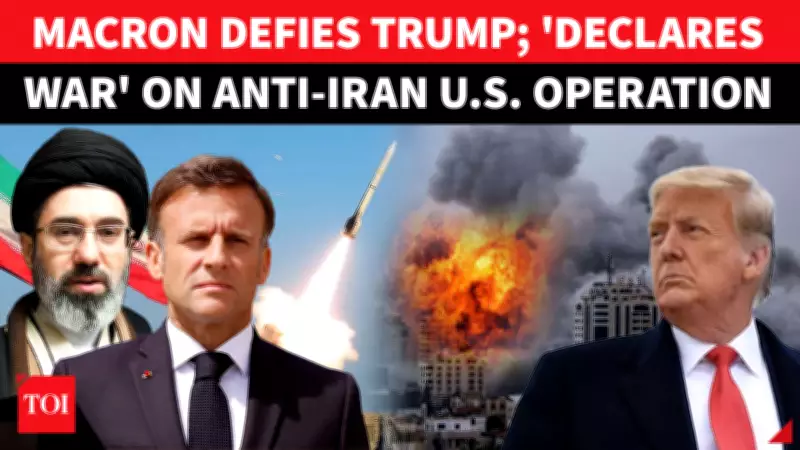
The Western alliance is fracturing at the world's most critical chokepoint. French Foreign Minister Jean-Noël Barrot has officially condemned the U.S. blockade of the Strait of Hormuz, calling it an illegal act that is punishing the global economy. As fuel prices skyrocket, France and the UK are moving to establish their own neutral naval mission, independent of President Trump's command. With Washington telling Europe to stay away, Paris is choosing strategic autonomy over a war it says it did not approve.
France's Bold Stance
In a sharp break from Washington, France has demanded an end to the U.S. blockade of the Strait of Hormuz. Foreign Minister Jean-Noël Barrot labeled the blockade an illegal measure that inflicts severe harm on the global economy. This move signals a deepening rift within the Western alliance at one of the world's most strategically vital maritime passages.
Rising Fuel Prices and Economic Strain
The blockade has triggered a sharp increase in fuel prices worldwide, exacerbating economic pressures on nations already grappling with inflation. France and the United Kingdom, feeling the pinch, are now taking steps to safeguard their own interests by establishing a neutral naval mission in the region, operating independently of U.S. command.

Independent Naval Mission
Paris and London are collaborating to deploy a naval force that will ensure freedom of navigation through the Strait of Hormuz without aligning with Washington's directives. This initiative underscores a growing desire for strategic autonomy among European powers, as they seek to avoid being drawn into conflicts they did not authorize.
Washington's Reaction
The Trump administration has reacted sharply, telling European allies to stay away from the region. However, France remains undeterred, prioritizing its own strategic calculations over compliance with U.S. demands. The French government insists that the blockade is not only illegal but also counterproductive, fueling instability and economic hardship.
Broader Implications for the Alliance
This dispute highlights the widening cracks in transatlantic relations. European nations are increasingly asserting their independence in foreign policy, particularly when U.S. actions threaten their economic and security interests. The Strait of Hormuz crisis may serve as a turning point, prompting a re-evaluation of alliance dynamics and the distribution of power within the Western bloc.
Conclusion
France's decision to break with Washington over the Strait of Hormuz blockade marks a significant moment in international diplomacy. By condemning the U.S. action and forging an independent path with the UK, Paris is sending a clear message: Europe will not be a passive participant in conflicts it deems unjust. As the situation unfolds, the world watches to see how this fracture will reshape global alliances and the balance of power in the Middle East.