By the autumn of 1922, Howard Carter was running out of time and energy. After years of excavating Egypt's Valley of the Kings with minimal results, he faced a crucial meeting with his wealthy British patron, Lord Carnarvon. Carter proposed one more season of digging, a bold request that most archaeologists would not have dared to make. Carnarvon, who had funded the frustrating dig since 1909, agreed, and that decision altered the course of history.
A Hidden Step That Changed Human History
On November 4, 1922, Carter's team was clearing debris beneath old workmen's huts. This arduous and unglamorous labor suddenly paid off when a worker's tool struck something solid: a stone step. Soon, more steps emerged. By November 5, Carter was staring at a sealed door that had remained untouched for over 3,000 years. This led to the discovery of Tutankhamun's tomb, a burial hidden for millennia. According to the study 'The Mummy's Curse: Historical Cohort Study,' the tomb was discreetly concealed beneath 20th Dynasty workers' huts in the Valley of the Kings. This explains how a royal burial could survive so long in plain sight. The huts hid the entrance and camouflaged the cut stone below. The Valley of the Kings was a busy, well-trodden archaeological zone, yet this tomb went unnoticed for thousands of years.
Why Carter Stopped Instead of Entering
Carter did not immediately break through the door. Instead, he cabled Lord Carnarvon. This caution is often overlooked but was crucial. A sealed door in the Valley of the Kings could indicate an untouched royal tomb, a looted chamber, or a hidden stash. Carter needed certainty before disturbing anything. He also owed his patron the courtesy of knowing that the long, expensive gamble had finally succeeded. One of the engraved wooden chests found inside the tomb is a testament to the treasures within.

Over 5,000 Treasures, Almost All Untouched
When Carter and Carnarvon finally entered, they discovered something unexpected. The tomb's significance lay not just in its contents but in their intact state. Gold furniture, chariots, statues, and ebony caskets were among more than 5,000 objects packed into the chambers, as if the burial had occurred recently rather than in 1323 BC. According to records from The Griffith Institute, the range of objects is staggering. It was not a cache of scattered relics but a complete picture of royal burial in Egypt's late 18th Dynasty, preserved in extraordinary detail. Photographer Harry Burton documented everything, creating a permanent visual record that allowed the discovery to be enjoyed by scholars and the public worldwide.
The Golden Mask and Its Meaning
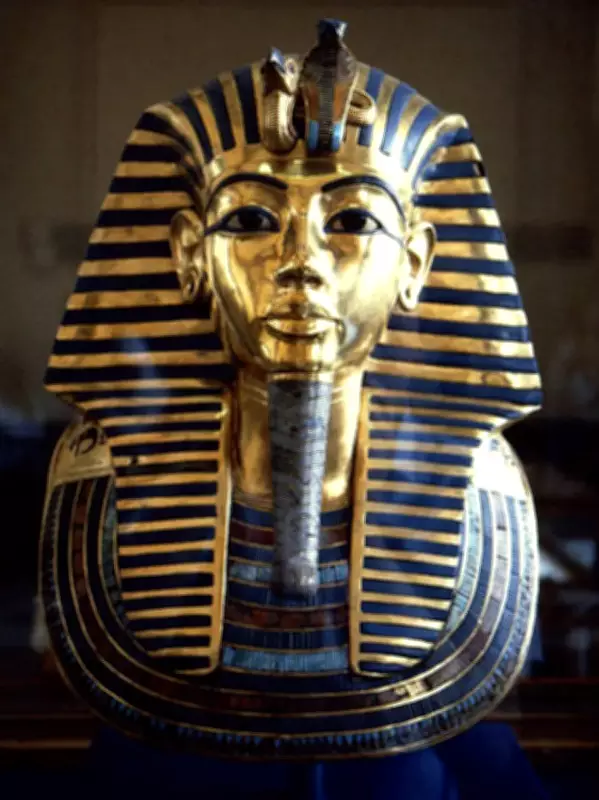
Most people associate ancient Egypt with Tutankhamun's iconic funerary mask: a serene, striped gold face. This mask became the symbol of the discovery. However, its legend stems from its context. If looted from a ransacked tomb, it would have been remarkable, but found in a perfectly intact royal burial surrounded by thousands of objects, it became a symbol of an entire civilization.
Why It Still Matters a Century Later
The 1922 discovery was not just about beautiful museum objects. It transformed how scholars understand ancient Egypt. Before Carter, researchers relied on fragments, looted sites, damaged artifacts, and incomplete records. His discovery provided an intact, sealed, well-documented burial setting. The photographs, excavation notes, and object records established a research baseline still used today. For the public, the discovery made ancient Egypt tangible in a way that ruins and mummies never did. Tutankhamun's tomb was not rubble; it was a frozen world waiting to be discovered.