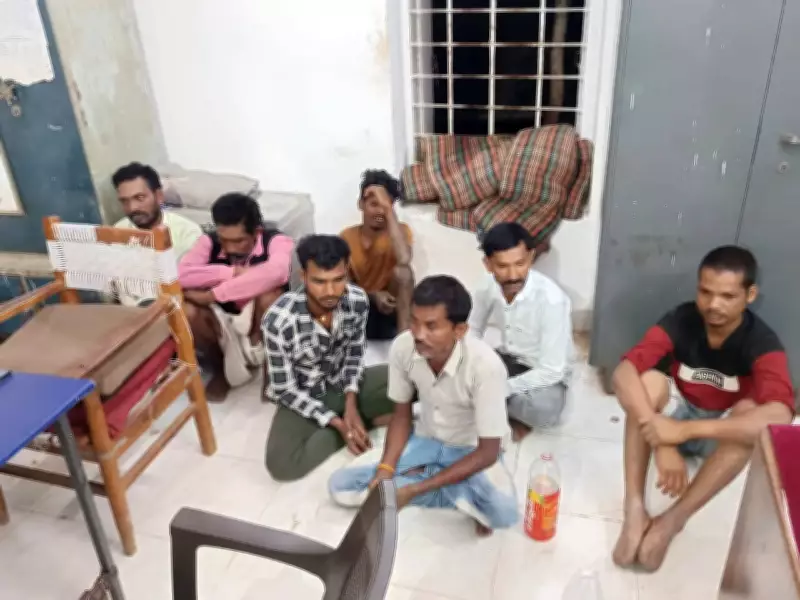
RAIPUR: In a major crackdown on child trafficking and bonded labour, 13 children from the primitive Baiga tribe—one of India's Particularly Vulnerable Tribal Groups (PVTGs)—were rescued from hazardous cattle-rearing units in Chhattisgarh's Kabirdham district. Eight alleged traffickers were arrested late Wednesday.
The children, aged between 8 and 15, had reportedly been taken from their villages around seven to eight months ago after traffickers lured their families with promises of money and better living conditions. Police stated that the children were forced to work long hours in cattle units near the Kanha National Park belt and were paid barely Rs 1,000 to Rs 2,000 per month.
The joint operation was carried out by Kabirdham police, Childline, the Women and Child Development Department, and AVA of Just Rights for Children, a Delhi-based NGO. They had tracked the traffickers' movements for nearly two weeks before alerting the police.

Kabirdham Superintendent of Police Dharmendra Singh said police acted immediately after receiving credible inputs. “These children were forced into bonded labour and were living in extremely exploitative conditions. An FIR has been lodged, and efforts are on to identify and arrest all those involved in the network. We will ensure that the accused are brought to justice,” he said.
The rescue unfolded in stages. Officials first rescued four children from one cattle-rearing unit. Those children then helped the team identify other locations where more minors were allegedly held. By the end of the day-long operation, 13 children had been rescued from four places in the district.
According to preliminary complaints, some children were allegedly “bought” for as little as Rs 5,000 to Rs 6,000. Police are also probing allegations that parents of some minors were paid money by traffickers before the children were taken away for work. Officials said the role of every person involved—recruiters, transporters, employers, and middlemen—is being examined.
The case has once again exposed the vulnerability of forest-dwelling tribal communities to trafficking networks. Activists said traffickers often target families struggling with poverty, isolation, and lack of access to education, offering small cash advances before pushing children into exploitative labour.
Manish Sharma, senior director of AVA, said the rescue points to a disturbing pattern. “Trafficking networks prey on the extreme vulnerability of marginalised tribal communities. It is deeply disturbing that children as young as eight were forced into hazardous work. The immediate police response is commendable, but the focus must now be on rehabilitation, compensation, education, and ensuring these children get back a safe childhood,” he said.
After the late-night rescue, the children were shifted to child care institutions and are being produced before the Child Welfare Committee for further care and rehabilitation. Police have invoked provisions related to human trafficking, bonded labour, child labour, and the Juvenile Justice Act against the accused.
Officials said the investigation is being expanded to find whether more children from remote Baiga villages were similarly trafficked to cattle units or other labour sites. The district administration is also expected to map vulnerable villages and strengthen surveillance to prevent repeat trafficking.