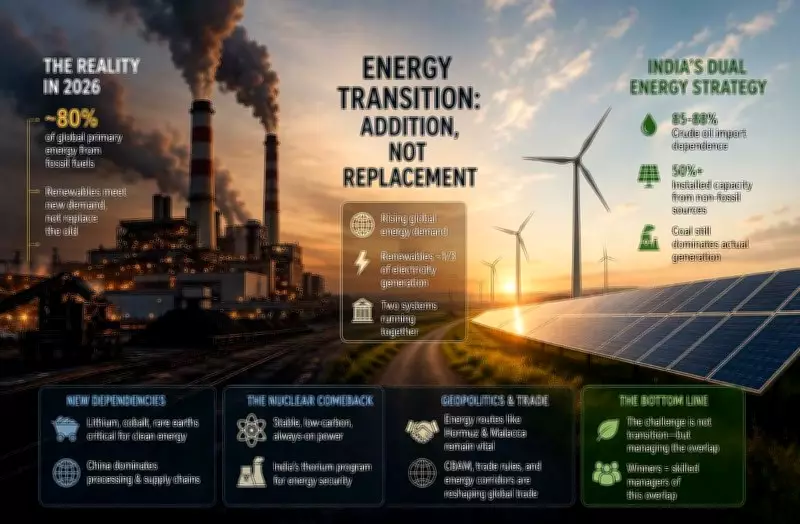
Energy is no longer merely a domestic policy problem; it is actively rewriting the rules of global trade. Imagine a house where the family is installing solar panels on the roof while the gas furnace in the basement still runs at full blast. The solar panels are new, efficient, and promise a greener future. But the furnace is not being dismantled. It is not even being turned down. This, in essence, is the global energy story of 2026, and it is a story that demands far more nuance than the slogans of either the climate optimist or the fossil-fuel apologist.
The Reality of Energy Expansion
Beneath the solar surge, fossil fuels are not retreating. They are expanding alongside renewables, and that changes the entire equation. According to recent data, global renewable energy capacity has grown by over 20% in the past year, yet coal and natural gas consumption have also hit record highs. This dual expansion is driven by rising energy demand in developing economies and the intermittent nature of renewables, which still require reliable backup power.
Implications for Global Trade
The energy transition is reshaping international trade dynamics. Countries rich in fossil fuels are diversifying their exports, while nations investing heavily in renewables are gaining new leverage. For instance, the European Union's carbon border adjustment mechanism is influencing trade flows, and China's dominance in solar panel manufacturing is altering supply chains. The result is a complex web of dependencies that neither side can fully control.

A Nuanced Path Forward
Rather than a simple replacement, the energy transition is an addition. This means policymakers must focus on integration, not elimination. Investments in grid storage, nuclear power, and carbon capture are essential to bridge the gap. The narrative of a clean energy revolution must acknowledge the reality of fossil fuels' persistence, urging a pragmatic approach that balances climate goals with economic stability.