

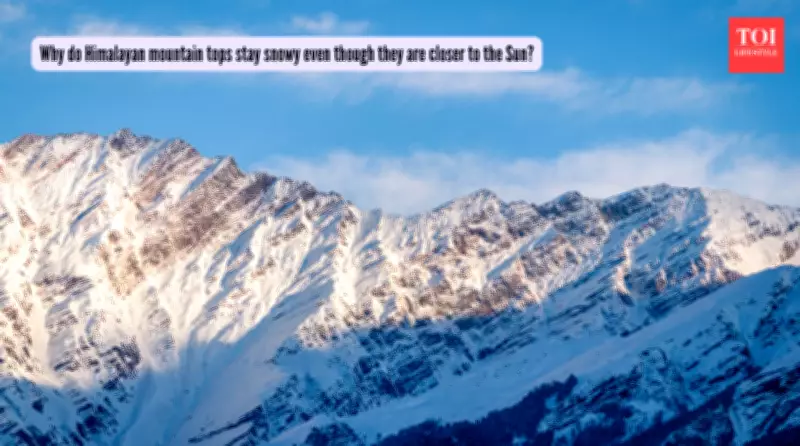
The Paradox of Snowy Peaks: Closer to Sun, Yet Frozen Year-Round
High mountain summits present a captivating natural paradox, dazzling with permanent snowcaps despite their proximity to the Sun compared to lower elevations. This phenomenon stands as one of Earth's most fascinating climatic tricks, driven by a combination of extreme altitude chill, atmospheric dynamics, and the reflective power of snow itself.
The Atmospheric Shield: More Than Just Distance from Sun
Contrary to simple intuition, being closer to the Sun doesn't guarantee warmth at high altitudes. The Earth's atmosphere functions as a protective shield, composed of gases like oxygen and water vapor that filter solar radiation while trapping nighttime heat through the greenhouse effect. This delicate balance maintains surface temperatures, though human activities have amplified certain gases, contributing to global warming concerns.
Why Thin Air Means Colder Temperatures
Gravity concentrates atmospheric gases near the Earth's surface, creating thinner air with fewer molecules at higher elevations. This atmospheric thinning explains why Everest climbers require oxygen tanks and, more crucially, why temperatures drop significantly with altitude.

Two primary mechanisms drive this cooling effect:
- Reduced Molecular Collisions: Fewer gas molecules mean fewer collisions that generate heat energy.
- Poor Heat Retention: Less dense air traps warmth inefficiently, allowing heat to escape rapidly.
This combination creates a temperature decline of approximately 6.5°C per 1,000 meters of elevation, ensuring precipitation falls as snow rather than rain at sufficient heights.
The Reflective Power of Snow: Nature's Cooling Blanket
Snow-covered surfaces possess remarkable reflective properties, effectively bouncing incoming solar radiation back toward space. This albedo effect creates a self-reinforcing cooling cycle where snow reflects sunlight, maintains low temperatures, and preserves more snow accumulation. The snow line—the elevation above which snow persists year-round—varies by latitude but remains a critical threshold for permanent ice caps.
How Mountains Accumulate and Preserve Snow
High elevations intercept moisture from rising air currents, resulting in substantial snowfall that accumulates into glaciers and ice fields. Several factors enhance snow preservation:
- North-Facing Slopes: In the Northern Hemisphere, these aspects receive less direct sunlight, maintaining colder conditions.
- Steep Terrain: While avalanches occur on gentle slopes, steep faces often shed excess snow, preventing melt from solar exposure.
- Glacial Storage: Compacted snow transforms into glacial ice, storing cold energy deep within mountain ranges.
Ecological and Climatic Significance
Beyond their visual majesty, snowy peaks serve vital environmental functions. They feed major river systems through seasonal meltwater, influence regional weather patterns, and demonstrate Earth's capacity to maintain temperature extremes despite global warming pressures. From the Himalayas to the Alps, these frozen summits stand as enduring symbols of atmospheric science and natural resilience.






