

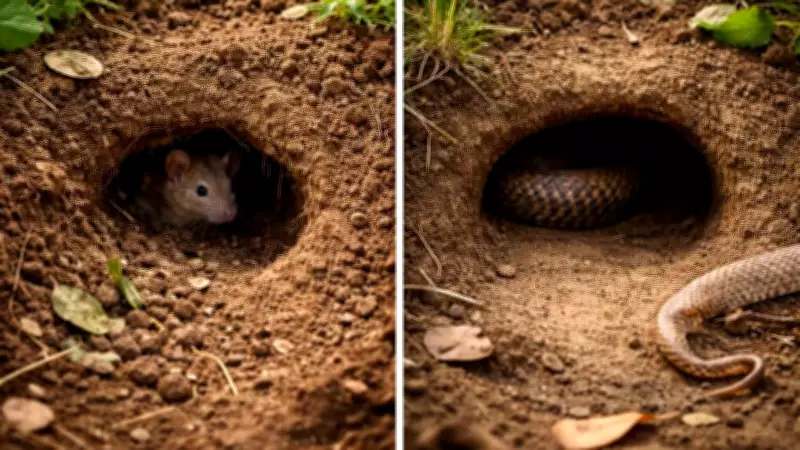
Snake Hole vs Rodent Hole: Essential Guide to Identifying Garden Burrows
If you discover a hole in your garden, your immediate concern might be about what creature could be residing in your backyard. While it may appear to be a minor issue, accurately determining whether the hole belongs to a snake or a rodent is crucial information for safety and garden management. At first glance, the holes created by snakes and rodents can seem similar, but in reality, these animals form their burrows in distinctly different ways. Recognizing the telltale signs can help you identify the hole's origin, preventing unnecessary panic and guiding appropriate actions.
How Snake Holes and Rodent Holes Are Formed
The primary distinction lies in how these holes are created. Rodents dig holes as part of their natural burrowing behavior, using their claws and teeth to excavate soil. This burrowing often results in a larger tunnel network that serves multiple purposes, including shelter, food storage, and movement. In contrast, snakes do not dig holes themselves. Instead, they utilize existing holes made by other animals, meaning a "snake hole" is typically not dug by a snake but rather occupied by one.
Snake Hole vs Rodent Hole: Size and Appearance
Rodent holes are generally wider and more irregular in shape, typically measuring two to three inches or more in diameter. The edges of these holes often appear rough and may show signs of recent digging, such as fresh soil displacement. On the other hand, snake holes tend to look neater and more pristine. Since snakes do not engage in digging, the holes they inhabit remain undamaged, featuring smooth edges and a clean appearance.

Soil and Surface Clues Around the Hole
One of the simplest methods to differentiate between a rodent's hole and a snake's hole is to examine the surrounding area. Rodents usually leave clear evidence of their digging activities, such as:
- Loose soil scattered near the entry point
- Small mounds or hills of dirt
- Visible disturbances in the ground
In contrast, a snake's hole typically has little to no loose soil around it, as the snake merely uses a pre-existing space without altering it.
Signs of Activity Nearby
Even if the creature itself is not visible, other indicators can reveal what type of animal uses the burrow. For rodent burrows, you might observe:
- Multiple holes or interconnected tunnels
- Pathways or trails in the ground
- Damaged plants with chew marks
For snake burrows, common signs include:
- Shed skin fragments
- Smooth tracks leading to the hole
- Droppings that are dark in color with a white tip
Why Snakes Use Existing Burrows
Snakes lack the ability to dig complex burrows, so they rely on existing structures created by rodents or other animals. These burrows provide snakes with essential benefits, such as protection from predators, a stable temperature environment, and a base for resting or hunting. Consequently, holes occupied by snakes are always clean and unchanged, making them easily distinguishable from the dug-out burrows of rodents.
When You Should Be Cautious
Not every hole in your garden poses a threat, but it is vital to exercise caution. Depending on your geographical location, some snakes that inhabit these holes may be venomous. It is strongly advised not to put your hand near or inside any hole without first identifying its contents to ensure safety.
What These Holes Say About Your Garden
The presence of underground holes often indicates a small, functioning ecosystem. Rodents are typically attracted to areas with abundant food sources, soft soil, and ample shelter. In turn, these rodents can attract snakes, which prey on them. This means that spotting one type of animal may account for the presence of another. Maintaining your garden environment through proper care and management is an effective way to control both rodent and snake activity, promoting a balanced and safe outdoor space.






