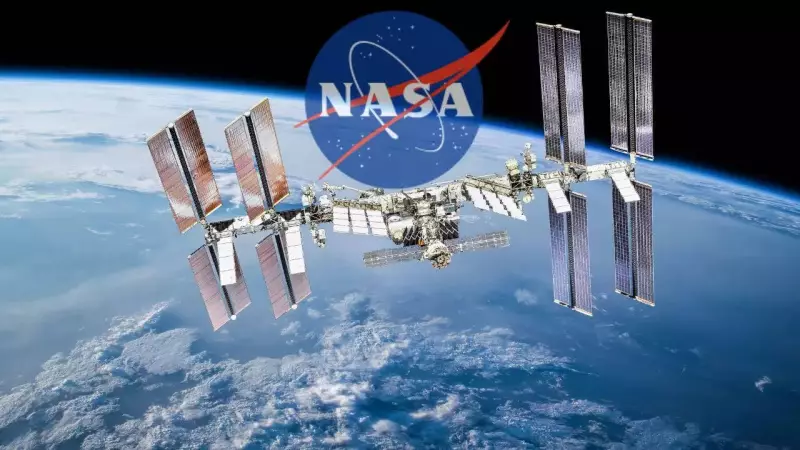
The latest guardian of our planet's oceans is now in orbit. Sentinel-6B, successfully launched into space on November 17, marks a significant advancement in humanity's ability to monitor the vital signs of Earth. It is the newest satellite in a crucial series that NASA and its international partners have used to record sea levels meticulously since 1992.
A Global Mission for a Global Challenge
Sentinel-6B is not a solitary endeavor but the result of a powerful international collaboration. It is the second satellite in the Sentinel-6/Jason-CS (Continuity of Service) mission, a joint project spearheaded by NASA, the European Space Agency (ESA), EUMETSAT, and the National Oceanic and Atmospheric Administration (NOAA). The mission also benefits from the financial support of the European Commission and the technical expertise of France's space agency, CNES.
Following its launch, Sentinel-6B has begun a critical data cross-calibration phase with its twin, Sentinel-6 Michael Freilich, which was launched earlier. This ensures the continuity and accuracy of a multi-decade dataset that is indispensable for science and society.

Six Crucial Benefits of the Sentinel-6B Mission
According to NASA, the data from this satellite will deliver direct and wide-ranging advantages. Here are six key things to know about its impact:
1. Unprecedented Ocean Coverage: The satellite will provide vital data on approximately 90% of the Earth's ocean surface. This comprehensive view is foundational for all subsequent applications, from weather prediction to understanding long-term climate trends.
2. Safeguarding Coastal Communities: The mission's direct observation of sea levels delivers information critical to protecting coastlines, where nearly half the world's population, including millions in India, resides. It helps planners understand which areas are most vulnerable to flooding, erosion, and saltwater intrusion into freshwater supplies—threats to both farmland and drinking water.
3. Enhancing Weather and Hurricane Forecasting: For India, frequently battered by cyclones, this data is a game-changer. It allows meteorologists to make more accurate weather predictions and significantly enhances hurricane forecasts, particularly in predicting the risk of sudden storm intensification. This leads to better disaster preparedness and saves lives.
4. Supporting National Security and Infrastructure: Sentinel-6B's observations will empower decision-makers to better protect critical coastal military and civilian infrastructure from events like nuisance flooding. It supports national defence and commercial navigation by providing precise, near-real-time data on ocean and atmospheric conditions for weather models.
5. A Foundation for Future Exploration: Interestingly, the satellite's work has implications beyond Earth. By meticulously tracking changes in ocean tides, the data can improve our understanding of the gravitational relationship between Earth and the Moon. This knowledge can be applied to planning future lunar exploration missions.
6. A Model of International Cooperation: The decades-long dataset is a testament to successful global partnership. By pooling capabilities, resources, and expertise, the collaboration between NASA, ESA, EUMETSAT, CNES, and NOAA has created cost-effective solutions that deliver high-impact data to governments, industries, and researchers worldwide.
A Long-Term Legacy for India and the World
The launch of Sentinel-6B is more than just another satellite deployment; it is an investment in our collective future. The long-term record it helps maintain is essential for improving public safety, guiding sustainable city planning for coastal megacities, and protecting economic and environmental interests. For a coastal nation like India, the insights from this mission will be invaluable in building resilience against the escalating challenges of climate change and sea-level rise.