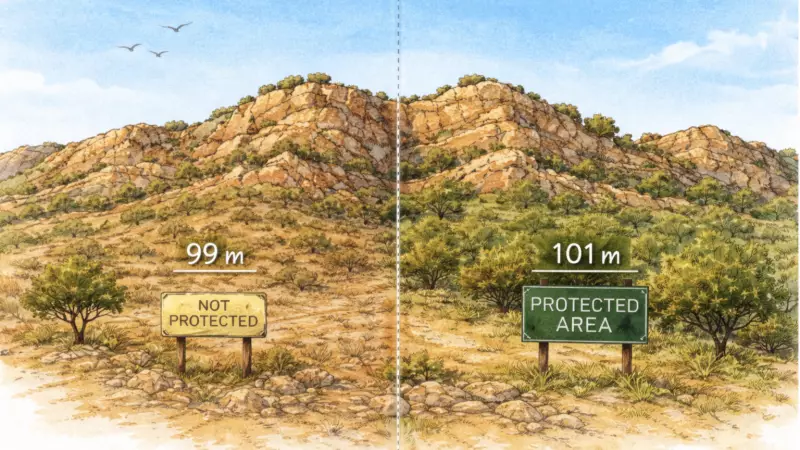
A seemingly technical question about how to define a mountain range has erupted into a major public controversy, thrusting India's ancient Aravalli Hills back into the legal and environmental spotlight. The debate now centers on conservation, mining activities, and the enforcement of ecological laws.
A Landmark Definition from the Supreme Court
On November 20, 2025, the Supreme Court of India took a decisive step. It accepted a uniform, policy-level definition for the Aravalli Hills and Ranges. This crucial definition was proposed by a committee led by the Ministry of Environment, Forest and Climate Change (MoEFCC). The court's acceptance aims to bring clarity to a long-standing and legally fraught issue.
The core of this new definition is a specific 100-metre rule. This rule is designed to create a clear geographical and legal boundary for the Aravallis. Its primary purpose is to regulate and control mining operations, a contentious subject that has seen numerous court battles over the years.

Why This Definition Matters
The legal ambiguity over what precisely constitutes the Aravalli range has been a significant hurdle for conservation efforts. Without a clear definition, enforcement against illegal mining and land degradation has been challenging. The newly accepted criteria move the discussion from technical committees to the heart of public policy.
This decision has immediate implications for the states of Rajasthan, Haryana, Delhi, and Gujarat, where the Aravalli range is located. Mining interests, environmental activists, and state governments are all keenly observing how this 100-metre rule will be implemented on the ground.
Broader Implications for Conservation and Enforcement
The Supreme Court's intervention highlights the ongoing national conversation about balancing economic development with ecological preservation. The Aravallis, considered one of the world's oldest mountain ranges, act as a critical green barrier against desertification and are a vital groundwater recharge zone.
By accepting a scientific definition, the court has provided a stronger legal tool for enforcement agencies. The move is seen as a potential turning point that could strengthen conservation measures across the vulnerable ecosystem. However, it also sets the stage for further scrutiny of mining leases and land use in the region, ensuring the debate will remain at the forefront of India's environmental agenda.