The Supreme Court of India has cast significant doubt on the prevailing narrative that places the primary blame for Delhi's severe air pollution on stubble burning by farmers. During a recent hearing, the apex court raised critical questions about the oversimplification of a complex environmental crisis.
Court Highlights Unfair Targeting of Farmers
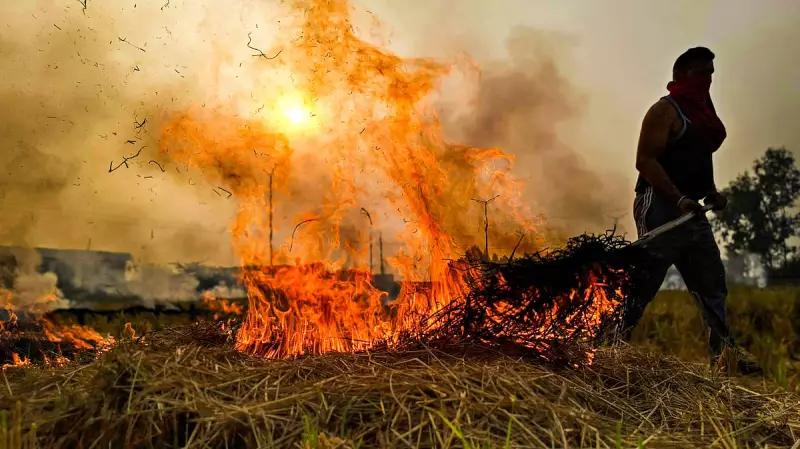
Chief Justice of India (CJI) Uday Umesh Lalit, heading the bench, made a poignant observation that has shifted the discourse. CJI Kant pointed out that it is remarkably easy to blame farmers who engage in stubble burning when they are not represented before the Court or in a position to defend themselves. This statement, made on December 1, 2025, underscores a judicial concern over the one-sided attribution of guilt in the public and political debate surrounding the capital's toxic air.
The bench explicitly questioned whether the practice of stubble burning in neighboring states like Punjab and Haryana is the sole, or even the primary, contributor to the hazardous smog that engulfs the National Capital Region (NCR) every winter. The court's skepticism suggests a recognition of multiple, year-round pollution sources that are often overlooked.

Seeking a Holistic View on Pollution Sources
The judicial remarks imply a need for a more comprehensive and scientific approach to tackling Delhi's air quality emergency. While agricultural residue burning is a visible and seasonal factor, the court hinted that other persistent contributors demand equal, if not more, urgent attention.
These perennial sources include:
- Vehicle emissions from the millions of cars, trucks, and two-wheelers on Delhi's roads.
- Industrial pollution from factories operating within and around the city.
- Dust from rampant construction and infrastructure projects.
- Local waste burning and other urban activities.
By questioning the singular focus on farmers, the Supreme Court has effectively called for a re-evaluation of the pollution control strategy. It highlights the risk of using a vulnerable and economically stressed community as a scapegoat for a systemic failure of environmental governance and urban planning.
Implications for Policy and Public Discourse
The court's intervention is likely to have far-reaching consequences. It challenges policymakers to move beyond short-term, blame-oriented solutions and develop a sustainable, multi-pronged action plan. The observation emphasizes that a lasting solution requires addressing all pollution sources with equal rigor, supported by data and equitable measures.
Furthermore, it brings a measure of justice to the farming community, which has long argued that the financial and logistical burdens of managing crop residue are immense without adequate government support and affordable alternatives. The court's stance adds judicial weight to the demand for constructive solutions rather than punitive blame.
As the hearing progresses, all eyes will be on the directives the Supreme Court issues. Its call for a more balanced analysis could be the catalyst needed for a more honest and effective fight against Delhi's chronic air pollution crisis, ensuring responsibility is shared and solutions are holistic.