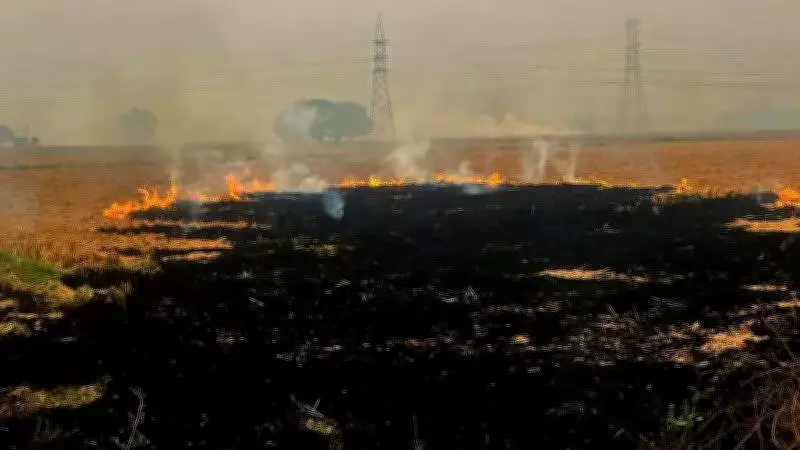
Bathinda: Punjab recorded 72 farm fire cases on Sunday. In comparison, Haryana reported 18 cases on the same day. However, Madhya Pradesh remains the national leader in stubble burning, with a staggering 916 cases reported on Sunday alone.
Nationwide, farm fire cases have surpassed 41,500 this season. Madhya Pradesh accounts for more than 69% of these incidents. According to data from the CREAMS monitoring consortium, the state has also reported over 51% of all crop residue burning cases over the last five years. It is followed by Uttar Pradesh, Punjab, and Haryana in terms of cumulative stubble burning incidents.
The data highlights a persistent problem of agricultural residue burning, which contributes significantly to air pollution in northern India. Despite various government initiatives and awareness campaigns, the practice continues, particularly in states like Madhya Pradesh, where the number of cases remains alarmingly high.

Authorities have urged farmers to adopt alternative methods of crop residue management, such as using machinery for in-situ management or converting stubble into useful products. However, the lack of affordable alternatives and time constraints during the sowing season often lead farmers to resort to burning.
The CREAMS monitoring consortium, which tracks farm fires using satellite data, continues to provide real-time updates to help authorities take immediate action. The data is also used to assess the effectiveness of policies aimed at reducing stubble burning.
As the winter season approaches, the impact of these farm fires on air quality in cities like Delhi, Chandigarh, and others in the region is expected to worsen. Stubble burning is a major contributor to the seasonal spike in pollution levels, often leading to health advisories and temporary school closures.
Experts emphasize the need for long-term solutions, including financial incentives for farmers, promotion of crop diversification, and investment in technology for residue management. Without such measures, the cycle of stubble burning and its adverse effects on public health and the environment is likely to continue.