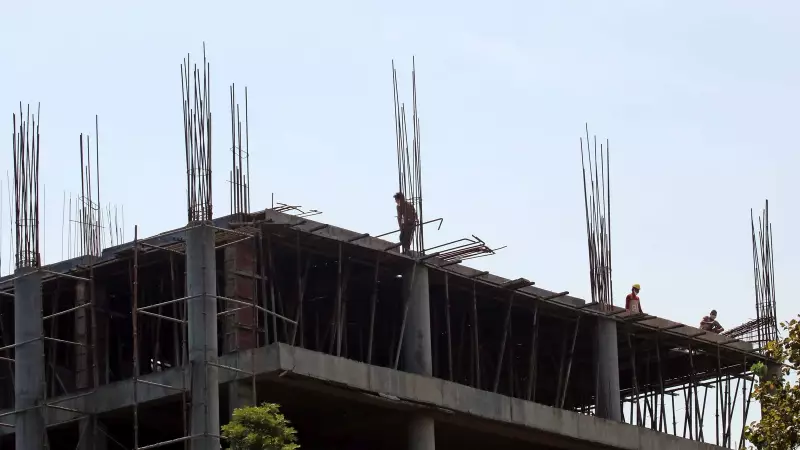
Delhi Citizens Rally to Protect City's Green Lungs
Hundreds of concerned residents gathered in South Delhi's Vasant Kunj neighborhood on Sunday, November 30, 2025, to voice their strong opposition against a multi-storey construction project they claim threatens Delhi's fragile ecological zone. The protest represents a significant grassroots movement aimed at preserving what environmentalists call the capital's green lungs.
The Contested Land and Legal Battles
The controversy centers around a plot measuring 5,353 square metres, with a substantial portion—4,553 square metres—falling within Delhi's Morphological Ridge. This geological formation forms part of the larger Aravalli ecosystem, which plays a crucial role in maintaining the city's environmental balance.
Although the area hasn't received formal forest notification, multiple court rulings have recognized the Morphological Ridge's environmental significance. These judicial decisions mandate that any construction activity in such ecologically sensitive zones requires explicit clearance from the Supreme Court.

The project has sparked parallel legal challenges. Environmental activist Bhavreen Kandhari has filed a contempt petition in the Supreme Court, while residents of Pocket B-1 in Vasant Kunj have registered an appeal with the National Green Tribunal, creating a multi-front legal battle against the development.
Community Voices and Environmental Concerns
Aby Johnson, General Secretary of the RWA B-1 in Vasant Kunj, articulated the community's perspective: This protest represents the culmination of our year-long struggle to prevent Delhi's ridge from being privatized and falling into the wrong hands. While the legal proceedings continue, we want to remind Delhi residents that protecting our green spaces represents a crucial battle for the city's environmental health, especially when air quality remains a persistent concern.
Environmentalist Bhavreen Kandhari emphasized the urgency of preserving existing natural resources: Trees currently stand as our primary defense against air pollution. While future solutions like clean energy and improved public transportation are important, we must do everything possible to protect the natural safeguards we already have.
Project Details and Institutional Disagreements
The contested development, being undertaken by RR Texknit, plans substantial construction across a 25,650 square metre built-up area. The project design includes three basement levels, a stilt floor, and nine upper floors reaching a maximum height of 33.25 metres.
The proposed residential complex would contain 138 dwelling units, comprising 74 main apartments, 32 units designated for Economically Weaker Sections (EWS), and 32 Community Service Provider (CSP) units.
Adding complexity to the situation, government agencies themselves disagree about the land's classification. While the Delhi Development Authority (DDA) and Municipal Corporation of Delhi (MCD) have categorized the plot as residential land, the Forest Department maintains it forms part of the Morphological Ridge—an extension of the geological structure known as the Delhi Ridge.
The protest and ongoing legal challenges highlight the growing tension between urban development needs and environmental conservation priorities in India's capital city, particularly as residents grapple with persistent air quality issues that make green spaces increasingly valuable.