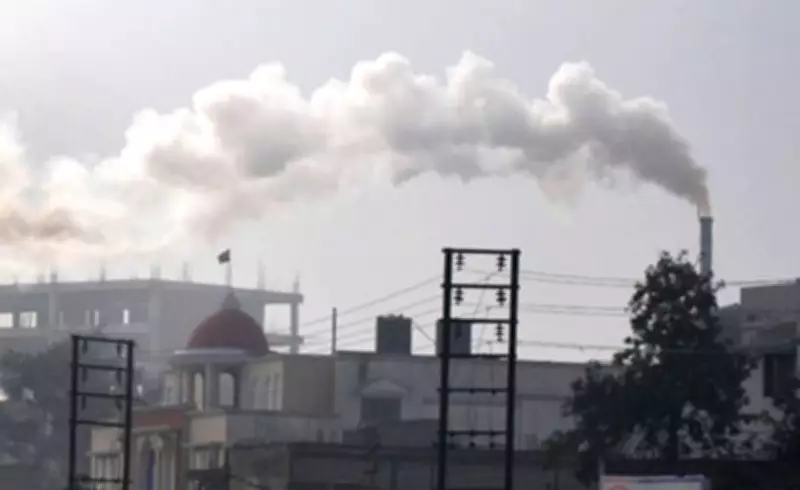
Pakistan Emerges as World's Most Polluted Nation, India Ranks Sixth in Global Air Quality Study
According to the 2025 edition of the World Air Quality Report published by IQAir, a Swiss air quality technology company, Pakistan has been identified as the most polluted country globally. Bangladesh and Tajikistan follow closely in the rankings, while India occupies the sixth position among the most polluted nations.
Comprehensive Data Analysis from Global Monitoring Stations
The report is based on an extensive analysis of data collected from monitoring stations across 9,446 cities in 143 countries, regions, and territories. This data was sourced from over 40,000 regulatory monitoring stations and low-cost sensors managed by a diverse array of contributors, including government agencies, universities, non-profit organizations, private enterprises, and engaged citizen scientists worldwide.
Alarming Global Trends and City-Specific Findings
The study reveals that only 13 countries or territories met the World Health Organization's annual average PM2.5 guideline. These include French Polynesia, Puerto Rico, the US Virgin Islands, Barbados, New Caledonia, Iceland, Bermuda, Reunion, Andorra, Australia, Grenada, Panama, and Estonia. In stark contrast, 130 out of 143 countries or territories, accounting for 91 percent, exceeded the WHO guideline value.

The five most polluted countries identified in the report are Pakistan, Bangladesh, Tajikistan, Chad, and the Democratic Republic of the Congo. Notably, the world's 25 most polluted cities are all located in India, Pakistan, and China, with India home to three of the four most polluted urban areas.
Among cities, Uttar Pradesh's Loni is the most polluted, followed by Hotan in China and Byrnihat in Meghalaya, India. Delhi ranks fourth globally, with Faisalabad in Pakistan taking the fifth spot. On a positive note, Nieuwoudtville in South Africa was recognized as the world's cleanest city, with an annual average PM2.5 concentration of 1.0 µg/m³.
Impact of Wildfires and Long-Term Health Concerns
The report highlights that in 2025, wildfire activity severely impacted regions that have historically experienced relatively low PM2.5 levels. As a result, only 14 percent of global cities met the WHO annual PM2.5 guideline in 2025, compared to 17 percent in 2024. This downward trend serves as a stark reminder that maintaining clean air requires active stewardship and a proactive strategy, regardless of historical performance.
Maintaining clean air is a long-term commitment to incremental improvement rather than a single policy goal achieved or annual target concentration reached, the report emphasized. It also pointed out the severe health implications, particularly for children, stating that the respiratory damage sustained during developmental years is often irreversible. As the demographic with the least agency in these environmental shifts, children are left to bear the permanent health costs of air quality they did not choose.
Comparative Global Rankings
In the broader context, China ranks 20th among the most polluted countries, while the United States is at the 120th spot and the United Kingdom at the 110th. This data underscores the varying levels of air quality challenges faced by nations across the globe, with South Asia emerging as a particularly affected region.