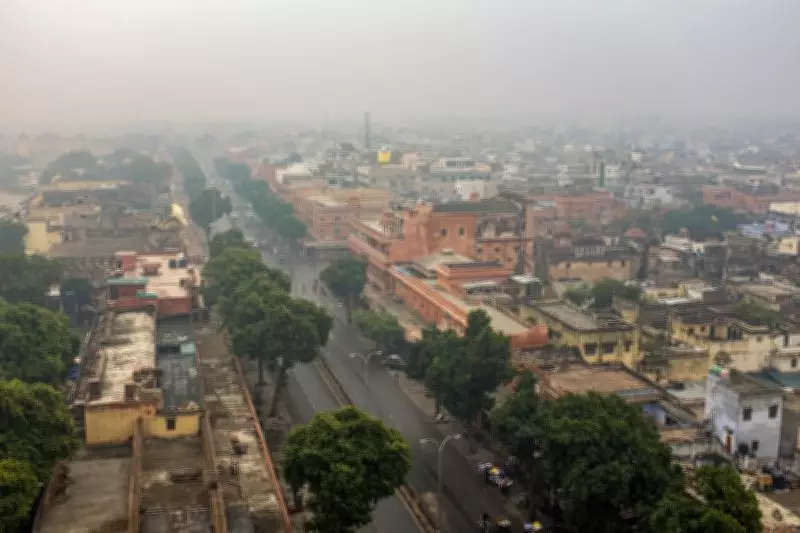
Pakistan Emerges as World's Most Polluted Nation in 2025, India's Loni Tops City List
According to the latest annual report from Swiss air quality monitoring firm IQAir, Pakistan has been ranked as the most polluted country globally in 2025. The data reveals that concentrations of hazardous fine particulate matter, known as PM2.5, in Pakistan were up to 13 times higher than the World Health Organization's recommended safety level of less than 5 micrograms per cubic metre.
Global Air Quality Findings and Key Statistics
The comprehensive report highlights that a staggering 130 out of 143 monitored countries and territories failed to meet the WHO's stringent air quality guideline in 2025. This marks a significant deterioration from previous years, underscoring a growing environmental crisis. Only 13 countries and territories managed to maintain average PM2.5 levels within the WHO standard, a slight increase from seven in 2024.
Following Pakistan on the list of most polluted countries were Bangladesh and Tajikistan, securing the second and third positions respectively. Chad, which held the top spot as the smoggiest country in 2024, dropped to fourth place in 2025. However, this decline is attributed to data gaps rather than actual improvements, as the United States discontinued a global monitoring program in March 2025 due to budget constraints.

Christi Chester Schroeder, the lead author of the IQAir report, emphasized that the shutdown of the U.S. monitoring initiative created significant information voids. "The loss of the data in March made it appear there was a significant drop in PM2.5 levels in Chad, but the fact of the matter is that we don't know," Schroeder stated. This decision eliminated a crucial data source for many smog-prone nations, leading to the exclusion of countries like Burundi, Turkmenistan, and Togo from the 2025 report due to insufficient information.
Most Polluted Cities and Regional Trends
India's Loni was identified as the world's most polluted city in 2025, with average PM2.5 levels reaching 112.5 micrograms per cubic metre. It was closely followed by Hotan in China's northwestern Xinjiang region, which recorded 109.6 micrograms. Alarmingly, all of the top 25 most polluted cities worldwide were located in India, Pakistan, and China, highlighting severe air quality issues in these regions.
Only 14 percent of cities globally met the WHO air quality standard in 2025, a decrease from 17 percent in the previous year. Factors contributing to this decline included Canadian wildfires, which drove up PM2.5 concentrations across the United States and even impacted parts of Europe.
Positive Developments and Reductions in PollutionDespite the grim overall picture, some countries reported improvements. Nations such as Australia, Iceland, Estonia, and Panama successfully maintained PM2.5 levels within the WHO guideline. Additionally, Laos, Cambodia, and Indonesia saw significant reductions in PM2.5 concentrations compared to 2024, largely due to wetter and windier La Nina weather conditions. Mongolia experienced a notable 31 percent drop in average PM2.5 levels, bringing it down to 17.8 micrograms per cubic metre.
In total, 75 countries reported lower PM2.5 levels in 2025 compared to the previous year, while 54 recorded higher average concentrations. This mixed trend underscores the complex and varied nature of global air pollution challenges, necessitating continued monitoring and international cooperation to address environmental health risks.