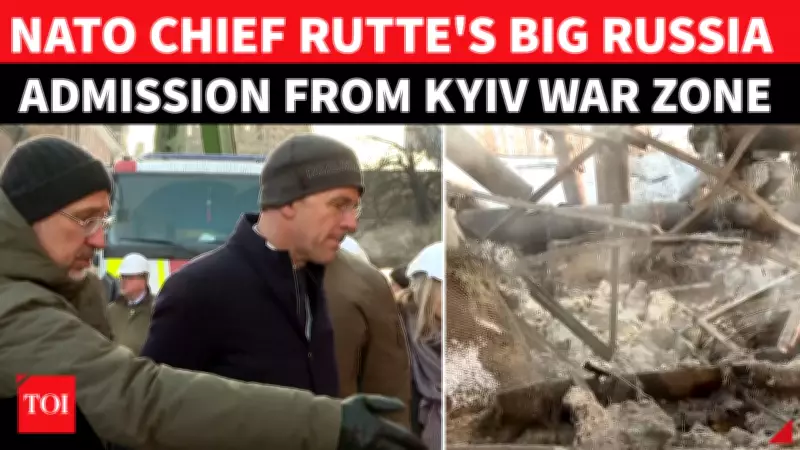
NATO Chief Raises Concerns Over Putin's Peace Commitment Following Devastating Kyiv Strike
NATO Secretary General Mark Rutte has expressed serious doubts about Russian President Vladimir Putin's commitment to achieving peace in Ukraine, following a devastating overnight bombardment of the capital Kyiv. Rutte's comments came during an urgent visit to the Ukrainian capital, where he witnessed firsthand the destruction caused by Russian missile strikes on critical energy infrastructure.
High-Profile Visit to Damaged Civilian Facility
Accompanied by Ukrainian First Deputy Prime Minister Denys Shmyhal, the NATO chief toured the severely damaged Darnytskyi district heat power plant, which Ukrainian authorities confirmed served exclusively civilian purposes. The facility, vital for providing heating to Kyiv residents during harsh winter conditions, sustained significant structural damage from precision Russian missile attacks.
Ukrainian officials have categorically labeled the assault as a war crime, emphasizing that targeting civilian energy infrastructure violates international humanitarian law and represents a deliberate escalation in Russia's campaign against Ukrainian population centers.

Warning Signals Ahead of Peace Negotiations
During his assessment of the damage, Secretary General Rutte issued a stark warning about the timing and implications of the attacks. "These strikes send a really bad signal ahead of potential peace talks," Rutte stated, suggesting that Russia's continued aggression undermines diplomatic efforts to resolve the conflict through negotiation.
The NATO chief's remarks highlight growing international concern that Moscow may be using military pressure to gain leverage in any future peace discussions, rather than demonstrating genuine interest in de-escalation or conflict resolution.
Ukrainian Leadership Calls for Enhanced Defensive Capabilities
Meanwhile, Ukrainian President Volodymyr Zelenskyy has intensified his appeals to Western allies for additional air defence systems. The latest attacks on Kyiv's energy infrastructure demonstrate the urgent need for more sophisticated missile interception technology to protect civilian areas from Russian aerial assaults.
The timing of Rutte's visit underscores NATO's continued support for Ukraine's sovereignty and territorial integrity, even as the alliance carefully navigates its direct involvement in the conflict. The Secretary General's presence in Kyiv during active hostilities sends a powerful message of solidarity with the Ukrainian people and government.
Broader Implications for European Security
This incident occurs against a backdrop of escalating tensions between Russia and Western nations, with energy infrastructure becoming an increasingly frequent target in the conflict. The attack on civilian heating facilities during winter months raises humanitarian concerns and demonstrates the conflict's evolving tactics.
As peace negotiations remain stalled, Rutte's doubts about Putin's commitment to genuine dialogue reflect broader Western skepticism about Russia's strategic intentions in Ukraine. The NATO chief's assessment suggests that military pressure continues to be Moscow's preferred approach, despite diplomatic overtures and international calls for ceasefire.
The situation in Kyiv highlights the complex dynamics of the Ukraine conflict, where battlefield developments directly influence diplomatic possibilities. With civilian infrastructure under sustained attack and Ukrainian leadership calling for enhanced defensive capabilities, the path to meaningful peace negotiations appears increasingly challenging.