Nagpur Airport Confronts Escalating Winter Fog Challenges, January Emerges as Peak Month
A comprehensive long-term climatological investigation has identified a significant surge in winter fog activity at Dr Babasaheb Ambedkar International Airport in Nagpur, presenting a major operational concern for aviation authorities. The study highlights that this enhanced fog phenomenon has become particularly pronounced in recent years, with January standing out as the most severely impacted month during the winter season.
Clear Increase in Fog Occurrence Since 2018
The assessment reveals a distinct upward trend in fog frequency at Nagpur airport during recent winter periods, especially noticeable after 2018. This escalation has intensified low-visibility conditions throughout the peak winter months, creating substantial challenges for airport operations and flight management.
January has been identified as the most problematic month, accounting for approximately 79 hours of fog between 2005 and 2025. This duration is more than double the fog hours recorded in December and substantially higher than those observed in February. The prolonged persistence of fog during January mornings has significantly disrupted flight schedules, reduced runway availability, and diminished overall airport capacity according to the research findings.

Scientific Team and Research Methodology
The study was conducted under the leadership of scientist Rizwan Ahmed, who serves as director at the Airport Meteorological Office in Nagpur. The research team included notable contributors such as RMC Nagpur head R Balasubramanian, Shashikant Mishra from the National Weather Forecasting Centre in New Delhi, Shivam Mishra from the AMO Nagpur, S Mulla from the Climate Research and Services division in Pune, and RK Jenamani from the India Meteorological Department in Delhi.
The authors emphasize that their findings provide crucial insights for enhancing fog forecasting capabilities at Nagpur airport, which could lead to improved operational planning and safety measures.
Comprehensive Assessment of Fog Characteristics
The research presents a detailed climatological evaluation of various fog attributes at this major central Indian aviation hub, including:
- Frequency patterns across different winter months
- Intensity variations between dense, very dense, and shallow fog
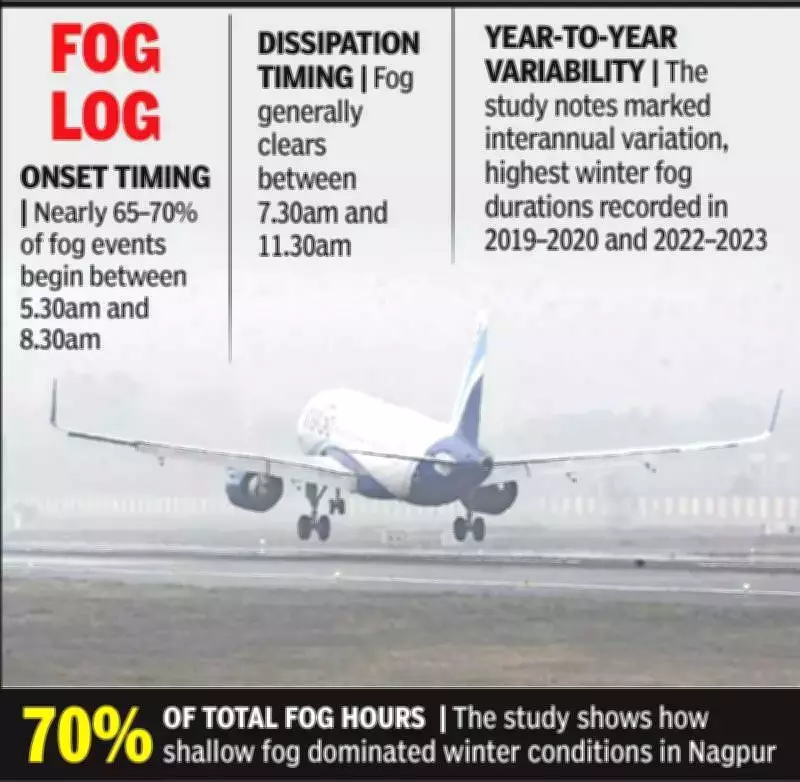
- Onset and dissipation timing characteristics
- Inter-annual variability in fog occurrence
"Fog remains one of the most critical weather hazards for aviation operations," explained lead researcher Rizwan Ahmed. "It dramatically reduces visibility along runways and approach paths, forcing airlines to implement delays, diversions, and low-visibility procedures. These conditions substantially increase the workload for pilots, air traffic controllers, and ground staff while compromising operational efficiency."
Seasonal Fog Patterns and Operational Implications
The study indicates that shallow fog dominates winter conditions at Nagpur airport, contributing to over 70% of total fog occurrences. Interestingly, dense and very dense fog events were primarily confined to December, making it the month with the greatest fog intensity despite having fewer total fog hours than January.
In contrast, January and February fog events were predominantly shallow in nature, though their extended duration during January mornings created substantial operational challenges. The research underscores how these weather patterns directly affect flight scheduling, passenger convenience, and overall airport functionality during the winter months.
This growing fog trend at Nagpur's international airport highlights the increasing importance of advanced meteorological forecasting and adaptive operational strategies to maintain aviation safety and efficiency amid changing weather patterns in central India.