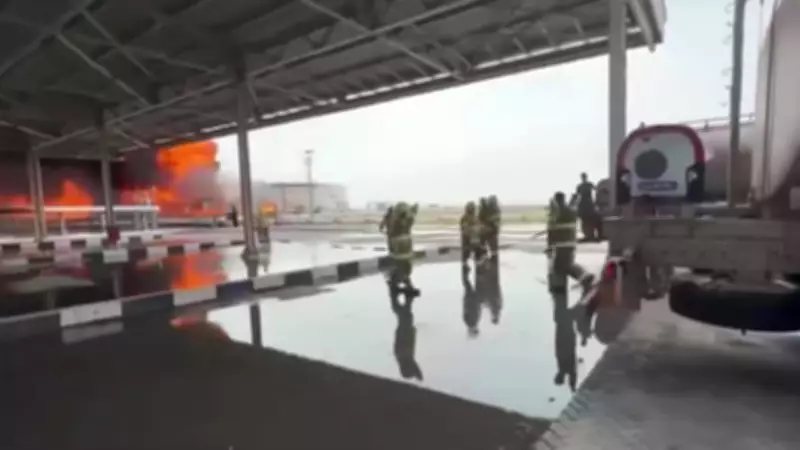
Major Fire at Kuwait Airport Following Suspected Iranian Drone Attack
A massive blaze erupted at Kuwait’s main international airport after a suspected Iranian drone strike targeted fuel storage facilities, triggering extensive emergency operations and heightening fears of further escalation across the Gulf region. Officials confirmed that the fire broke out at fuel tanks located at Kuwait International Airport, with dramatic online visuals showing thick plumes of black smoke billowing into the sky as firefighters worked tirelessly through the night to contain the flames.
Fire Extinguished After Nearly 58 Hours of Efforts
Kuwait’s fire department reported that the blaze has now been fully extinguished following nearly 58 hours of continuous firefighting efforts. Despite the significant scale of the fire and damage to critical infrastructure, authorities have confirmed that there were no casualties, a relief amid the chaotic situation. The country’s Civil Aviation Authority stated that multiple drones were involved in the attack, causing "significant damage" to the airport’s radar systems. A spokesperson later attributed the strike to Iran, along with allied armed groups and proxies, accusing them of carrying out the assault.
Escalating Aerial Campaign by Iran Across the Region
This strike on Kuwait comes as Iran expands its aerial campaign beyond Israel, targeting countries that host US military facilities. In recent days, Iran has launched missiles towards Jerusalem, while attacks have also been reported in the United Arab Emirates and Oman. The broader conflict has seen intensifying exchanges across multiple fronts, with Israel conducting strikes in Iran and southern Lebanon, including one that reportedly killed journalists linked to Hezbollah-affiliated outlets. Additionally, Yemen’s Houthi rebels have entered the conflict, launching missiles towards Israel in support of Tehran, further complicating the regional dynamics.

Impact on Global Trade and Shipping Routes
Tensions have spilled into global trade routes, affecting shipping operations and raising concerns over oil shipments. For instance, operations at Oman’s Salalah port were temporarily halted after a drone strike damaged infrastructure, disrupting maritime activities. Several countries have expressed heightened concerns over the safety of oil shipments through the strategic Strait of Hormuz, a critical chokepoint for global energy supplies. This incident underscores the widening ripple effects of the conflict, potentially impacting international markets and geopolitical stability.
Broader Context of Regional and Global Tensions
The attack on Kuwait’s airport is part of a larger pattern of escalating hostilities in the Middle East, with Iran and its allies increasingly targeting infrastructure in neighboring countries. This has led to a complex web of retaliatory actions and diplomatic strains, as nations grapple with the threat of further violence. The situation remains fluid, with ongoing military engagements and political maneuvers shaping the future of regional security. As emergency teams in Kuwait work to assess and repair the damage, the international community watches closely, wary of potential spillovers that could destabilize the Gulf and beyond.