The End of an Era: Ayatollah Ali Khamenei Killed in US-Israel Air Strikes
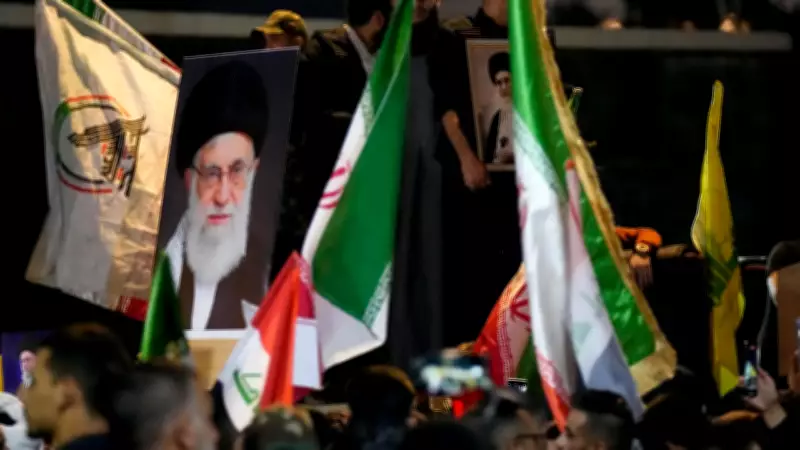
Ayatollah Ali Khamenei, the Supreme Leader of Iran who ruled the nation with an iron fist for 36 years, transforming it into a formidable anti-American power and extending its military influence throughout West Asia, has been killed. Iranian state media announced on Sunday that the 86-year-old leader died in air strikes conducted by Israel and the United States on Saturday.
A Transformative Reign That Shaped Modern Iran
Khamenei dramatically remoulded the Islamic Republic after assuming power following the death of Ayatollah Ruhollah Khomeini in 1989. His rule ultimately lasted far longer than his predecessor's, during which he significantly expanded the Shia clerical class and built the paramilitary Revolutionary Guard into the most crucial institution supporting his authority.
Born into a religious family in Mashhad, a northeastern holy city that served as a hotbed of revolutionary fervor during the struggle against the Western-allied Shah Mohammad Reza Pahlavi, Khamenei studied under Khomeini at the seminary in Qom before Khomeini's exile to Iraq and France.

From Revolutionary to Supreme Leader
Khamenei actively participated in the anti-shah movement, enduring both imprisonment and periods in hiding. When Khomeini returned triumphantly to Iran in 1979 and proclaimed the Islamic Republic, Khamenei was appointed to the secretive revolutionary council. In 1981, he was elected as Iran's third president; that same year, a bombing by opponents left him with permanent paralysis in one hand.
After being named Supreme Leader following Khomeini's death, he was elevated overnight to the rank of Grand Ayatollah, at the pinnacle of the clerical hierarchy. For years, he faced skepticism regarding his religious credentials, which he acknowledged with notable humility.
Consolidating Power and Confronting Challenges
Khamenei stabilized Iran after the devastating 1980s war with Iraq and governed for over three decades. Hard-liners within the regime considered his authority second only to God's. He established an ever-expanding bureaucracy of Shia clerics and governmental agencies, positioning himself as the ultimate arbiter of all state matters.
Under his leadership, Iran shifted fully from conventional warfare to supporting proxy forces, constructing the so-called 'Axis of Resistance' to advance its regional interests across West Asia.
Domestic Repression and International Confrontation
Khamenei's first major domestic challenge emerged in 1997 when pro-reform politicians gained control of parliament and cleric Mohammad Khatami won the presidency by a landslide. The reformists demanded a relaxation of the strict social rules imposed by the revolution. Khamenei-backed hard-liners moved swiftly to contain this liberal movement, fearing it would ultimately call for an end to clerical rule. His regime was subsequently marred by numerous protests seeking political and social reforms, which were consistently crushed with an iron fist.
Internationally, Khamenei remained deeply suspicious of the United States, frequently referring to it as the "Great Satan." He defiantly shrugged off extensive US sanctions and pushed forward with Iran's nuclear program, which the US and its allies maintained concealed a secret project to develop nuclear weapons until at least 2003. Khamenei consistently vowed that Iran would never relinquish its right to develop a "peaceful nuclear energy programme," despite repeated attempts by Western powers to dissuade him.
The ongoing conflict that ultimately led to Khamenei's death has its roots in Iran's persistent quest for nuclear capabilities and its expanding regional influence, which brought it into direct confrontation with both Israel and the United States.