In a contentious move, the Maharashtra State Board for Wildlife (SBWL) has granted approval for an iron ore mining project located within a crucial wildlife corridor connected to the famed Tadoba-Andhari Tiger Reserve. The decision, taken during a meeting on Tuesday, has ignited fierce opposition from conservationists who argue it threatens tiger conservation and could exacerbate the region's severe human-wildlife conflict.
Project Details and Environmental Cost
The proposed mine is situated at Lohardongri in the Bramhapuri forest division of Chandrapur district. The project will require the diversion of forest land and the felling of more than 18,000 trees spread across nearly 36 hectares of reserved forest. While the mine is projected to create employment for approximately 120 individuals, only 32 of these positions are slated to be permanent.
This forest patch is not just any land; it forms a vital link within a network of corridors. It connects the Tadoba-Andhari Tiger Reserve with the Bramhapuri-Gadchiroli landscape, Umred-Karhandla, and Navegaon-Nagzira tiger areas. Blocking such natural pathways forces tigers and other wildlife into human-dominated spaces, increasing dangerous encounters.

History of Opposition and Expert Warnings
The board's approval comes despite significant prior resistance from expert bodies. A three-member committee formed after an SBWL meeting on November 16, 2023, had conducted a detailed review. Its conclusion was stark: the environmental damage from the mining project would far outweigh its benefits, and it recommended the proposal be scrapped entirely.
Furthermore, the SBWL's own standing committee had also opposed the project after examining it on January 24, 2024. The proposal was revisited based on a preliminary report interpretation that suggested referring the matter to the National Board for Wildlife (NBWL). However, in Tuesday's decisive meeting, the project was cleared subject to certain conditions and mitigation measures—a decision critics say blatantly ignores the core warnings from specialists.
Conservationists Sound Alarm on Human-Wildlife Conflict
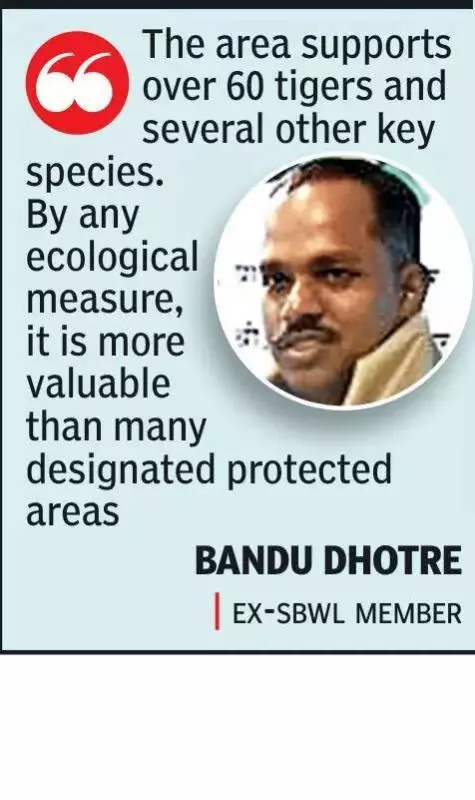
Former SBWL member and conservationist Bandu Dhotre voiced grave concerns, stating, "This corridor is essential for tigers. If you block natural movement routes, tigers will stray into farms and villages." His warning is backed by grim local statistics. Chandrapur district has been recording an alarming average of roughly 50 human deaths per year in recent times due to tiger attacks.
The approval, seen by many as a victory for industrial interests over ecological security, sets a dangerous precedent for fragile wildlife habitats. The Lohardongri mining proposal has now been forwarded to the National Board for Wildlife (NBWL) for the next stage of clearance. Conservationists are now pinning their hopes on the national body to heed the overwhelming expert advice and protect this critical tiger landscape from irreversible fragmentation.