Iran's Gulf Strikes Shatter Decades of Regional Equilibrium
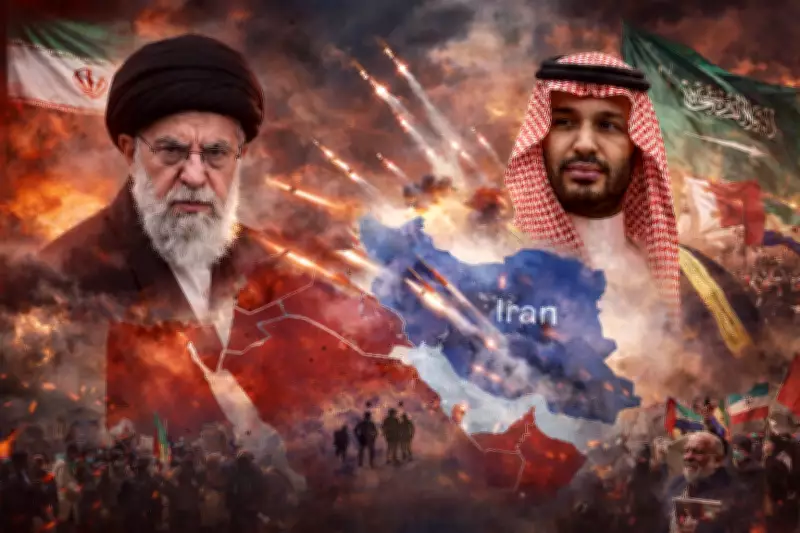
The initial warnings arrived not through formal declarations but as sudden flashes illuminating the Gulf sky, accompanied by sirens piercing the quiet of cities that had long considered themselves insulated from direct conflict. For generations, West Asia had adapted to a persistent state of tension, characterized by proxy battles, covert operations, and managed escalations that maintained an uneasy balance. However, the events of recent weeks have fundamentally disrupted this pattern. Iran's response to joint United States and Israeli strikes has not merely been retaliatory; it has deliberately expanded the battlefield, drawing Gulf nations into a confrontation many assumed would remain confined to Tehran, Washington, and Tel Aviv.
Unprecedented Escalation and Global Shockwaves
The scale of this escalation has reverberated far beyond the region. United States President Donald Trump openly acknowledged that the scope and direction of Iran's strikes caught Washington unprepared. "They weren't supposed to go after all these other countries in the Middle East," Trump stated. "Nobody expected that. We were shocked." He emphasized this surprise repeatedly, noting that even top experts failed to anticipate such actions. Yet, beneath this surface shock lies a more profound narrative, one that transcends the immediate military targets and delves into centuries-old divisions shaping the region's alliances and identities.
The Historical Backdrop: Shia-Sunni Divide
To comprehend Iran's decision to strike Gulf states, one must look beyond the immediate triggers of war and examine the historical shadow looming over West Asia. The division between Shia and Sunni Islam, often referenced but rarely fully understood, provides essential context for this escalation. This is not merely a tale of religious animosity; it is a complex story intertwining power, legitimacy, influence, and survival.

The origins of this split trace back to 632 AD, following the death of the Prophet Muhammad. A political disagreement over succession—whether leadership should be chosen through consensus, supporting Abu Bakr, or remain within the Prophet's family, backing Ali—gradually evolved into broader distinctions in religious authority and identity. Over centuries, these differences solidified: Sunnis emphasized collective leadership and scholarly interpretation, while Shia Muslims developed the concept of divinely guided Imams. Historically, these distinctions did not always lead to constant conflict, with communities often coexisting and sharing cultural spaces.
Geopolitical Transformation and the 1979 Revolution
The transformation of this religious divide into a geopolitical fault line is a more recent phenomenon, significantly accelerated by the 1979 Islamic Revolution in Iran. By overthrowing its monarchy and establishing an Islamic republic led by clerics, Iran introduced a new ideological force into the region, positioning itself as a champion of resistance against Western influence and a voice for Shia communities across borders. This alarmed Sunni-led states, particularly Saudi Arabia, which viewed itself as the leader of the Sunni world and custodian of Islamic tradition.
The rivalry between Tehran and Riyadh soon became the defining axis of West Asian politics, playing out through proxy conflicts in Iraq, Syria, and Yemen rather than direct confrontation. In Iraq, the 2003 US invasion and fall of Saddam Hussein shifted power toward Shia groups with Iranian ties. In Syria, Tehran backed Bashar al-Assad while Sunni-majority states supported opposition factions. In Yemen, the rise of the Houthis added another layer to this rivalry, deepening mistrust and sharpening sectarian narratives. Despite these ongoing battles, an unspoken boundary persisted: Gulf monarchies, despite tensions with Iran, were not directly targeted on such a scale—until now.

Crossing the Boundary: Iran's Strategic Calculus
In the aftermath of Ali Khamenei's assassination in a joint US-Israeli operation, Iran launched thousands of projectiles toward Gulf Cooperation Council countries in recent weeks. These strikes have been far from symbolic, targeting critical infrastructure, disrupting economies, and sending a clear message that no state in the region is beyond reach. Iran's motivations operate on multiple levels.
Firstly, deterrence: By expanding the battlefield, Tehran signals that any attack on its territory will have consequences not only for direct adversaries but also for their partners and allies. Gulf states host US military bases, provide logistical support, and are deeply integrated into the US-shaped regional security architecture, making them, from Iran's perspective, active participants rather than neutral actors.
Secondly, reshaping the conflict: By targeting energy infrastructure and shipping routes, Iran leverages one of the region's most critical vulnerabilities. The Gulf serves as a vital artery for global oil flow, meaning disruptions here quickly escalate from regional to global issues. This marks a shift from Iran's previous reliance on proxies in Lebanon, Iraq, Syria, and Yemen, suggesting Tehran is now willing to act directly, even at the risk of broader confrontation.
Sectarian Dimensions and Regional Implications
The sectarian dimension adds another strategic layer. Striking Sunni-majority Gulf states allows Iran to challenge the political order that has long positioned these nations as counterweights to its influence. While geopolitical forces remain primary drivers, sectarian identity provides a powerful narrative framework that shapes perceptions, mobilizes support, and influences interpretations of actions. For many in the Gulf, Iran's strikes reinforce longstanding fears of Tehran seeking to destabilize the region and expand its influence across Arab states.
The economic impact is already evident, with oil markets experiencing volatility and infrastructure damage raising resilience concerns. Governments are reassessing their security postures amid the threat of further escalation. However, Iran's actions also carry significant risks, potentially alienating states that had maintained some distance from the conflict and increasing the likelihood of a coordinated response.
Global Stakes and Future Uncertainties
The United States now faces a complex challenge: restoring Gulf stability involves not only military operations but also ensuring global trade flow, maintaining alliances, and preventing further conflict spiral. Support from European allies and partners like Japan underscores the global stakes. Intelligence assessments had warned of wider retaliation possibilities, raising questions about whether risks were fully accounted for, as highlighted by the gap between Trump's public surprise and private preparedness considerations.
Iran's military capabilities, including ballistic missiles, drones, and precision targeting, indicate a level of preparedness beyond reactive defense, with implications for power balances in West Asia and beyond. For Gulf states, immediate priorities include testing defense systems and coordinated responses, but the question of retaliation looms large. If Gulf countries choose to respond directly, the conflict could enter a new phase, expanding from a triangular confrontation to a broader regional war.
Conclusion: A Turning Point in West Asian Conflict
The concept of Ummah, or unified Muslim community, faces strain as Iran's strikes on Sunni-majority countries highlight how political and strategic considerations often override religious unity. Yet, it is crucial to avoid oversimplification; regional politics have long been shaped by shifting alliances and evolving rivalries, with sectarian identity being just one factor among many.
The current moment is significant due to the convergence of military escalation, economic disruption, ideological narratives, and geopolitical rivalry. The shadow war is now unfolding in plain sight, with immediate and far-reaching consequences. For West Asia, this could mark a turning point toward a more direct and unpredictable phase of conflict. For the global community, it serves as a stark reminder that regional conflicts do not remain confined but ripple outward, affecting markets, security, and stability worldwide. Understanding the Shia-Sunni divide provides essential context, but the real story lies in the intersection of history, identity, and power in a region perpetually at the center of global attention.