

Government May Roll Out More Relief for MSMEs if Middle East Conflict Persists
According to sources cited by news agency PTI, the Indian government could introduce additional relief measures for vulnerable parts of the economy, including the MSME sector, if the ongoing conflict in the Middle East continues to escalate. The primary aim is to help businesses stay afloat and keep inflation under control amidst rising geopolitical tensions.
Centre Prepared to Escalate Support as Crisis Deepens
The Centre has already announced a series of steps this month and is ready to do more if the situation deteriorates further. This is especially crucial to shield sectors most exposed to increasing fuel, freight, and input costs. Sources told PTI that the government "will not hesitate" to announce extra support packages if the prolonged geopolitical crisis starts exerting greater pressure on domestic prices and weaker segments of the economy.
Recent Measures to Mitigate Impact
In response to the conflict, the government recently cut excise duty on petrol to Rs 3 per litre and fully exempted diesel from excise duty. These moves are designed to soften the impact of rising global crude prices on consumers. Additionally, export duties on diesel and aviation turbine fuel (ATF) were reimposed to improve domestic availability.

Global crude prices have surged by nearly 50 per cent since the US and Israel launched military strikes on Iran on February 28, which triggered large-scale retaliation from Tehran. International oil prices climbed to $119 per barrel earlier this month before easing to around $100 per barrel.
Exporters Already Receiving Relief
The government has already taken steps to support exporters facing disruptions from the conflict. Earlier this month, it provided certain relaxations to exporters in meeting their export obligations after businesses reported difficulties in moving goods due to the Middle East crisis.
It also launched the Resilience & Logistics Intervention for Export Facilitation (RELIEF) scheme worth Rs 497 crore to offset the impact of unusually high freight rates, rising insurance costs, and war-related export risks. This scheme aims to keep India’s supply chains stable, protect MSME exporters, prevent order cancellations, and safeguard jobs in the export sector.
In another key step, the government on Monday restored full benefits under the RoDTEP scheme to support exporters dealing with elevated freight costs. Last month, the government had halved the duty benefit rates under the scheme, drawing strong criticism from exporters who sought a rollback.
The Directorate General of Foreign Trade (DGFT) stated in a notification: "The RoDTEP rates and value caps as specified as applicable on February 22, 2026, are hereby restored with effect from February 23, 2026 to March 31, 2026 for all eligible export products."
Economic Review Highlights Rising Risks
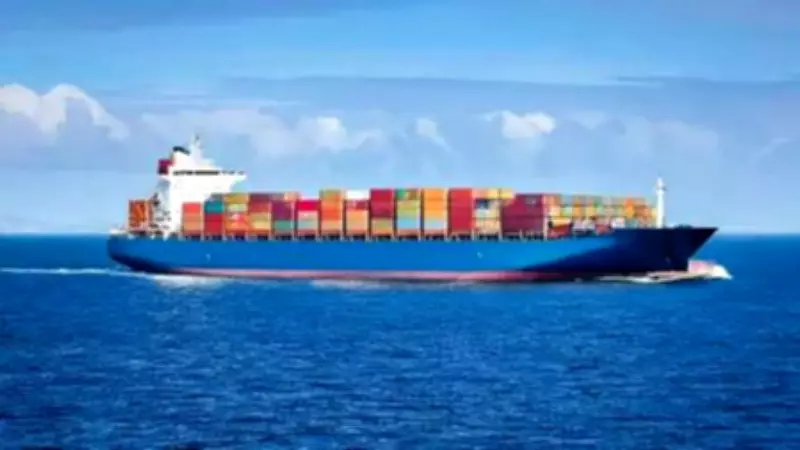
Escalating security risks around the Strait of Hormuz have led to vessel diversions, longer sailing routes, congestion at transhipment hubs, and emergency conflict-linked surcharges. This has pushed up logistics costs and created uncertainty for export shipments moving to or through the region.
In the latest Monthly Economic Review released on Saturday, chief economic advisor V Anantha Nageswaran emphasized that India must provide immediate support to the most affected households and businesses while also creating fiscal room for longer-term strategic needs exposed by the conflict. He said: "This calls for re-prioritisation of spending and targeted relief for the most affected and vulnerable businesses and households."
The report noted that recent shocks are already being transmitted through higher input costs, supply constraints, and pressure across sectors, with early signs of some moderation in economic activity. It added that the near-term outlook remains uncertain, with the Middle East crisis posing downside risks to growth through elevated input costs and possible supply disruptions. However, the review also highlighted that strong macroeconomic fundamentals and robust domestic demand could help cushion the blow.

The government views the geopolitical crisis as a complex risk for India due to the country’s heavy dependence on imported energy and its strong trade, investment, and remittance ties with the Middle East region.





