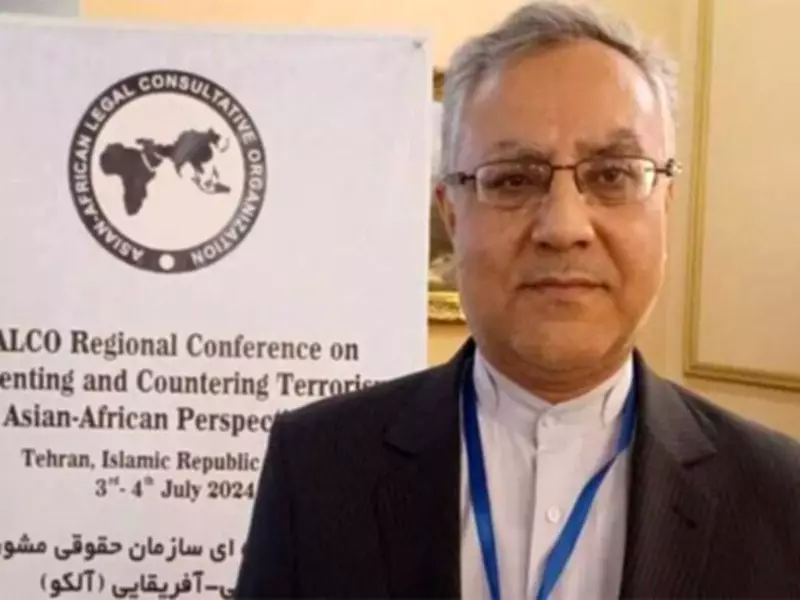
Iran Envoy Clarifies Strait of Hormuz Access Amid Escalating Tensions
Iran's representative to the International Maritime Organization (IMO), Ali Mousavi, has issued a statement clarifying the nation's position on navigation through the strategic Strait of Hormuz. According to reports from Al Jazeera, citing the Mehr news agency, Mousavi emphasized that foreign vessels are permitted to transit the waterway, provided they coordinate with the Iranian government to ensure security and safety protocols are upheld.
Conditions for Maritime Passage
Mousavi, who also serves as Iran's envoy to the United Kingdom, stressed that such cooperation is essential for maintaining stability in the region. He noted that while transit remains feasible, it must balance international obligations with respect for "Iran's territorial integrity and rights." Tehran has expressed readiness to engage with the IMO and various nations to enhance maritime safety measures and protect seafarers operating in the Gulf area.
However, the envoy drew a clear distinction regarding which countries would be allowed passage. Mousavi asserted that the "Strait of Hormuz is only closed to Iran's enemies," pointing to regional tensions as the primary cause of current maritime friction. He specifically cited the ongoing conflict involving the United States and Israel as being at the "root of the current situation" in the Gulf and the Strait of Hormuz.

US Military Ultimatum and Global Implications
In response to these restrictions, US President Donald Trump has issued a severe military threat against Iran. Through a social media post, Trump warned of strikes on Iranian energy infrastructure if the Strait of Hormuz is not fully reopened within a 48-hour window. He declared, "If Iran doesn't fully open, without threat, the Strait of Hormuz, within 48 hours from this exact point in time, the United States of America will hit and obliterate their various power plants, starting with the biggest one first! Thank you for your attention to this matter."
This ultimatum comes amid mounting domestic and international pressure on the Trump administration, following a sharp rise in global oil prices this month. The economic volatility is largely attributed to Iran's effective blockade of the strategic waterway, which serves as a transit point for approximately 20 per cent of the world's oil and gas. The situation has been exacerbated by repeated attacks on regional energy facilities and vessel targeting since the conflict's onset.
Iran's Stance and Internal Divergence
Tehran has maintained a hardline position during the standoff, previously warning that it would not allow "even a single litre of oil" destined for the US, Israel, or their allies to navigate the Strait. Adding to the urgency, a recent internal assessment by the US defence intelligence agency, as reported by CNN, suggests that Iran possesses the capability to maintain a closure of the Strait for a period ranging from one to six months.
Despite the aggressive rhetoric from some Iranian officials, there appears to be internal divergence. Last week, Iran's ambassador to the United Nations, Amir Saeid Iravani, stated that Tehran had no plans to shut the waterway. His comments seemed to contrast with the more assertive tone set by the country's newly appointed Supreme Leader, Mojtaba Khamenei, who indicated that the maritime route could be used as strategic leverage.
Speaking at the UN on Thursday, Iravani reiterated that while Iran would not block the vital shipping lane, the country reserved the right to ensure its own security. This nuanced approach highlights the complex dynamics at play as global powers navigate the escalating crisis in one of the world's most critical maritime chokepoints.