Greenland's Independence Dreams Paused Amid US Geopolitical Ambitions
In the icy expanse of Greenland, normal life has been put on pause as anxiety over United States ambitions creates widespread uncertainty. Residents of this vast island find themselves caught in a geopolitical struggle that has upended their long-standing push for independence from Denmark.
Daily Life Disrupted by Geopolitical Tensions
As President Trump spoke at the World Economic Forum in Davos, Switzerland, Greenlanders like Rikke Østergaard were refreshing news coverage with nervous anticipation. "My nerves are in flight or fight mode," confessed Østergaard, a Ph.D. student at the University of Greenland. "I try to calm myself down, but it's difficult." Despite Trump's assurances that he wouldn't deploy military forces to take control of Greenland, his words did little to calm the island's frayed nerves.
The political upheaval has created a palpable tension that permeates daily existence. In a telling sign of the distress spreading across the territory, the Greenlandic government distributed emergency preparedness brochures to residents, urging them to stockpile enough food and water for five days and prepare crank-powered radios. Officials carefully avoided specifying what emergency they were preparing for while encouraging basic readiness measures.

Independence Movement Suddenly Stalled
Before Trump renewed his interest in acquiring Greenland, the political conversation had shifted from if to when the island would achieve independence. Now, that entire process has been put on indefinite hold as Greenland tries to navigate the political storm created by great power ambitions.
Minister for Social Affairs Aqqaluaq B. Egede addressed a packed room of journalists, acknowledging the national anxiety while warning about divisive forces. "The goal of our opponents, who have different thoughts, is to divide us," he stated, reflecting the complex political landscape that has emerged.
Resident Anxiety Reaches Breaking Point
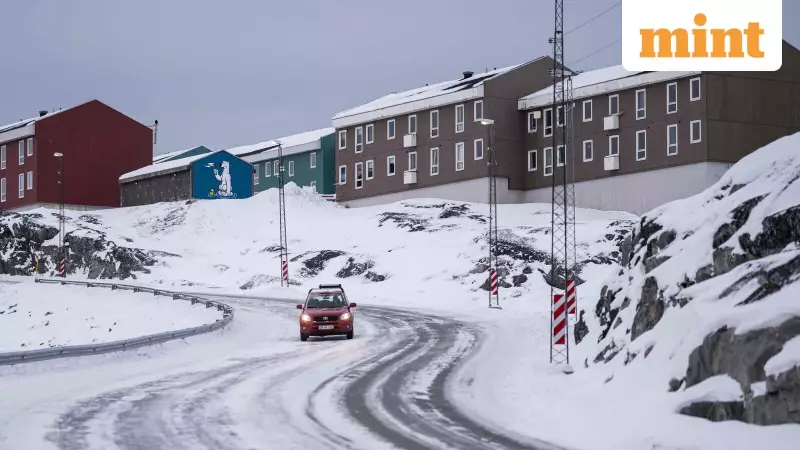
On the snow-covered streets of Nuuk, Greenland's capital, residents expressed anxiety that has begun affecting their health and sleep patterns. One mother described her panic when her 11-year-old son asked if he needed to start learning English. "It's not good for our health, the stress!" she exclaimed while lowering groceries to the ground. "Americans need to understand that we are not for sale."
Trump's characterization of Greenland as a "piece of ice, cold and poorly located" and his framing of the territory as a debt Denmark owes Washington has particularly rankled residents. What his remarks failed to address was what Greenlanders themselves would gain from joining America.
Political Parties Face Unexpected Backlash
The geopolitical tensions have created unexpected challenges for political parties that have long advocated for independence. Juno Berthelsen, a member of Parliament with the Naleraq party that calls for immediate independence, described the changing political climate. "A lot of the rhetoric we're seeing now is like, 'Cool it, don't talk about independence now, you're only poking the bear,'" she explained.
This sentiment was dramatically illustrated when Naleraq party leaders largely refrained from joining a thousands-strong march against American conquest—described as the largest protest in Greenland's modern history. When a party member tried to address the crowd, protesters shouted him down with chants of "Greenland for Greenlanders!"
Historical Context and Contemporary Dilemmas
For decades, Greenland quietly incubated one of the last anticolonial movements challenging European empires. If successful in breaking from Denmark, Greenland would become—five centuries after Columbus—the only independent nation in the Western Hemisphere whose governing language remained that of its pre-European ancestors.
Now, Greenlanders find themselves in a world where great powers seem closed to their aspirations. The irony is particularly sharp: the work of deterring U.S. ambitions has fallen to Denmark, the very colonial power most Greenlanders had sought to escape.
The complex relationship with Denmark involves:

- Three centuries of colonization that created resentments between Inuit residents and Copenhagen
- Danish citizens who spend six months on the island gaining voting rights equal to native-born Greenlanders
- Administrative jobs in Nuuk often filled by Danes who never learn Greenlandic
- Significant disparities between the capital and far-flung Inuit settlements
Financial Dependencies and Political Realities
Denmark funds healthcare, police, courts, and approximately half of Greenland's annual budget—roughly $1 billion in aid that prompts ongoing debate about whether it prevents poverty or entraps residents in a Scandinavian system imposed on an indigenous population.
The 2009 self-government act, approved by three-quarters of Greenland voters, charted a constitutional path toward independence. If Greenlanders vote yes in a future referendum, Denmark is obligated to commence negotiations for the island's departure.
This past March, Naleraq won a quarter of parliamentary votes—double its previous share—while being open to an agreement granting the U.S. exclusive military access to secure independence. Now, party leader Pele Broberg finds his group labeled as turncoats in local media. "Now they're trying to use the narrative, 'If you talk to the Americans, you are a traitor,'" said Broberg, a pilot who joined the party after observing unequal promotion opportunities for Inuit crew members. "Who's supposed to talk to them if whoever talks to them is a traitor?"
As Greenland navigates this unprecedented geopolitical challenge, residents continue their daily lives under the shadow of great power ambitions, their independence dreams paused indefinitely while they await the next development in a global game where they feel like mere pawns.