Five Remarkably Tiny Fish Species That Survive in Extreme Environments
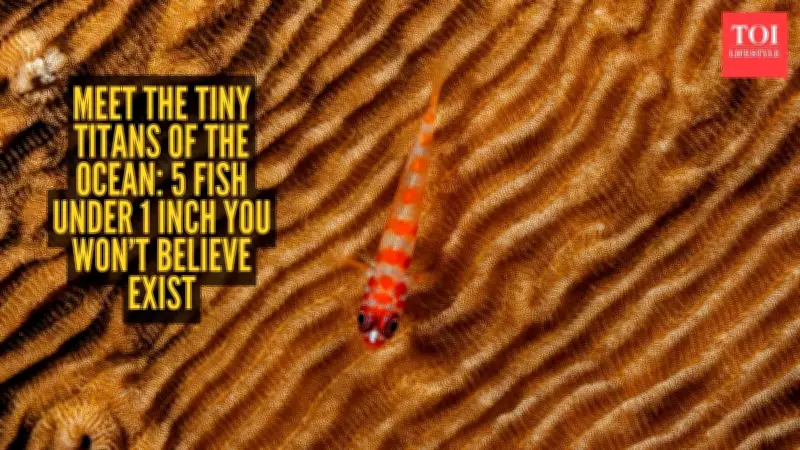
Not all fish are large, colorful, or easily visible in their aquatic homes. Some species are so minuscule that they could swim past you repeatedly without detection. Yet, these diminutive creatures have evolved to thrive in some of the planet's most challenging and unforgiving habitats. Here are five of the smallest fish species you likely haven't encountered, each demonstrating unique survival strategies in extreme conditions.
Paedocypris Progenetica: The Nearly Invisible Swamp Dweller
This fish is almost imperceptible to the naked eye, inhabiting the peat swamps of Southeast Asia. It rarely exceeds 8 millimeters in length, with a body that is nearly transparent, providing excellent camouflage. Life in acidic, low-oxygen waters is difficult, but this tiny fish adapts by maturing rapidly, reaching adulthood in just a few weeks. Its ability to survive in such harsh conditions highlights the resilience of small aquatic life.
Schindleria Brevipinguis: The Drifting Coral Reef Inhabitant
Found off the coral reefs of northern Australia, this fish measures about 8 millimeters and often goes unnoticed as it drifts with ocean currents. It feeds on plankton, and its small size is a key adaptation for evading predators in a reef environment full of threats. This species exemplifies how being tiny can be an advantage in navigating complex ecosystems.

Pandaka Pygmaea: The Sensitive Dwarf Pygmy Goby
Known as the dwarf pygmy goby, this fish originates from the Philippines and typically grows to just one centimeter in length. It hides among plants and roots in calm, shallow waters, consuming microscopic organisms. Its small and agile body helps it avoid predators, but it is surprisingly sensitive to environmental changes, making it vulnerable to habitat disturbances.
Paedocypris Micromegethes: The Transparent Swamp Survivor
A close relative of Paedocypris progenetica, this species is barely one centimeter long and lives in the murky swamps of Southeast Asia. Its see-through body allows it to blend seamlessly into the water, aiding in evasion from threats. Surviving in nutrient-poor and acidic conditions, it demonstrates that even the tiniest creatures can adapt to extreme habitats through specialized traits.
Photocorynus Spiniceps: The Deep Ocean Parasite
This species inhabits the deep, dark ocean, where males are tiny at about 6 millimeters. They employ a unique survival strategy by latching onto much larger females and depending entirely on them for sustenance. In the pitch-black depths where sight is ineffective, they rely on touch and chemical signals to navigate. This adaptation shows how being small can be a clever survival tactic in extreme environments.
Disclaimer: The information in this article is based on publicly available scientific observations and research. Sizes and behaviors of the fish species mentioned may vary slightly depending on environmental conditions. This article is intended for informational purposes only.