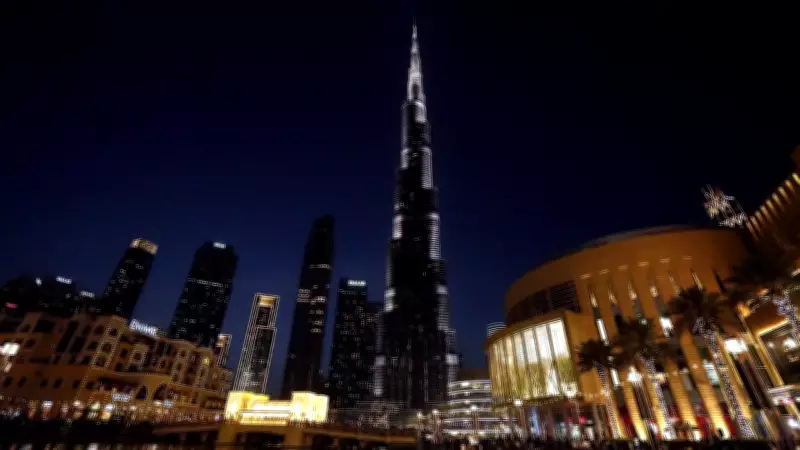
Dubai's Security Shattered: Iranian Strikes Test the Gulf's Safe Haven Status
For decades, Dubai has stood as the Gulf's glittering safe haven, a dazzling hub of glamour and grandeur amid endless Middle East turmoil. With its towering skyscrapers piercing the clouds, the city cultivated an aura of impregnable safety, drawing millions of tourists yearly and positioning itself as the Middle East's financial powerhouse. However, recent shocks from a vengeful Iran have raised a stark question: Is the "Pearl of the Gulf" truly secure anymore?
A Perilous Shift in Perception
On Saturday, Iranian strikes entered Dubai's airspace, targeting the world's busiest airport for international travelers and aiming at iconic landmarks like the Burj Al Arab hotel. This shattered the sense of invulnerability that had long defined the city, built on tax-free salaries, seamless business ease, and vows of ironclad stability. UAE President Mohammed bin Zayed Al Nahyan initially called for calm, urging Tehran to "go back to your senses" and reminding the Iranian leadership that "your war is not with your neighbors." Despite this, Iran continued its military offensive on key UAE cities, including Abu Dhabi, Dubai, and Sharjah, not limiting strikes to Israeli or American bases.
Psychological Impact and Investor Concerns
The attacks have not only caused physical damage but also hit the psychological foundation of a city that spent four decades building its reputation as a reliable business hub in an unstable region. Authorities moved quickly to contain confidence damage, with the UAE's national emergency authority stating the situation remained under control. Yet, for investors and residents seeing landmarks hit, these reassurances may not suffice. Jim Krane, a fellow at Rice University's Baker Institute, told Reuters, "It's hard to overstate the peril for Dubai's economic model. The physical damage may be slight, but Dubai's status as a safe haven for expatriates and their businesses is in increasing doubt."

Reflecting the strain, UAE stock markets closed on Monday and Tuesday, tech outages affected banking operations, and tens of thousands remained stranded as airspaces stayed largely closed. Dubai and Abu Dhabi, once dubbed the "Switzerland of the Middle East," now face a crack in their safe-haven image as they count interceptors against Iran's missile barrage.
Infrastructure Disruption and Regional Fallout
According to a Bloomberg report, since the weekend, Dubai's financial centres and tourist spots have been shaken by fires and missile debris after defence systems intercepted 165 ballistic missiles, two cruise missiles, and 541 drones from Iran. Supermarkets were swamped with panic buyers, and Dubai International Airport was forced to shut down. The Strait of Hormuz, a key trade and oil route, is effectively closed, highlighting underestimated war risks despite Dubai's proximity to Iran.
Gulf monarchies, despite high defence budgets, struggle to manage external threats and public reaction. Critical infrastructure, including desalination plants and data centers, faces real danger. Many residents have driven to Oman or Saudi Arabia to secure flights out, with over 11,000 flights canceled since Saturday, affecting more than 1 million passengers.
Dubai's Rise and Current Vulnerabilities
Dubai's rise from a small pearling port to a global financial center took decades, driven by milestones like Emirates airline's launch in 1985 and laws allowing foreign property ownership. Today, its economy relies mostly on non-oil sectors, with trade, tourism, real estate, and financial services as main drivers. The city's success was partly built on instability elsewhere, attracting new residents and capital during regional crises.
However, vulnerabilities have always existed. The Strait of Hormuz runs close to Dubai, and Iran has both motive and capability to destabilize Gulf commerce. Over the weekend, incidents included a hit to Dubai International Airport, a fire at Jebel Ali Port, and damage to the Burj Al Arab, with three killed and 58 injured. Nabil Milali, multi-asset portfolio manager at Edmond de Rothschild Asset Management, said, "People are afraid. It's the first time they have to hide in underground places."

Economic and Social Repercussions
Some firms have begun planning layoffs, halting fundraising, and reassessing their presence in Dubai. Demand for gold surged, and private banks may reconsider serving clients locally. Madhur Kakkar, founder and CEO of Elevate Financial Services, noted, "Historically, markets like the UAE have demonstrated resilience during crises. A broad structural reallocation of capital appears unlikely unless tensions escalate materially." William Jackson, chief emerging markets economist at Capital Economics, added, "It's really quite a big change in perceptions. The impact will depend on how long the conflict continues."
Risk for Indian Communities
Nearly 10 million Indians living across the Middle East face heightened risks as tensions escalate. Prime Minister Narendra Modi called the situation a "matter of grave concern," emphasizing India's support for dialogue and diplomacy. The Gulf hosts one of the largest overseas Indian communities, with about 3.5 million in the UAE alone, working across construction, healthcare, finance, and IT sectors.
In summary, Dubai's security crisis underscores a pivotal moment for the Gulf, challenging its stability model and testing the resilience of its economic foundations in the face of escalating regional conflicts.