

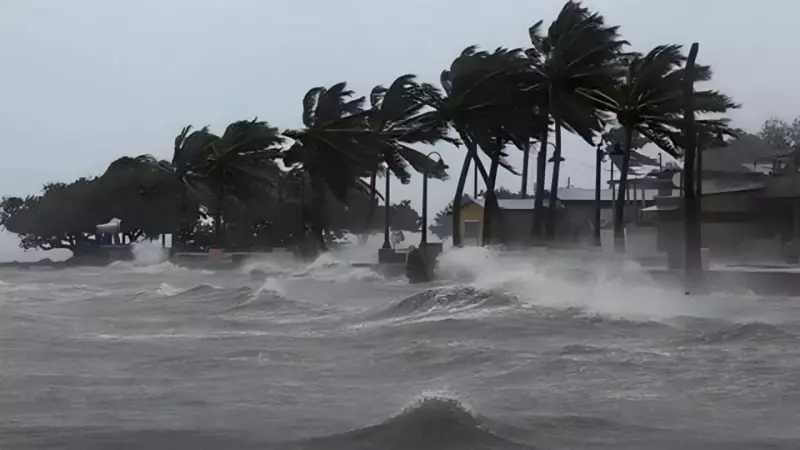
Cyclone Ditwah has left a path of destruction across Tamil Nadu and Sri Lanka, claiming three lives in the Indian state while causing catastrophic damage in the island nation where the death toll has exceeded 330 people.
Human Toll and Immediate Impact
The severe cyclonic storm resulted in three confirmed fatalities in Tamil Nadu according to official statements. TN revenue minister KKSSR Ramachandran confirmed on Sunday that two individuals died in separate wall collapse incidents in Tuticorin and Thanjavur districts, while another person lost their life due to electrocution in Mayiladuthurai.
While Chennai residents braced for a major impact, the storm unexpectedly weakened and changed course, sparing the capital city from the anticipated devastation. Instead of the forecasted pounding, Chennai experienced only brief periods of drizzle and chilly winds, with normalcy returning by noon as sunlight emerged and streets filled with people.

Widespread Damage Across Multiple Regions
The cyclone's impact was felt across large swathes of Tamil Nadu, Andhra Pradesh, and Sri Lanka, where the storm displayed its full force. Official reports indicate significant property and agricultural damage throughout affected regions.
Ramachandran detailed the extent of destruction, noting that 234 huts and houses sustained damage across Tamil Nadu. The storm also claimed the lives of 149 cattle and caused extensive crop losses spanning approximately 56,000 hectares of agricultural land.
The worst-hit agricultural regions include Nagapattinam with 24,000 acres affected, Tiruvarur with 15,000 acres damaged, and Thanjavur where 8,000 acres of crops were destroyed. The minister indicated that the full extent of damage would be assessed once floodwaters recede from the affected areas.
Response and Recovery Efforts
In response to the widespread agricultural devastation, farmers' associations in the Cauvery delta region have appealed to the Union government to officially classify the destruction as a national calamity. This designation would trigger additional relief resources and support for affected communities.
The contrasting impact between Tamil Nadu and Sri Lanka highlights the unpredictable nature of cyclonic systems, with the storm maintaining its intensity as it approached Sri Lanka while weakening considerably before reaching the Tamil Nadu coastline.
Emergency response teams are currently assessing damage in the affected districts, with focus on providing immediate relief to displaced families and evaluating the long-term impact on agricultural communities that have lost their standing crops.






