

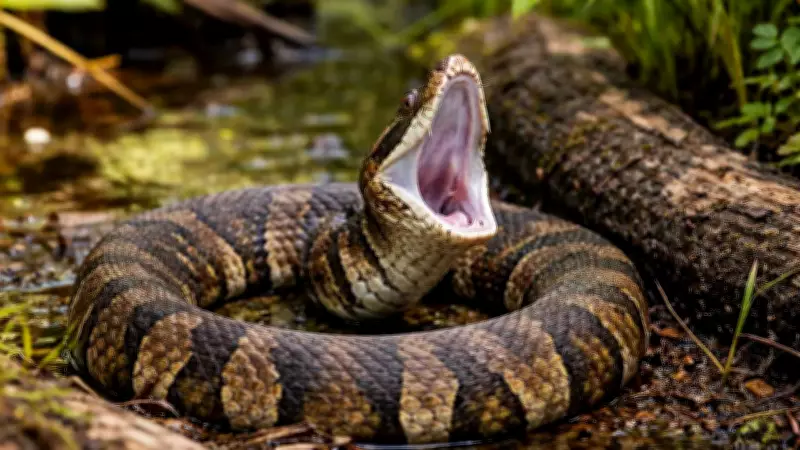
The Cottonmouth Snake: A Stealthy Predator with a Striking Warning
Snakes are typically silent and stealthy creatures, relying on these traits for survival. However, some species employ warning signs to avoid confrontations. Among the most fascinating is the cottonmouth snake, also known as the water moccasin, which uses a unique defense mechanism to signal danger.
Meet the Cottonmouth: North America's Only Semi-Aquatic Venomous Snake
Cottonmouth and water moccasin refer to the same species, Agkistrodon piscivorus, a venomous pit viper found primarily in the southeastern United States. Recognized by its stout build, triangular head, and distinctive white interior mouth, this snake is a member of the viper family, which includes rattlesnakes. It stands out as the only semi-aquatic venomous snake in North America, making it unique among similar species.
Why the Cottonmouth Displays Its White Mouth
One of the snake's most remarkable features is its defense strategy. When threatened, it coils its body and opens its mouth wide to reveal a bright white lining. This behavior is akin to waving a white flag, signaling readiness to defend itself. The stark contrast between the white interior and the snake's dark body serves as a visible warning to potential threats, helping to prevent attacks.

Physical Features That Identify the Cottonmouth
The cottonmouth has several distinguishing characteristics:
- Muscular build and broad, triangular head: Clearly distinct from its neck.
- Vertical pupils: Similar to a cat's eyes, common in pit vipers.
- Heat-sensing pits: Located between the eyes and nostrils, aiding in detecting warm-blooded prey in low light.
- Coloration: Ranges from dark brown to olive or black, with younger snakes having more distinct markings.
Habitat and Common Locations
Cottonmouth snakes thrive in aquatic environments, such as swamps, marshes, ponds, and riverbanks. They are adept swimmers, often floating on water surfaces, which helps differentiate them from non-venomous water snakes. Typically found near water, they can be seen basking on logs or rocks, utilizing these habitats for food and shelter.
Behavior and Danger Level
Contrary to popular belief, cottonmouths are not inherently aggressive. They generally prefer solitude and will only stand their ground when cornered or threatened. In such situations, they display their white mouth as a defensive, not aggressive, warning. Understanding this distinction is crucial for accurately assessing their behavior.
Consequences of a Cottonmouth Bite
Cottonmouth venom is hemotoxic, affecting blood cells and clotting processes. A bite causes significant pain and tissue damage, and while rarely fatal, it constitutes a medical emergency. Potential risks include internal bleeding and long-term damage, underscoring the need for caution in areas where these snakes reside.
Ultimately, the cottonmouth is not an attacker by nature but a well-adapted creature using a striking warning display for protection. Recognizing this behavior allows us to appreciate it as part of the ecosystem rather than a mere threat.






