The principal opposition party, the Congress, has launched a scathing attack on the Narendra Modi-led central government, labelling its handling of the nation's severe air pollution crisis as "exceedingly ineffective." The critique comes as a thick, toxic haze continues to engulf large parts of northern India, posing a grave public health emergency.
A Scathing Critique from the Congress
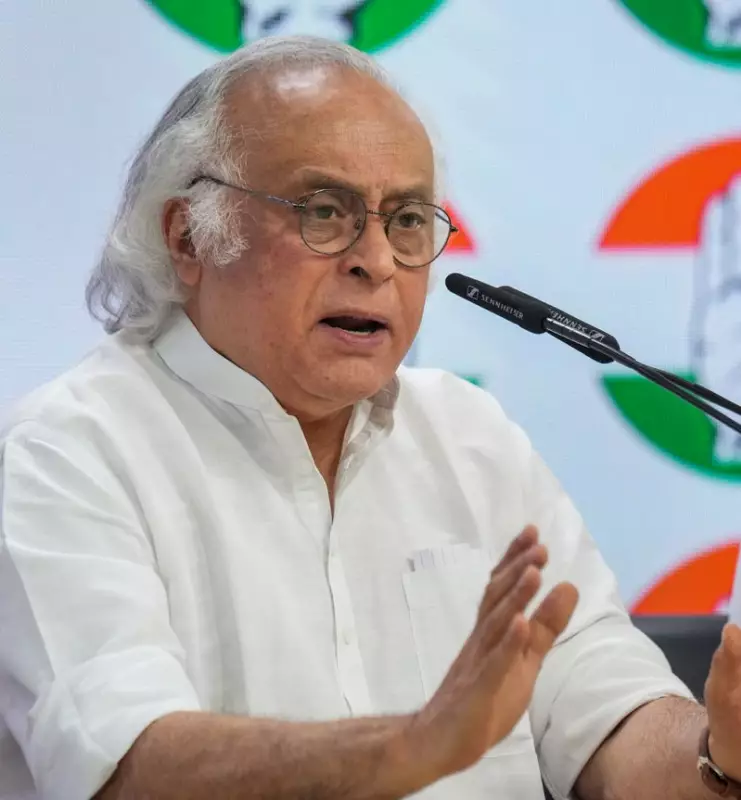
In a detailed statement issued on Sunday, Congress General Secretary Jairam Ramesh pulled no punches. He asserted that the government's flagship initiative, the National Clean Air Programme (NCAP), launched with much fanfare in 2019, has failed to deliver on its promises. Ramesh highlighted that the programme's initial goal was to achieve a 20-30% reduction in particulate matter concentrations by 2024. However, he pointed out that this target was later pushed back to 2026, indicating a lack of urgency and tangible progress.
Ramesh bolstered his argument with stark data, drawing attention to the alarming Air Quality Index (AQI) levels recorded in several major Indian cities. He noted that on a recent Saturday, cities like Mumbai, Bengaluru, and Kolkata reported AQI figures in the 'poor' to 'very poor' categories. He specifically mentioned Mumbai's AQI at 157, Bengaluru's at 153, and Kolkata's at 181. The Congress leader contrasted this with the situation in Delhi, where he claimed the AQI was "only marginally better" at 138, suggesting a widespread national problem rather than one confined to the capital.

The Failure of the National Clean Air Programme
The core of the Congress's accusation revolves around the perceived failure of the NCAP. Jairam Ramesh argued that the programme has been plagued by chronic underfunding and a lack of serious implementation. He stated that the financial resources allocated are "grossly inadequate" to meet the massive scale of the pollution challenge faced by India's urban centres.
"The National Clean Air Programme is a classic case of too little, too late," Ramesh's statement implied. He criticized the government for relying on headline-grabbing announcements without following through with the robust financial backing and stringent enforcement mechanisms required for meaningful change. The delay in the programme's targets, from 2024 to 2026, was cited as prime evidence of this failure in execution and ambition.
Public Health and Political Accountability
The Congress's statement frames the air quality crisis not just as an environmental issue, but as a direct threat to public health and a failure of governance. By highlighting the dangerous AQI levels in cities outside the typical Indo-Gangetic plain, the party aims to broaden the issue into a pan-Indian concern. The critique positions the government as being out of touch with the daily struggles of citizens who are forced to breathe toxic air, leading to a rise in respiratory illnesses and other health complications.
The political ramifications are clear. The opposition is seeking to hold the ruling dispensation accountable for what it sees as a major policy failure. The statement serves as a political tool to question the government's commitment to safeguarding the environment and the health of its citizens. It calls for a more aggressive, well-funded, and transparent approach to combating air pollution, moving beyond what the Congress describes as mere "tokenism."
As the winter season sets in, traditionally worsening air quality in North India, this critique from the Congress ensures that the government's environmental record will remain under intense scrutiny. The demand is for concrete action, measurable results, and a renewed sense of urgency in tackling what is undeniably a nationwide public health crisis.