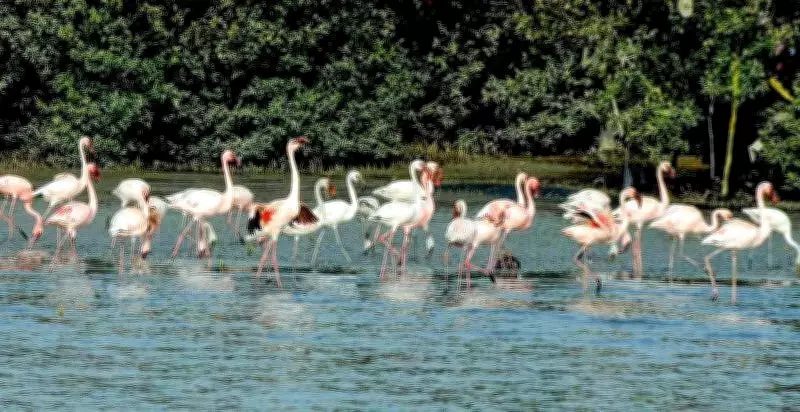
Centre Invokes Wetland Rules, Directs Maharashtra to Address Toxic Flamingo Habitats in Navi Mumbai
In a significant environmental intervention, the Union Ministry of Environment, Forest and Climate Change (MoEFCC) has invoked the Wetlands (Conservation and Management) Rules, 2017, directing the Maharashtra government to take immediate action concerning three critically polluted flamingo wetlands in Navi Mumbai. The directive follows a formal complaint submitted to the Prime Minister's Office (PMO) on World Water Day, highlighting an alarming ecological crisis.
Environmental Watchdog Flags "Wetland Emergency"
The complaint was filed by the environmental advocacy group NatConnect Foundation, which identified DPS Lake, NRI Lake, and T S Chanakya Lake in Nerul, Navi Mumbai, as sites of rapid ecological decline. Laboratory tests commissioned by the foundation revealed that all water samples from these lakes failed to meet prescribed quality norms, indicating severe contamination.
B N Kumar, director of NatConnect Foundation, described the situation as a "wetland emergency," emphasizing that these water bodies are integral components of the larger wetland system connected to the internationally recognized Ramsar-listed Thane Creek Flamingo Sanctuary. The deteriorating condition of these lakes threatens the fragile habitat of migratory flamingos and other aquatic life.

Alarming Laboratory Findings Reveal Extreme Pollution Levels
Detailed analysis conducted by a Thane-based laboratory presented shocking data, underscoring the severity of the pollution:
- Total Dissolved Solids (TDS): Recorded between 17,000 and 23,000 mg/L, drastically exceeding the standard norm of approximately 5,000 mg/L.
- Biochemical Oxygen Demand (BOD): Measured between 14.8 and 23.6 mg/L, far above the acceptable range of 3–5 mg/L, indicating high organic pollution.
- Chemical Oxygen Demand (COD): Ranged from 47.5 to 73.5 mg/L against the standard of 20–30 mg/L, pointing to significant chemical contamination.
- pH Levels: Consistently above 9, reflecting highly alkaline conditions detrimental to aquatic ecosystems.
These parameters collectively indicate severe pollution and stagnation, with restricted or blocked tidal flow identified as a key factor disrupting natural hydrological processes and reducing the flushing of pollutants.
Central Directive Cites Wetland Protection Rules
In its official response, the MoEFCC explicitly referenced the provisions of the Wetlands Rules, 2017, which strictly prohibit activities such as the discharge of untreated waste and effluents, dumping of solid and construction waste, encroachment, and any alteration of the ecological character of wetlands. The communication, signed by Pankaj Verma, Scientist 'F' in the ministry's wetlands division, was addressed to the Maharashtra State Wetland Authority.
The Centre has mandated the state authority to thoroughly examine whether these prohibited activities have contributed to the current degraded condition of the wetlands and to initiate prompt corrective measures. Furthermore, the state has been instructed to submit a detailed action taken report to both the complainant and the central government.
Local Activists Express Hope for Timely Intervention
Environmental activists have welcomed the central intervention, expressing hope that it will catalyze concrete action from the state authorities. Jyoti Nadkarni, a member of the Raigad district wetland documentation committee, stated that there is now a renewed expectation for the Maharashtra environment department to act decisively to salvage these three vital wetlands.
The MoEFCC's communication also included an attachment of the Gazette Extraordinary from September 2017, which outlines the regulatory framework for wetland management, for the state authority's reference. This move underscores the legal and ecological imperative to protect these critical habitats from further degradation.
As the Maharashtra State Wetland Authority begins its examination, the focus remains on implementing sustainable solutions to restore the ecological balance of these lakes, ensuring the preservation of the Thane Creek Flamingo Sanctuary and its iconic avian residents.