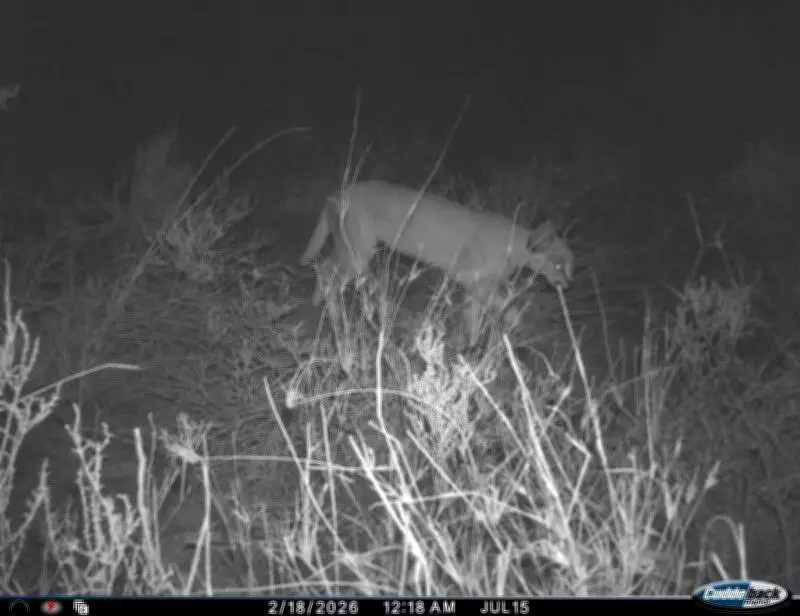
Camera Traps Confirm Three Endangered Caracals in Jaisalmer's Ghotaru Border Area
The forest department has successfully deployed motion-sensing camera traps in the Ghotaru border area of Jaisalmer, Rajasthan, to track the elusive and endangered caracal. This critical conservation exercise has already yielded significant results, confirming the presence of three individual caracals in the monitored zone. Among these, two are newly recorded animals that were previously undocumented, marking a hopeful discovery for a species believed to survive in very small numbers in the arid Thar Desert.
Strategic Monitoring and Early Findings
Officials stated on Monday that a limited number of cameras have been installed so far, but the early outcomes are profoundly important. The camera trap images have captured all three caracals within the study area, providing valuable visual evidence of their existence. Alongside the two newly detected individuals, the movement of a recently radio-collared caracal is also being closely monitored. This allows researchers to study behavior patterns and habitat usage in the challenging desert landscape.
Leadership and Collaborative Efforts
The monitoring initiative is being conducted under the expert guidance of Chief Conservator of Forests (Jodhpur) Anoop K R. A dedicated team led by Devendra Singh Bhati, the Divisional Forest Officer (DFO) of IGNP II Division in Jaisalmer, is overseeing the field operations. Additionally, researchers from the prestigious Wildlife Institute of India are actively involved in analysing the movement patterns and activity data collected from the camera traps. Anoop K R emphasized that the cameras were strategically placed across the border desert belt, which directly led to the identification of the two new caracal individuals.

Conservation Challenges and Future Plans
With the collared caracal already under observation, the confirmed count in the monitored zone has now reached three. However, Anoop K R also highlighted past threats to the species, citing an incident in Bachhiya where a caracal was allegedly hunted and burnt. This underscores the ongoing dangers these animals face. Forest officials have pointed out that a wider camera network will be essential to accurately assess the caracal's full habitat range. Following the current study, a comprehensive conservation plan will be prepared to ensure the species' long-term survival.
Human-Wildlife Conflict and Community Engagement
Locally known as ‘padang’, the caracal occasionally preys on livestock, which can trigger conflicts with local communities. To address this, forest department teams are conducting extensive awareness drives in border villages. They are urging residents to report any attacks or sightings instead of harming the animal. Assurances have been given that safe capture and relocation will be carried out if necessary, promoting coexistence and protecting the endangered caracal from retaliatory actions.