

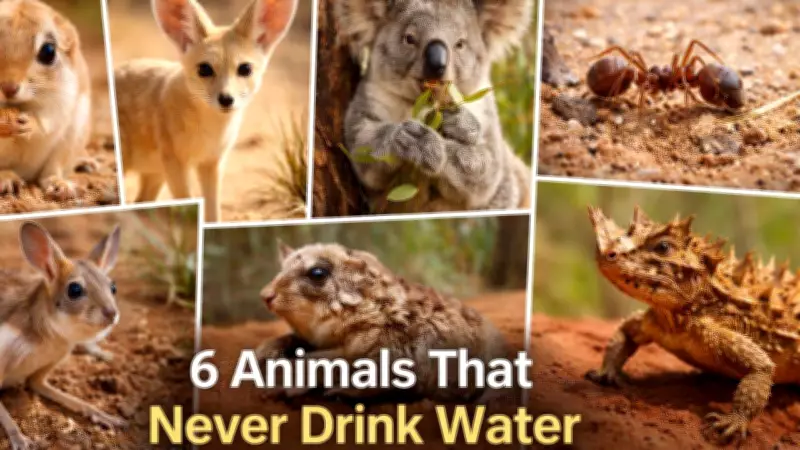
Six Remarkable Animals That Thrive Without Drinking Water
Water is universally acknowledged as a fundamental necessity for life, with most creatures requiring substantial quantities to sustain their biological functions. However, nature consistently defies conventional wisdom, presenting extraordinary examples of adaptation in some of Earth's most hostile environments. Across deserts and dry grasslands, a select group of animals has evolved sophisticated survival strategies that enable them to flourish without ever consuming liquid water. These species ingeniously extract moisture from their food or utilize physiological mechanisms to conserve every precious drop, showcasing the remarkable resilience of life.
Thorny Devil Lizard: The Skin-Absorption Specialist
The thorny devil lizard, native to the arid landscapes of Australia, employs one of the most distinctive hydration methods in the animal kingdom. Rather than drinking from external sources, this unique reptile absorbs moisture directly through its skin. Microscopic channels covering its body efficiently channel rainwater or dew toward its mouth, allowing it to hydrate seamlessly. This exceptional adaptation permits the thorny devil to endure extremely dry conditions where conventional water sources are nonexistent.
Jerboas: Desert Rodents with Nocturnal Advantages
Jerboas are small, desert-dwelling rodents equipped with multiple adaptations for waterless survival. They derive necessary moisture from the plant material, seeds, and insects they consume. Similar to kangaroo rats, jerboas possess highly efficient kidneys that concentrate urine to minimize water loss. Their nocturnal lifestyle helps them avoid the dehydrating effects of the scorching daytime sun, while their disproportionately large ears facilitate heat dissipation, further conserving bodily fluids.

Harvester Ants: Seed-Based Hydration Experts
Harvester ants thrive in parched environments through a completely different strategy. These industrious insects obtain water primarily from the seeds they collect and consume. During digestion, their bodies metabolize the fats within seeds, converting them into metabolic water—a byproduct of biochemical processes. Additionally, they capitalize on the humidity present within their meticulously constructed nests. Their small size and highly organized social structure significantly reduce individual water requirements, enabling colony-wide survival in arid regions.
Koalas: Eucalyptus Leaf Dependents
Koalas represent another fascinating example of animals that rarely drink water. These iconic Australian marsupials subsist almost entirely on eucalyptus leaves, which provide both nutrition and sufficient moisture to meet their daily hydration needs. The leaves' inherent water content typically satisfies the koala's requirements, though during periods of extreme drought or elevated temperatures, they may occasionally seek out supplementary water sources. This dietary specialization underscores their adaptation to specific ecological niches.
Fennec and Sand Foxes: Efficient Water Conservers
Inhabiting some of the world's driest desert habitats, fennec foxes and sand foxes have mastered the art of water conservation. These cunning canines acquire all necessary moisture from their prey, which includes insects, small mammals, and plants. Their bodies are exceptionally efficient at retaining water, producing highly concentrated urine to prevent fluid loss. Nocturnal behavior helps them avoid daytime heat, while their characteristically large ears aid in thermoregulation, reducing the need for cooling through evaporation.
Kangaroo Rats: Metabolic Water Producers
Perhaps the most renowned of all water-independent animals, kangaroo rats inhabit the deserts of North America. These rodents survive exclusively on dry seeds, an unlikely source of hydration for most species. Through a remarkable metabolic process, they convert the carbohydrates in seeds into water during digestion. Their kidneys are extraordinarily efficient, producing urine so concentrated that it minimizes water loss. By remaining in cool, humid burrows during the day, kangaroo rats further reduce dehydration risk, epitomizing adaptation to arid environments.

These six animals demonstrate nature's incredible capacity for innovation in the face of adversity. Their unique adaptations—ranging from skin absorption and metabolic water production to behavioral modifications—highlight the diverse strategies life employs to conquer Earth's most challenging habitats. As climate change intensifies aridification globally, studying these species may offer valuable insights into resilience and survival in water-scarce conditions.





