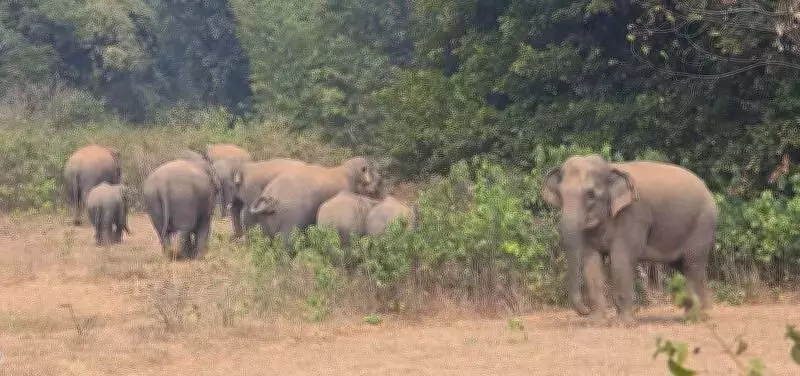
Tragic Elephant Attack Claims Woman's Life in Latehar Forest
A devastating incident occurred in the Hemna forest area under the Balumath range of Latehar district on Thursday, where two makna elephants trampled a 45-year-old woman to death. The victim has been identified as Dulari Devi, a local resident whose life was tragically cut short during what should have been a routine morning activity.
Details of the Fatal Encounter
According to sources familiar with the situation, Dulari Devi left her home early on Thursday morning to harvest lentils in her field, which is located perilously close to the forest boundary. It was during this agricultural work that the two elephants suddenly appeared from the wooded area, launching a fatal attack that resulted in her immediate death. The suddenness of the elephant's appearance left no opportunity for escape or defense.
Immediate Response and Compensation
N K Mahto, the range officer in-charge of Balumath, confirmed that the bereaved family has received an immediate ex gratia payment of Rs 40,000 as initial compensation for their tragic loss. The officer further explained that the remaining compensation amount of Rs 3.60 lakh will be disbursed to the family after they submit the necessary documentation, including the post-mortem report, death certificate, Aadhar card, and other required papers.

The post-mortem examination was conducted at Sadar Hospital on Thursday evening, providing official medical documentation of the cause of death. This procedural step is crucial for both legal purposes and for processing the full compensation package promised to affected families in such wildlife conflict situations.
Forest Department's Safety Warnings
Range officer Mahto expressed frustration at what he described as a preventable tragedy, stating emphatically: "We always urge people not to enter jungles before sunrise and after sunset, and never go alone. But people ignore our advice only to pay a heavy price." His comments highlight an ongoing challenge for forest authorities who regularly issue safety advisories that are frequently disregarded by local residents.
Sources indicate that many villagers regularly venture into forested areas not just for agricultural purposes, but also to collect valuable forest products like mahua flowers and fruits. Mahto added a sobering warning about this practice: "If elephants are in and around those areas, they may become a danger to life." This statement underscores the inherent risks of human-wildlife interaction in regions where elephant habitats overlap with human settlements and agricultural lands.
Broader Context of Human-Wildlife Conflict
This tragic incident represents another chapter in the ongoing human-wildlife conflict that plagues many forest-adjacent communities across India. As elephant habitats continue to face pressure from human encroachment and agricultural expansion, such dangerous encounters have become increasingly common. The compensation mechanism, while providing some financial relief to affected families, does little to address the root causes of these conflicts.
Local authorities face the difficult task of balancing conservation efforts with community safety, often finding their warnings about forest entry times and safety precautions ignored by residents who depend on forest resources for their livelihoods. This creates a persistent cycle of risk that endangers both human lives and wildlife populations.