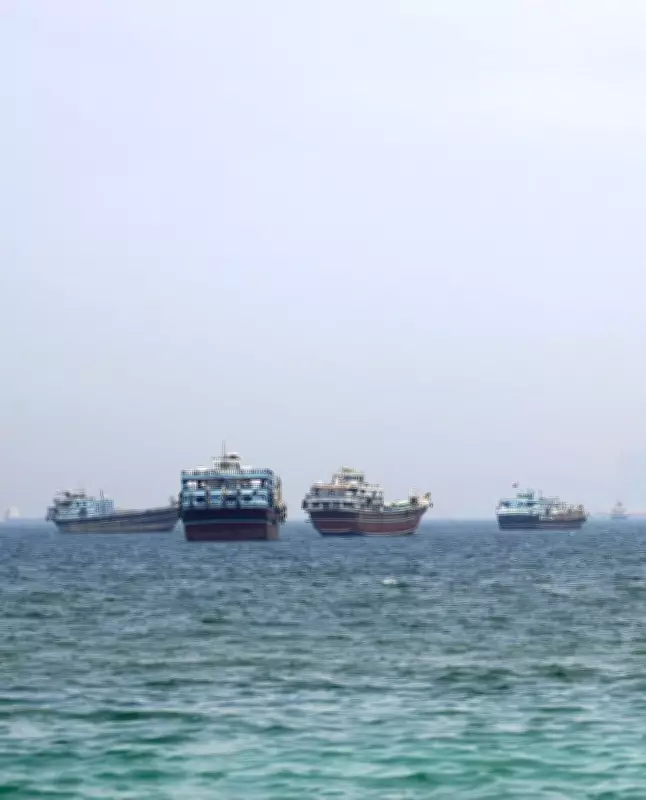
The United States military has reportedly boarded another vessel in the vicinity of the Strait of Hormuz, a strategic waterway that has been a focal point of rising tensions between Washington and Tehran. This action comes as part of ongoing efforts to ensure maritime security and freedom of navigation in the region, according to US officials.
Details of the Incident
The boarding occurred near the Strait of Hormuz, a critical chokepoint for global oil shipments. The US Navy has not yet released the name of the vessel or its flag state, but sources indicate that the operation was conducted without incident. The move is seen as a direct response to recent Iranian seizures of commercial vessels in the same area, which have heightened concerns among international shipping companies.
Regional Context
The Strait of Hormuz connects the Persian Gulf with the Gulf of Oman and the Arabian Sea. Approximately one-fifth of the world's oil passes through this narrow waterway, making it a vital artery for global energy supplies. Iran has repeatedly threatened to block the strait in response to sanctions and military pressure, while the US and its allies have conducted patrols to ensure free passage.

This latest boarding follows a pattern of increased US naval activity in the region. Earlier this year, the US Navy intercepted several vessels suspected of carrying weapons to Houthi rebels in Yemen, further escalating tensions. The US Central Command has stated that these operations are defensive in nature and aimed at deterring hostile actions by Iran.
Reactions and Implications
The Iranian government has condemned the US action, calling it a violation of international law and an act of aggression. In a statement, the Iranian Foreign Ministry warned that such moves could lead to a dangerous escalation in the region. Meanwhile, shipping companies have expressed concerns about the safety of their crews and cargoes, with some considering rerouting vessels to avoid the area.
The international community has urged restraint on both sides. The United Nations has called for dialogue to de-escalate the situation, while the European Union has offered to mediate talks between Washington and Tehran. However, with no clear diplomatic solution in sight, the risk of a direct confrontation remains high.
As the situation continues to unfold, the US military has vowed to maintain its presence in the region to protect freedom of navigation. The Pentagon has not ruled out further boardings if necessary, signaling that the US is prepared to take a firm stance against any threats to maritime security.