

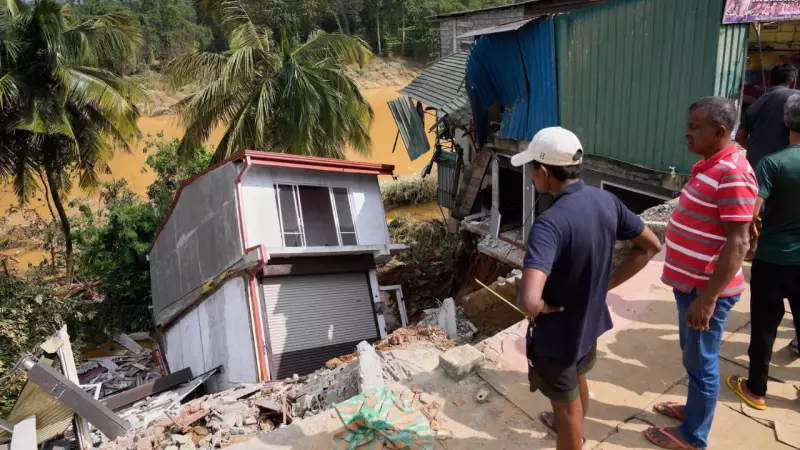
Sri Lanka is grappling with its most severe flooding catastrophe in two decades, as the aftermath of Cyclone Ditwah continues to impact millions across the island nation. More than a week after the cyclone's landfall, the scale of the disaster remains immense, with rescue operations stretched thin and public frustration mounting over the official response.
Scale of the Catastrophe and International Response
Official figures from the Disaster Management Center paint a grim picture. The death toll has reached 410, with 336 individuals still reported missing. The disaster has impacted a staggering 1.46 million people across all 25 districts of Sri Lanka. Over 64,000 people from approximately 407,000 affected families have sought refuge in nearly 1,450 government-run safety centers.
In response to Sri Lanka's appeal for help, a coalition of nations has stepped forward with aid pledges. India is leading the international relief effort, followed by commitments from the United Kingdom, China, Australia, and Nepal. President Anura Kumara Dissanayake has declared a state of emergency to manage the crisis, but this has done little to assuage public anger over perceived governmental failures.

Criticism Mounts Over Failed Preparedness and Communication
Experts and opposition voices are united in condemning the government's handling of the early warning signals and its reactive approach. Science writer Nalaka Gunawardene from Colombo highlighted that the Department of Meteorology had flagged the risk of extreme rainfall as early as November 12, nearly two weeks before Cyclone Ditwah made landfall on November 28.
"Unlike tsunamis, hydrometeorological hazards like cyclones arrive with sufficient notice of several days to take precautions," Gunawardene told DW. He criticized the lack of proactive, multi-level government preparations that should have been triggered by the forecasts.
Paikiasothy Saravanamuttu, executive director of the Centre for Policy Alternatives, accused the government of allowing the crisis to spiral out of control. "This disaster reveals significant gaps in preparedness and response mechanisms," he stated, calling for Parliament to be convened urgently to review and strengthen disaster management policies.
Adding to the criticism, public interest advocate Kishali Pinto-Jayawardena said the aftermath was "particularly horrendous as the deadly impact of the cyclone was not realized until it was far too late." She emphasized that sentimental political statements cannot substitute for competent emergency decision-making.
Northern Provinces Isolated, Rescue Teams Overwhelmed
The situation in northern Sri Lanka is described as extremely severe. Sivanathan Navindra, a political activist based in Jaffna, reported that districts like Mannar, Mullaitivu, Vavuniya, and Kilinochchi have been crippled. Mullaitivu is experiencing a total power blackout with downed telecommunication towers, severing phone and internet access for residents. Road closures have effectively cut off the northern province, making travel between major districts impossible.
Deputy Minister Chathuranga Abeysinghe acknowledged the immense strain on rescue operations. "We had initial difficulty in predicting the cyclone's course," he said, noting that the widespread rainfall "stretched rescue teams beyond capacity to reach everyone in need." He warned that rising water levels, particularly along the Kelaniya River, were making further evacuations extremely difficult.
Language Barriers and Legal Threats Compound Crisis
A critical failure in communication has been highlighted by disinformation expert Sanjana Hattotuwa. He pointed out that key disaster updates were primarily issued in Sinhala, sometimes mirrored in English, but rarely, if ever, in the official Tamil language. This created an information vacuum for Tamil-speaking communities during critical hours, potentially costing lives.

The political fallout is intensifying. The main opposition party, Samagi Jana Balawegaya (SJB), has pledged to take legal action against the government. SJB lawmaker S M Marikkar compared the disaster's severity to the 2019 Easter Sunday attacks and the recent economic collapse, vowing to hold the government accountable for every life lost.
As Sri Lanka begins the long process of rebuilding, the disaster has exposed deep flaws in its disaster management framework. The call for accountability and systemic reform grows louder, with the hope that such a tragedy will not be repeated due to preventable failures in preparedness and communication.





