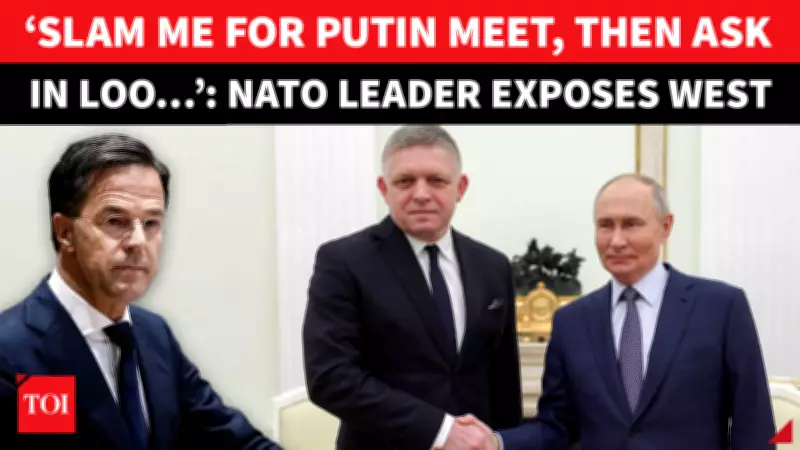
Slovakia’s Prime Minister Robert Fico has ignited a diplomatic firestorm by accusing European leaders of evading direct talks with Russian President Vladimir Putin, even as tensions mount ahead of Moscow’s Victory Day celebrations. Speaking in Bratislava, Fico openly mocked his critics, claiming that the very voices condemning his engagement with Moscow are the ones privately seeking details about his meetings with Putin. Defiant and unapologetic, Fico is proceeding with his planned visit to Moscow despite fierce backlash from the European Union, turning his stance into a bold and polarizing challenge to Europe’s united front against Russia.
Fico’s Accusations Against EU Leaders
During a press conference in Bratislava, Fico stated, “Some of my European colleagues who publicly attack me for talking to Putin are the first to hide in the loo to ask me what he said.” He argued that the West’s approach of isolating Russia has failed and that dialogue is necessary for peace. Fico emphasized that his visit to Moscow for the Victory Day parade is a matter of national sovereignty and historical respect, not a political endorsement of the Kremlin.
EU Response and Internal Divisions
The European Union has condemned Fico’s move, with many member states viewing it as a breach of the bloc’s unified stance on Russia. However, Fico’s remarks have exposed underlying divisions within the EU, where some leaders have quietly maintained channels of communication with Moscow. Analysts suggest that Fico’s bluntness may resonate with other EU nations grappling with energy dependency and security concerns tied to the war in Ukraine.

Fico’s defiance comes at a critical time, as the EU prepares to discuss new sanctions against Russia. His decision to attend the Victory Day parade, which commemorates the Soviet Union’s role in World War II, has been particularly controversial given the ongoing conflict in Ukraine. Critics argue that such gestures lend legitimacy to Putin’s regime, while supporters claim they keep diplomatic channels open.
Broader Implications for EU Unity
The Slovak prime minister’s actions highlight a growing rift between Eastern and Western EU members over how to handle Russia. While countries like Poland and the Baltic states advocate for a hardline approach, nations like Hungary and Slovakia have called for engagement. Fico’s public exposure of his colleagues’ private curiosity may further erode trust within the bloc, complicating efforts to maintain a cohesive foreign policy.
As the May 9 Victory Day approaches, all eyes will be on Moscow to see which world leaders attend. Fico’s presence is expected to be a symbolic boost for Putin, who has sought to portray Russia as not isolated on the global stage. Meanwhile, EU officials are working behind the scenes to minimize the diplomatic fallout, but Fico’s unrepentant stance suggests that the controversy is far from over.