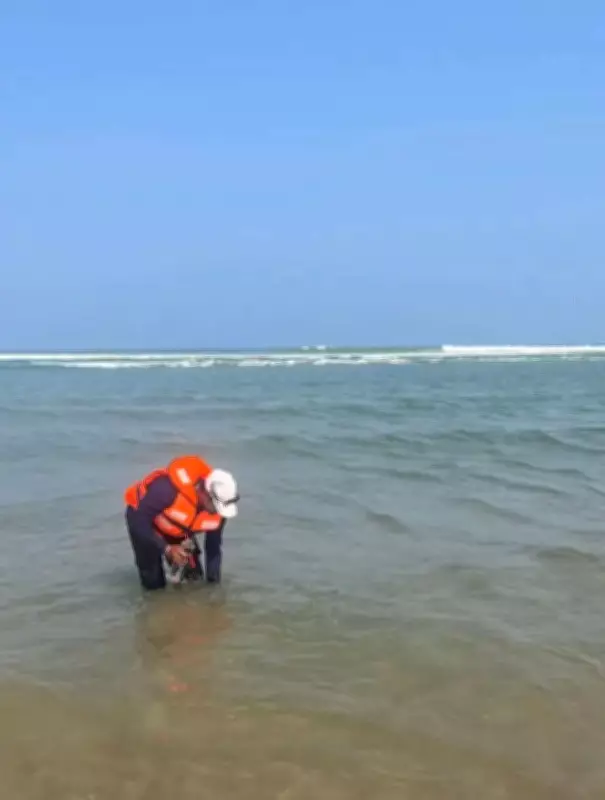
A team comprising researchers from six institutions, including IIT-Bhubaneswar and NIT-Rourkela, has commenced field work under the Samudra Manthan project, which aims to assist the government in creating a systematic database of Odisha's marine bioresources. The team collected samples from the Bahuda river mouth in Ganjam district.
Project Overview
The Samudra Manthan project is implemented under the Odisha Marine Biotechnology Research and Innovation Corridor. A review of the project is scheduled for Tuesday, according to official sources.
The initiative is expected to not only help the government establish a genomic and biodiversity repository but also strengthen marine biotechnology research, enhance publications and intellectual property generation, and expand national and international collaborations.

Policy and Industry Impact
The project will provide high-quality biodiversity data for policymaking, connect researchers with policymakers for improved ocean governance, and support marine biotechnology businesses through industry linkages and partner networks, sources added.
Sashi Kanta Dash, deputy director (biotechnology) of the science and technology department, stated that the field work has just begun. “Samples of water, sediment, algae, and other items were collected from the beach and sea in Ganjam by researchers for testing and analysis,” he said, adding that various teams will start their work at different beaches in a phased manner.
Technology and Collaboration
Dash noted that IIT-Bhubaneswar will map Odisha's 574-kilometer coastline using satellite imagery, GIS, remote sensing, and sensor-equipped drones to assess bioresource availability and monitor pollution.
The Odisha government has already signed a Memorandum of Understanding with the National Centre for Coastal Research (NCCR) in Chennai under an India-Norway collaboration on sustainable ocean planning. NCCR will provide support for the Samudra Manthan project.