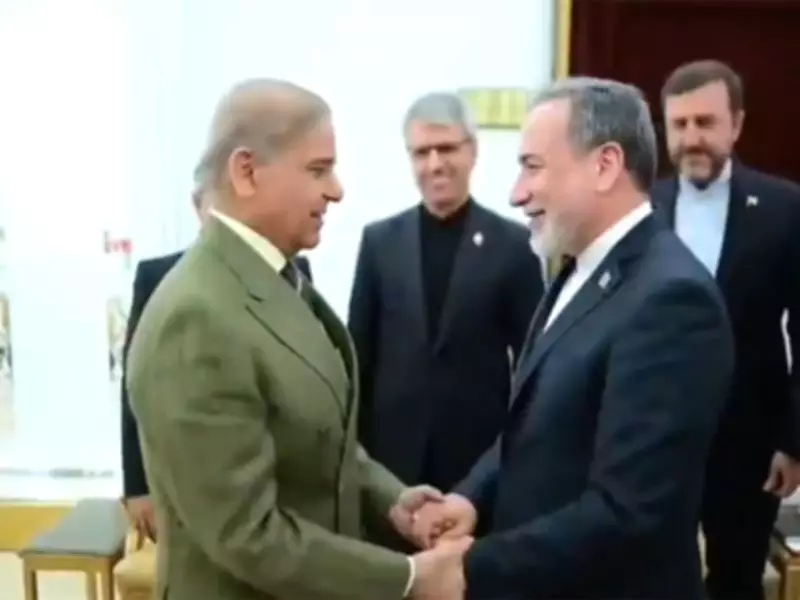
A senior Iranian lawmaker has stated that Pakistan lacks the credibility to mediate between Tehran and Washington, according to a report by the Iranian Students' News Agency (ISNA). Ebrahim Rezaei, a member of the Iranian Parliament's National Security and Foreign Policy Committee, made the remarks in an interview published on Saturday.
Rezaei's comments on Pakistan's credibility
Rezaei said that Pakistan's close ties with the United States and Saudi Arabia have undermined its ability to act as a neutral mediator. He noted that Pakistan has historically aligned itself with US interests in the region, which makes it an unsuitable intermediary for Iran.
The lawmaker also pointed to Pakistan's role in the Yemen conflict and its support for the Saudi-led coalition, which has been at odds with Iran's regional policies. Rezaei argued that any mediation effort by Pakistan would be viewed with suspicion by Iran given these factors.

Iran's stance on negotiations with the US
Rezaei reiterated Iran's position that it will not engage in direct talks with the United States unless Washington lifts all sanctions and returns to the 2015 nuclear deal, formally known as the Joint Comprehensive Plan of Action (JCPOA). He emphasized that any mediation attempt must be impartial and credible.
The lawmaker's comments come amid reports that Pakistan had offered to facilitate dialogue between Iran and the US. However, Iran has consistently rejected such overtures, stating that it does not trust Pakistan's ability to mediate fairly.
Background on Pakistan-Iran relations
Pakistan and Iran have historically maintained diplomatic relations, but tensions have risen due to differences over regional issues, including the conflict in Yemen and the situation in Afghanistan. Pakistan's close ties with Saudi Arabia, a regional rival of Iran, have further strained relations.
Iran has also expressed concerns about militant groups operating along the Pakistan-Iran border, which have carried out attacks on Iranian soil. Both countries have discussed border security, but Iran remains skeptical of Pakistan's commitment to addressing these threats.
In recent months, Pakistan has sought to position itself as a mediator in regional disputes, including between Iran and the US. However, Rezaei's comments suggest that Iran is not receptive to such efforts.
Reactions and implications
Political analysts say that Rezaei's remarks reflect a broader sentiment in Tehran that Pakistan is too closely aligned with US and Saudi interests to serve as a credible mediator. This could further complicate efforts to reduce tensions between Iran and the US, which have escalated since the US withdrawal from the JCPOA in 2018.
Pakistan's foreign office has not yet responded to the Iranian lawmaker's statement. However, Pakistani officials have previously expressed willingness to facilitate dialogue between Iran and the US, citing their country's unique position as a neighbor to both Iran and Afghanistan.
The United States has not commented on the possibility of Pakistan mediating with Iran. The Biden administration has expressed interest in returning to the JCPOA but has also maintained that negotiations must be conducted directly or through the European Union.