

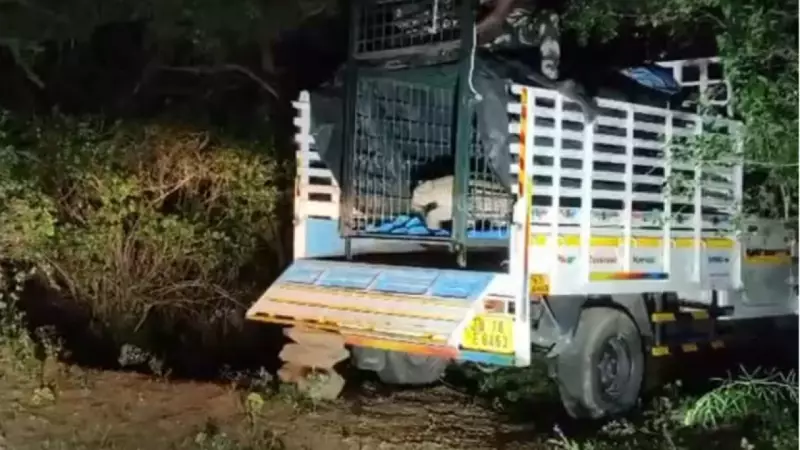
In a successful wildlife operation, forest department officials have captured and safely released a leopard that had been creating panic in the Pollachi region of Coimbatore district. The five-year-old male leopard had strayed from its natural habitat and was responsible for multiple livestock attacks in the area.
The Straying Predator and Livestock Attacks
The leopard first ventured out of its natural forest territory on October 25, entering human settlements in the Pothamadai beat of the Pollachi forest range. Located within the expansive Anamalai Tiger Reserve, this area has witnessed increasing human-wildlife conflict in recent times. The big cat began preying on domestic animals, causing significant concern among local farmers and residents.
Forest department personnel quickly sprang into action upon receiving reports of the leopard's movements near human habitats. They identified three strategic locations to set up trap cages as part of their carefully planned capture operation.

The Successful Capture Operation
After days of monitoring the leopard's movement patterns, the forest department's strategy finally yielded results on Tuesday evening around 7 PM. The leopard entered a trap cage placed on private farmland near Kuppuchipudur, lured by live chicken bait placed inside the enclosure.
Following the successful capture, the Coimbatore forest veterinary officer conducted a thorough medical examination of the carnivore to ensure it was healthy and uninjured. The examination confirmed the leopard was a healthy male specimen capable of surviving back in the wild.
Safe Return to Natural Habitat
In the early hours of Wednesday around 3 AM, forest department personnel transported the captured leopard to the Ulanthi forest range near Topslip, where they released it into deep forest territory. This carefully chosen release site provides adequate distance from human settlements while offering suitable habitat and prey base for the leopard's survival.
The entire operation demonstrates the forest department's commitment to balancing wildlife conservation with human safety. Rather than resorting to extreme measures, officials employed scientific methods to resolve the human-animal conflict situation, ensuring both the leopard's welfare and community protection.
This incident highlights the ongoing challenges faced by wildlife authorities in regions where forest boundaries interface with human settlements. The successful resolution of this particular case sets a positive precedent for future human-wildlife conflict management in the Anamalai Tiger Reserve and surrounding areas.






