Japan Unveils Massive Stimulus to Counter Soaring Inflation
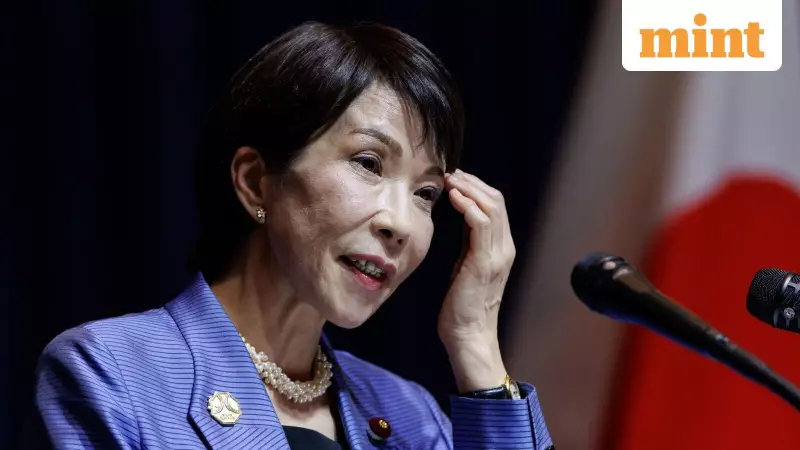
The Japanese government, under Prime Minister Sanae Takaichi, has given its official approval to a substantial economic stimulus package. Valued at a staggering 21.3 trillion yen (approximately $135 billion), this initiative was passed on Friday with the primary goal of alleviating the financial strain caused by persistent inflation on both households and businesses across the nation.
This marks a significant policy move from Prime Minister Takaichi, who assumed office just last month. Her administration has committed to tackling the rising cost of living, a key issue that contributed to the short tenure of her predecessor, Shigeru Ishiba. The new package includes a range of measures, such as direct energy subsidies and targeted tax cuts, designed to put money back into the pockets of Japanese citizens.
Market Jitters and the Weakening Yen
However, this bold fiscal intervention has not been met with universal acclaim. Economists and market analysts have expressed deep concern that such a large-scale spending plan will add to Japan's already massive public debt, which is one of the highest in the world. These fears have triggered a direct reaction in the financial markets, pushing government bond yields to record highs and causing the value of the yen to fall further against the US dollar.

A weaker yen presents a paradoxical problem for Japan. As a nation that relies heavily on imports for essential items like food, energy, and raw materials, a depreciated currency makes these goods more expensive. This, in turn, can fuel the very inflation the government is trying to combat. Finance Minister Satsuki Katayama addressed these concerns, stating that the government is prepared to take "appropriate action against disorderly (foreign exchange) moves," hinting at potential intervention to stabilize the yen.
Margarita Estevez-Abe, an analyst at Syracuse University's Maxwell School, highlighted the long-standing dilemma. "Japan has been engaged in expansionary economic policies for so long without being able to stimulate the economy," she told AFP. "Meanwhile, Japan's public debts increased. We are already seeing the negative reactions from the market... Further depreciation of the yen will hit ordinary Japanese households with higher prices."
Economic and Diplomatic Headwinds Intensify
The urgency for the stimulus is underscored by recent economic data. Official figures revealed that Japan's core inflation rate, which excludes volatile fresh food prices, climbed to 3.0 percent year-on-year in October, up from 2.9 percent in September. Consumers are feeling the pinch, with staple items like rice seeing prices 40 percent higher than the previous year, although the rate of increase has slowed recently.
Compounding the economic challenges is a fresh diplomatic dispute with China. The tension escalated following comments by Prime Minister Takaichi regarding Taiwan, in which she suggested Japan could consider military involvement if the island were attacked. In response, China, which claims Taiwan as part of its territory, has summoned Japan's ambassador and advised its citizens against travelling to Japan. Reports also suggest Beijing may suspend imports of Japanese seafood, a significant blow to that industry.
The United States has reaffirmed its stance in the region, with the State Department stating its "commitment to the US-Japan Alliance is unwavering." A spokesman emphasized that the alliance remains the "cornerstone of peace and security in the Indo-Pacific" and firmly opposes any unilateral attempts to change the status quo in areas like the Taiwan Strait and the East China Sea, where the disputed Senkaku Islands (Diaoyu in China) are located.
As Prime Minister Takaichi reiterates her aim for a "responsible and proactive fiscal policy," her government faces the difficult task of balancing immediate economic relief for its citizens with the long-term risks of soaring debt and complex international relations.