

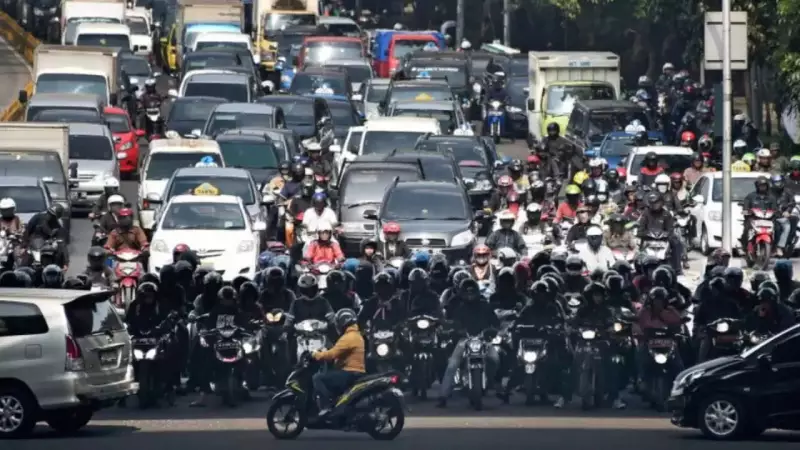
In a significant demographic shift, Indonesia's capital Jakarta has officially become the world's most populated city, surpassing Japan's Tokyo according to the latest United Nations report. The UN's World Urbanisation Prospects 2025 reveals that Jakarta now hosts approximately 42 million people, marking a new era in global urban population patterns.
The New Global Urban Landscape
The recently released UN report indicates that Jakarta leads with 42 million residents, followed closely by Dhaka in Bangladesh with 37 million people. Tokyo, which previously held the top position, has now dropped to third place with 33 million inhabitants. This represents a notable change from the 2018 UN report that placed Tokyo at the top with 37 million residents.
According to UN officials, this shift in rankings primarily results from a new methodology that applies consistent definitions for cities, towns, and rural areas worldwide. Patrick Gerland, head of the UN department's population estimates section, explained that the updated method provides a more internationally comparable delimitation of urban areas based on similar population and geospatial criteria.

The Rise of Megacities and Urbanization Trends
The report highlights dramatic changes in global urbanization patterns over recent decades. Urban populations have more than doubled since 1950, when only 20% of the world's 2.5 billion people lived in cities. Today, nearly half of the global population of 8.2 billion resides in urban areas, with projections indicating that two-thirds of population growth will occur in cities by 2050.
Perhaps most striking is the explosive growth of megacities - urban areas with at least 10 million inhabitants. The number of megacities has quadrupled from just eight in 1975 to 33 in 2025, demonstrating the accelerating pace of urban concentration worldwide.
Asian Dominance in Urban Population Growth
The current list of most populated cities reveals a clear geographic pattern: nine of the ten most populated cities are located in Asia. The top ten includes Jakarta, Dhaka, Tokyo, New Delhi, Shanghai, Guangzhou, Cairo, Manila, Kolkata, and Seoul, showcasing Asia's central role in global urbanization trends.
Li Junhia, UN undersecretary-general for economic and social affairs, emphasized that urbanization represents a defining force of our time. He noted that when managed strategically, urban growth can support climate action, economic growth, and social equity - crucial considerations for rapidly expanding cities.
While Tokyo's metropolitan area spreads across three neighboring prefectures - Saitama, Chiba, and Kanagawa - including Yokohama with 3.7 million residents, the new criteria indicate that Tokyo was the world's largest city until approximately 2010, when Jakarta began taking the lead.
Interestingly, despite Japan's overall population decline in recent years, Tokyo itself has continued to grow. According to the Tokyo metropolitan government, the 23 special wards and 26 smaller cities comprising "Tokyo proper" now have just over 14 million people, up from 13.2 million a decade ago. Migration slowed during the COVID-19 pandemic but has since recovered, driven primarily by young people moving to the city for work and education opportunities.
This demographic milestone underscores the ongoing global shift toward urban living and highlights the particular concentration of this growth in Asian cities, with Jakarta now at the forefront of this urban transformation.






