

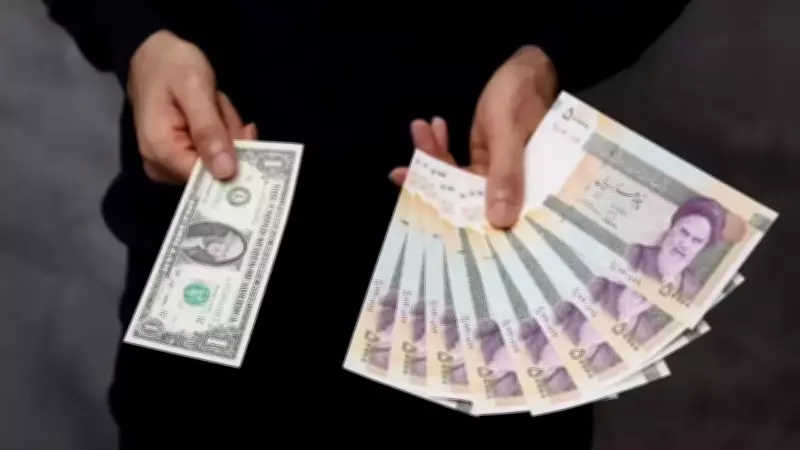
Iran's currency has plunged to a record low against the US dollar in recent days, as the ongoing US naval blockade of Iranian ports continues to strain the country's economy. On the black market Wednesday, the rial fell to around 1.80 million per dollar, according to currency-tracking websites Bonbast and AlanChand. At the start of the conflict two months ago, the exchange rate stood at about 1.70 million rials per dollar. While Iran maintains multiple official exchange rates, these platforms are widely seen as reliable indicators of real market trends.
Inflation Fears Grow
Experts warn that the sharp depreciation is likely to fuel inflation further, as the cost of imported goods—from food and medicines to electronics and industrial raw materials—rises in line with the dollar. The blockade has also hit a crucial source of government revenue by disrupting oil exports, limiting Iran's access to foreign currency. Despite this, Iranian authorities appear to be relying on the country's long-standing sanctions-era economic resilience to withstand the pressure.
Strait of Hormuz Tensions
Four weeks into a ceasefire that has largely halted active fighting, tensions remain high between the US and Iran over the Strait of Hormuz, a vital route through which about a fifth of global oil and gas supplies typically pass. Its continued disruption is affecting global markets, pushing up fuel, food, and transport costs worldwide, even as several countries call for the waterway to be reopened.

Meanwhile, US President Donald Trump rejected Iran's proposal to reopen the strait in exchange for lifting the blockade. In an interview with Axios, he defended the strategy, saying, "The blockade is somewhat more effective than the bombing. And it is going to be worse for them. They can't have a nuclear weapon."
US Treasury's 'Economic Fury'
Earlier, US Treasury Secretary Scott Bessent had said that the combined impact of sanctions and the naval blockade would inflict long-term damage on Iran's economy. "The Treasury Department, through Economic Fury, has targeted Iran's international shadow banking infrastructure, access to crypto, shadow fleet, weapons procurement networks, funding for terrorist proxies in the region, and independent Chinese 'teapot' refineries that support Iran's oil trade. These actions have disrupted tens of billions of dollars in revenue that would be used to fund terrorism," Bessent said.
"Kharg Island, Iran's primary oil export terminal, is soon nearing storage capacity, which will force the regime to reduce oil production, resulting in an additional approximately $170 million per day in lost revenue, and causing permanent damage to Iran's oil infrastructure. Treasury will continue to exert maximum pressure and any person, vessel, or entity facilitating illicit flows to Tehran risks exposure to US sanctions," he added.
Iran Rejects US Claims
Iran, however, rejected the US claims and criticized the strategy. Parliament Speaker Mohammad Bagher Ghalibaf dismissed Bessent's remarks, calling his advice "junk." "3 days in, no well exploded. We could extend to 30 and livestream the well here. That was the kind of junk advice the US admin gets from people like Bessent who also push the blockade theory and cranked oil up to $120+. Next stop: 140. The issue isn't the theory, it's the mindset," Ghalibaf said in a post on X.
The standoff continues to weigh on global markets, with oil prices remaining elevated. Analysts warn that prolonged disruption could trigger a broader economic slowdown, particularly in developing countries heavily reliant on energy imports.






