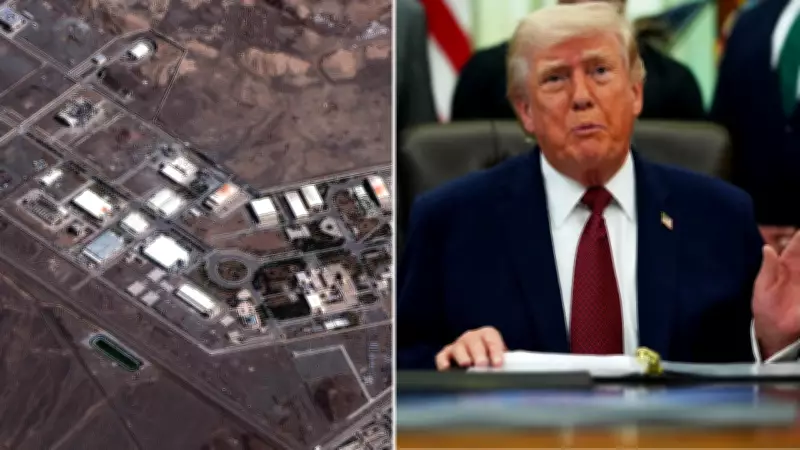
The Iran conflict, which began as Donald Trump's Operation Epic Fury, has now entered a Cold War-like phase marked by financial sanctions, gunboat interdictions, and ongoing talks about talks, according to an Axios report.
Stalemate and Rising Energy Prices
Trump remains far from satisfied with Iran's unbroken and unhindered nuclear capabilities. The situation has settled into a tense stalemate with no clear end in sight. Higher energy prices now appear likely to persist for months, while the risk of a sudden escalation into a hot war continues to hang over the region.
Concerns Over Frozen Conflict
Several US officials told Axios they are increasingly concerned about the United States being pulled into a frozen conflict defined by no war and no diplomatic breakthrough. In this scenario, US forces would remain deployed in the region for months to come. The Strait of Hormuz would stay closed, the US blockade would continue, and both sides would remain locked in a waiting game, each watching for the other to blink or strike first.

With the November midterm elections just six months away, "a frozen conflict is the worst thing for Trump politically and economically," one source close to the president said. President Trump is reportedly oscillating between authorising new military strikes and relying on his "maximum pressure" sanctions campaign to push Iran toward negotiations over its nuclear programme, according to five advisers familiar with his thinking.
"All [Iran's leaders] understand is bombs," Trump recently told one adviser, who relayed the comment to Axios. "I would describe him as frustrated but realistic," the adviser said. "He doesn't want to use force. But he's not backing down."
Divisions Within the Administration
Inside the administration, divisions have emerged over strategy. Some senior advisers are pushing to maintain the US blockade of the Strait of Hormuz while intensifying economic pressure before considering further military action.
"The level of sanctions on Iran are extraordinary, the pressure on Iran is extraordinary, and I think more can be brought to bear," secretary of state Marco Rubio, who's also Trump's national security adviser, said in an interview with Fox News that aired Monday. "I hope the rest of the world will join us in the crippling sanctions and other things that we are doing to pressure that regime into making concessions it does not want to make."
Hawkish Voices Urge Military Action
Outside the administration, hawkish voices are urging a more forceful approach. Washington Post columnist Marc Thiessen, retired Army Gen. Jack Keane, and senator Lindsey Graham are among those advising Trump to consider military action to break the deadlock.
"Mr President, stick to your guns for the good of the nation and the world. The Iranian regime and their behavior is the problem, not you," Graham posted Monday on X, calling on Trump to reject Iran's latest proposal.
Trump recently discussed an Iranian proposal with his national security team on Monday. Iran had offered to negotiate a side deal to reopen the Strait of Hormuz in exchange for the US lifting its blockade of ships coming and going from Iran. A US official and two other sources briefed on the meeting said no decisions were made. One source said Trump did not appear inclined to accept Iran's proposal because it would delay talks over the country's nuclear programme, the elimination of which remains his central objective.
"The president's red lines with respect to Iran have been made very, very clear, not just to the American public, but also to them as well," White House press secretary Karoline Leavitt said Monday.
The Blockade and Its Impact
Trump imposed the blockade after Iran closed the Strait of Hormuz and began charging tolls on tankers transporting oil out of the Persian Gulf, a route responsible for about 20 percent of global crude supplies. The US military has since been forcing Iranian-flagged vessels carrying oil to turn back, though some have slipped through. The US has also seized tankers carrying Iranian crude and what it describes as "contraband" that could support military use.

Trump has maintained that the blockade will not be lifted unless Iran agrees to a broader deal addressing its nuclear programme. Treasury secretary Scott Bessent has expanded the "maximum pressure" campaign, targeting financial institutions, shipping companies, and even Chinese "teapot" refiners processing sanctioned Iranian oil.
"This is maximum pressure everywhere and from all angles," a senior administration official said. "That could mean military action, too. It might not. It's up to the president."
Potential Outcomes and Criticism
Trump administration officials and allies believe the sanctions could eventually cripple Iran's ability to store and export oil, forcing major economic strain. However, critics argue the strategy may fail to secure concessions and could instead prolong the conflict without resolution.