

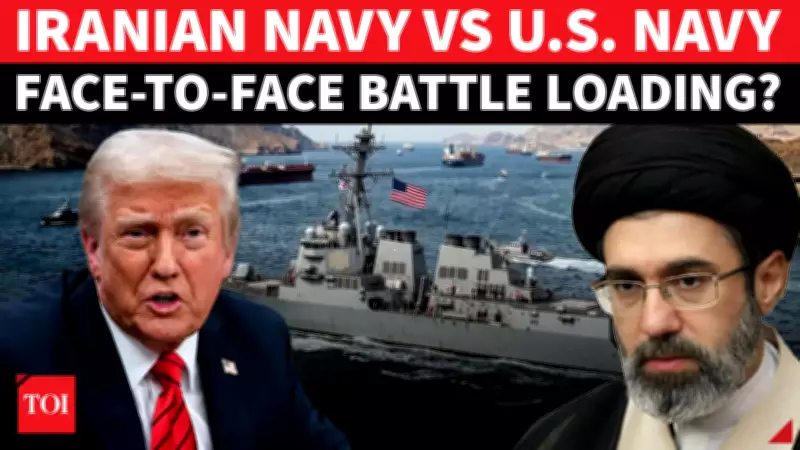
Satellite imagery cited by analysts reveals that more than 85 fast attack craft from the Islamic Revolutionary Guard Corps (IRGC) have been arrayed south of Qeshm Island across a 22-kilometer stretch. These small, agile boats are central to Iran's swarm doctrine, designed to be hard to track, quick to mass, and capable of harassing larger warships. Experts warn that this asymmetric posture is tailor-made for the narrow waters of the Strait of Hormuz.
Strategic Deployment in the Strait of Hormuz
The deployment of these vessels comes amid heightened tensions between Iran and the United States. The IRGC's 'mosquito fleet' consists of small, fast attack craft that can operate in shallow waters and use hit-and-run tactics. Their presence in the Strait of Hormuz, a critical chokepoint for global oil shipments, poses a significant challenge to the US Navy and allied forces.
Swarm Doctrine and Asymmetric Warfare
Iran's swarm doctrine relies on overwhelming an adversary with a large number of small, inexpensive boats that can attack from multiple directions simultaneously. This approach is intended to counter the technological superiority of larger naval vessels. The narrow geography of the Strait of Hormuz amplifies the effectiveness of such tactics, limiting the maneuverability of larger ships and increasing the risk of collisions or successful strikes.

- Hard to Track: Small radar cross-section and low profile make these boats difficult to detect.
- Quick to Mass: They can rapidly converge on a target from multiple bases along the coast.
- Capable of Harassment: Armed with machine guns, rockets, and anti-ship missiles, they can inflict damage on larger vessels.
Implications for Regional Security
The deployment has raised alarms among international observers, who fear that any miscalculation could lead to a broader conflict. The US Navy has maintained a significant presence in the region, and any confrontation in the Strait of Hormuz could disrupt global oil supplies and trigger a spike in energy prices. Analysts emphasize that while the boats are vulnerable to air and naval strikes, their sheer numbers and speed make them a persistent threat.
Historical Context and Escalation
This is not the first time Iran has used swarm tactics in the Persian Gulf. During the Iran-Iraq War in the 1980s, similar tactics were employed against oil tankers and naval vessels. However, the current deployment is one of the largest in recent years, coinciding with renewed tensions following US withdrawal from the nuclear deal and imposition of sanctions. The IRGC has repeatedly threatened to close the Strait of Hormuz if its interests are threatened.
Experts warn that the situation remains volatile, with both sides engaging in rhetoric and military posturing. The US has reinforced its naval assets in the region, while Iran continues to develop its asymmetric capabilities. The coming weeks could see further escalation if diplomatic efforts fail to de-escalate the situation.






