

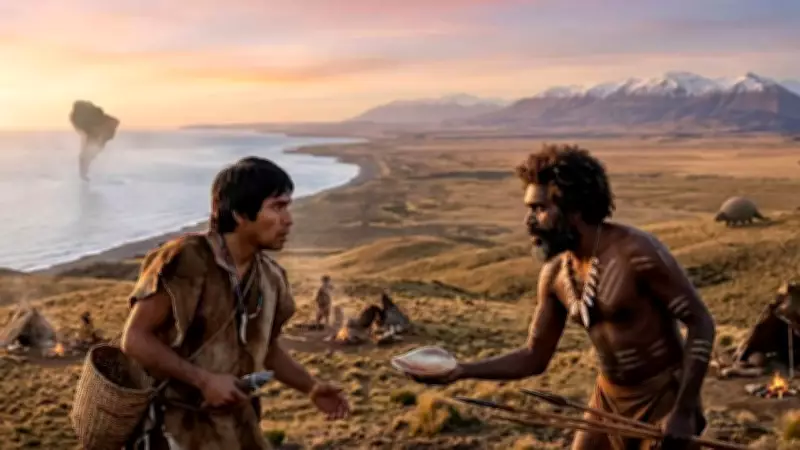
A groundbreaking study published in Nature sheds new light on the peopling of South America, the last major landmass to be colonized by humans. Researchers analyzed the genomes of 128 indigenous individuals from eight Latin American countries, uncovering three distinct waves of dispersal that challenge previous assumptions of a simple chronological sequence.
Surprising Genetic Links with Australasia
One of the most startling findings is that approximately 2% of Indigenous Amazonians share genetic traits with Indigenous Australasians, including Aboriginal Australians, New Guineans, and Andaman Islanders. This suggests a previously unknown ancestral population, dubbed Ypykuéra or Y Population, that may have interacted with early Amazonians in Beringia around 10,000 years ago. This indicates that unknown populations played a major role in the initial colonization of the Americas.
Evolutionary Advantage of Ancient Genes
The persistence of this 2% genetic signature over 10,000 years implies it provided an evolutionary selective advantage. Researchers identified genes associated with fertility, immunity, insulin signaling, and cancer progression that were over-represented in study populations, likely aiding survival in harsh environments.

Complex Migration Patterns
The study reveals a far more dynamic history than previously thought. Beyond known waves 15,000 and 9,000 years ago, a third dispersal occurred around 1,300 years ago, with indigenous groups from central and southern Mexico spreading into South America and the Caribbean. This gradual, interconnected process reshaped the genetic landscape, proving settlement was multi-phasic rather than a single event.
Contributions from Archaic Hominins
Additionally, 1% to 3% of contemporary Indigenous American genomes derive from Neanderthals and Denisovans. These archaic variants provided biological adaptability, helping early settlers withstand extreme conditions like high-altitude Andes and diverse Amazonian pathogens.






