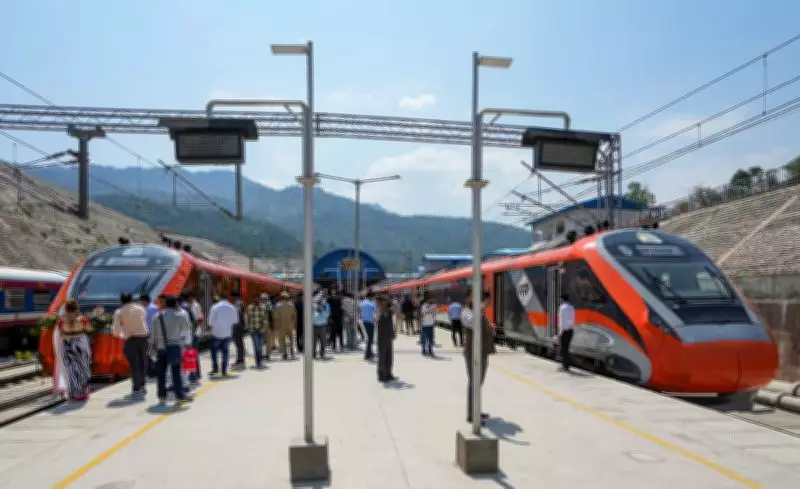
The introduction of a direct Vande Bharat train service between Jammu and Srinagar marks a significant milestone in enhancing connectivity in the Jammu and Kashmir region. The train, which is part of the Indian Railways' flagship Vande Bharat Express series, is expected to reduce travel time considerably, offering passengers a comfortable and efficient mode of transport.
Reduced Travel Time and Enhanced Comfort
The Vande Bharat train is designed to cover the distance between Jammu and Srinagar in approximately three and a half hours, compared to the current road journey that takes around six to seven hours. This drastic reduction in travel time is anticipated to benefit daily commuters, tourists, and business travelers alike. The train is equipped with modern amenities such as automatic doors, comfortable seating, onboard Wi-Fi, and GPS-based passenger information systems, ensuring a pleasant journey.
Boosting Regional Economy and Tourism
The improved connectivity is expected to give a substantial boost to the local economy. The Kashmir Valley, known for its scenic beauty and tourist attractions, will become more accessible to travelers from other parts of the country. This increased accessibility is likely to spur tourism, create job opportunities, and promote local businesses. Additionally, the train service will facilitate easier movement of goods and services, contributing to economic growth in the region.

Infrastructure Development and Future Plans
The launch of the Vande Bharat service is part of a broader effort by the Indian government to upgrade railway infrastructure in Jammu and Kashmir. The Udhampur-Srinagar-Baramulla Rail Link (USBRL) project, which includes several tunnels and bridges, is nearing completion. Once fully operational, it will provide all-weather connectivity to the Kashmir Valley. The introduction of the Vande Bharat train is a precursor to more such services that are planned for the region, including the much-anticipated bullet train project.
Challenges and Considerations
Despite the positive developments, there are challenges that need to be addressed. The region's challenging topography requires careful maintenance of tracks and safety systems. Additionally, the train's fare structure must be affordable to ensure widespread usage. The authorities are also focusing on security measures to ensure the safety of passengers, given the sensitive nature of the region.
Conclusion
The direct Vande Bharat train service between Jammu and Srinagar is a game-changer for connectivity in the region. It promises to bring economic prosperity, enhance tourism, and improve the quality of life for residents. With continued investment in infrastructure and technology, the future of rail travel in Jammu and Kashmir looks promising.